What is a Tire Pressure Sensor Battery? Sensor Errors
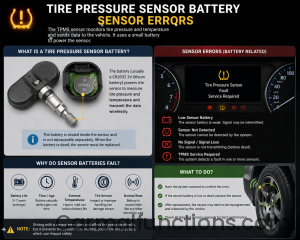
What is a tire pressure sensor battery? It is a small, internal power source within a Tire Pressure Monitoring System (TPMS) sensor. This battery powers the sensor’s components. These components measure tire pressure and temperature. They then wirelessly transmit this data to your vehicle’s computer. Understanding what is a tire...

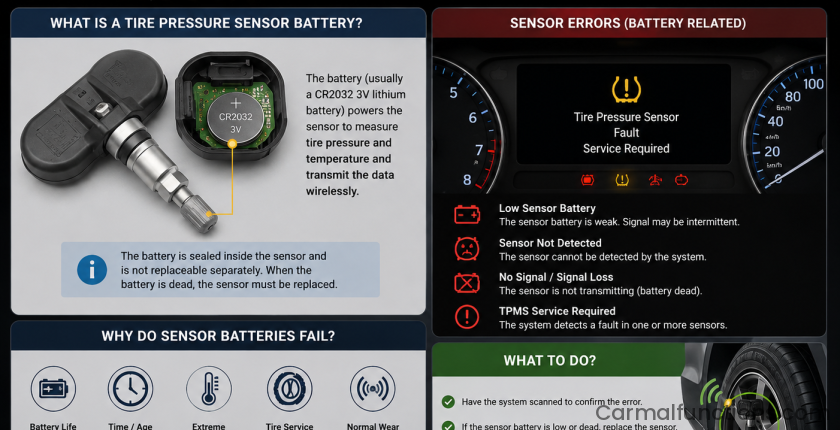
What is a tire pressure sensor battery? It is a small, internal power source within a Tire Pressure Monitoring System (TPMS) sensor. This battery powers the sensor’s components. These components measure tire pressure and temperature. They then wirelessly transmit this data to your vehicle’s computer. Understanding what is a tire pressure sensor battery? and its role is crucial for vehicle safety. Sensor errors often stem from battery issues. You will find detailed tables and FAQs below.
- 1. The Function of a Tire Pressure Sensor Battery
- 2. Common Causes of Tire Pressure Sensor Errors
- 2.1. Dead or Weak Sensor Battery
- 2.2. Physical Damage
- 2.3. Corrosion
- 2.4. Extreme Temperatures
- 2.5. Sensor Age
- 2.6. Faulty Wiring or Connections
- 2.7. Software Glitches
- 3. Signs of a Failing Tire Pressure Sensor Battery
- 3.1. The TPMS Warning Light Stays On
- 3.2. Intermittent Warnings
- 3.3. Incorrect or Missing PSI Readings
- 3.4. Delayed or No Data Transmission
- 3.5. TPMS Light After Tire Change or Service
- 4. How Long Do Tire Pressure Sensor Batteries Last?
- 5. Troubleshooting TPMS Sensor Errors
- 5.1. 1. Check and Adjust Tire Pressure
- 5.2. 2. Reset the TPMS System
- 5.3. 3. Inspect for Physical Damage and Corrosion
- 5.4. 4. Use a TPMS Diagnostic Tool
- 5.5. 5. Replace Faulty Sensors
- 5.6. 6. Recalibrate the System
- 6. When to Seek Professional Help
- 7. Cost of TPMS Sensor Replacement
- 8. Conclusion
The Function of a Tire Pressure Sensor Battery
A tire pressure sensor battery is essential for the operation of a direct TPMS. Direct TPMS uses sensors inside each tire. These sensors continuously monitor tire pressure and temperature. The battery provides the necessary power for these functions. It powers the pressure measurement. It also powers the wireless transmitter. This transmitter sends data to the vehicle’s central computer. The vehicle then displays this information on the dashboard. When the battery weakens or dies, the sensor stops functioning. This leads to TPMS sensor errors. Most TPMS sensor batteries are sealed units. They are not designed for individual replacement. Therefore, when the battery fails, the entire sensor usually needs replacement. The typical lifespan for these batteries is between 5 to 10 years. However, this can vary based on several factors. These include driving habits, temperature extremes, and battery quality.
Common Causes of Tire Pressure Sensor Errors
Tire pressure sensor errors can manifest in various ways. The most common cause is a dead or weak sensor battery. However, other factors can also contribute to TPMS sensor errors.
Dead or Weak Sensor Battery
This is the most frequent reason for TPMS sensor failure. The internal batteries in TPMS sensors have a limited lifespan. Most last between 5 to 10 years. As the battery degrades, it can no longer power the sensor effectively. This leads to inaccurate readings or complete failure to transmit data. A blinking TPMS warning light on the dashboard often indicates a low battery. This is because the sensor can no longer communicate reliably with the vehicle’s computer. Some advanced TPMS diagnostic tools can check the battery voltage. This helps determine if the battery is nearing the end of its life.
Physical Damage
Sensors are located inside the tire, near the valve stem. They are vulnerable to damage. Road debris, such as rocks or nails, can strike and damage the sensor. Even aggressive tire changes or impacts with curbs can cause physical damage. This damage can disrupt the sensor’s internal components. It can lead to inaccurate readings or a complete sensor failure.
Corrosion
Exposure to moisture, road salt, and harsh chemicals can cause corrosion. Corrosion can affect the sensor’s metal components. It can interfere with its ability to measure pressure accurately. This is particularly common in areas with harsh winters. Regular inspection and cleaning can help prevent corrosion.
Extreme Temperatures
Both very hot and very cold temperatures can affect TPMS sensor performance. Extreme heat can accelerate battery degradation. Extreme cold can cause the air inside the tires to contract, leading to pressure drops. While this is a natural phenomenon, it can sometimes trigger a TPMS warning light if the pressure drops significantly. Cold temperatures can also temporarily affect the sensor’s battery performance.
Sensor Age
Like all electronic components, TPMS sensors have a finite lifespan. Over time, internal components can degrade. This can lead to inaccurate readings or complete failure, even if the battery is still functional. Manufacturers typically design the sensor battery to last as long as the sensor itself.
Faulty Wiring or Connections
While less common, issues with the wiring or connections within the TPMS system can also cause sensor errors. Damaged wiring can prevent the sensor from communicating with the vehicle’s computer. This can result in false warnings or a complete system malfunction.
Software Glitches
Occasionally, the issue might not be with the sensor itself but with the vehicle’s TPMS software. Software glitches or failed updates can sometimes cause the TPMS warning light to illuminate erroneously. Resetting the TPMS system can often resolve minor software issues.
Signs of a Failing Tire Pressure Sensor Battery
Recognizing the signs of a failing TPMS sensor battery is crucial. Early detection can prevent potential safety issues and costly repairs.
The TPMS Warning Light Stays On
If your tire pressures are correct, but the TPMS warning light remains illuminated, it often indicates a sensor issue. This could be a dead battery or a malfunctioning sensor. The light might stay on constantly or flash intermittently.
Intermittent Warnings
The TPMS warning light may come on and off intermittently. This is especially common during cold mornings or highway driving. This often suggests that the sensor’s internal battery is weakening. It may still function under ideal conditions but struggles when conditions are less favorable.
Incorrect or Missing PSI Readings
Some vehicles display individual tire pressure readings on the dashboard. If one or more tires show incorrect pressure, a dash error message like “Tire Sensor Fault,” or a blank reading (“—”), it signifies a problem with the respective sensor.
Delayed or No Data Transmission
A failing sensor might transmit data late or not at all. This can lead to a lack of updates on your dashboard display. The system may eventually report a sensor fault.
TPMS Light After Tire Change or Service
Sometimes, the TPMS light may illuminate after a tire rotation or replacement. This could be due to a damaged sensor during the service, or it might be a coincidence if a sensor’s battery was already nearing its end.
How Long Do Tire Pressure Sensor Batteries Last?
The lifespan of a TPMS sensor battery is a significant factor in the overall life of the sensor. On average, these batteries are designed to last between 5 to 10 years. Some sources suggest a slightly shorter range of 5-7 years for optimal performance, while others extend it to 12 years for original equipment (OE) sensors.
Several factors influence battery life:
* Battery Quality: Higher-quality batteries tend to last longer.
* Usage Frequency: More frequent driving, especially stop-and-go traffic, increases the number of radio frequency transmissions. This consumes more battery power. Constant speed driving, like on a highway, is less demanding.
* Environmental Conditions: Extreme temperatures (both hot and cold) can affect battery performance and longevity. Cold temperatures can put less strain on the battery, while warmer conditions can accelerate degradation. Moisture and exposure to road chemicals can also contribute to wear.
* Sensor Design and Efficiency: Older sensor designs with less efficient integrated circuits (ASICs) consumed more power. Some sensors have a parking supervision mode that uses extra energy.
* Driving vs. Parked: Sensors transmit more data while driving, using more battery energy than when parked.
It’s important to note that these batteries are sealed within the sensor and are generally not replaceable individually. Therefore, when the battery dies, the entire TPMS sensor unit must be replaced.
Troubleshooting TPMS Sensor Errors
When you encounter a tire pressure sensor error, several steps can help diagnose and resolve the issue.
1. Check and Adjust Tire Pressure
The first and simplest step is to manually check the tire pressure in all tires using a reliable gauge. Ensure they are inflated to the manufacturer’s recommended PSI, which is usually found on a sticker inside the driver’s side doorjamb or in the owner’s manual. Incorrect tire pressure is a common cause of the TPMS warning light.
2. Reset the TPMS System
After adjusting tire pressure, most vehicles require a TPMS reset. This recalibrates the system. The reset procedure varies by vehicle. It might involve pressing a button on the dashboard or navigating through the vehicle’s infotainment system. Some systems may require driving a short distance for the reset to take effect.
3. Inspect for Physical Damage and Corrosion
Visually inspect each tire and valve stem for any signs of damage, cracks, or corrosion. Road debris or impact damage can compromise the sensor. Corrosion, often caused by road salt and moisture, can also interfere with sensor function.
4. Use a TPMS Diagnostic Tool
For a more accurate diagnosis, a TPMS diagnostic tool can be used. These tools can read error codes from the vehicle’s computer. They can also check individual sensor battery voltage, signal strength, and transmission frequency. This helps pinpoint a faulty sensor and determine if the battery is the issue.
5. Replace Faulty Sensors
If diagnostics reveal a faulty sensor, replacement is necessary. Since TPMS sensor batteries are not replaceable, the entire sensor unit needs to be swapped out. It is often recommended to replace all four sensors at once. This is because if one sensor’s battery has failed, the others are likely nearing the end of their lifespan as well. Replacing them proactively can save on future labor costs.
6. Recalibrate the System
After replacing a sensor, the TPMS system often needs to be recalibrated or “relearned.” This process allows the vehicle’s computer to recognize the new sensor. Recalibration may happen automatically after driving a certain distance, or it may require a specialized tool.
When to Seek Professional Help
While some TPMS troubleshooting can be done at home, certain issues require professional attention.
* Specialized Tools: Programming and recalibrating new TPMS sensors require specialized tools that most DIYers do not have.
* Tire Mounting and Balancing: Replacing a TPMS sensor involves removing the tire from the wheel. This requires specialized equipment for mounting and balancing the tire.
* Complex Diagnostics: If basic troubleshooting steps do not resolve the issue, a professional mechanic can use advanced diagnostic equipment to identify the root cause.
Cost of TPMS Sensor Replacement
The cost to replace a TPMS sensor can vary significantly. Factors include the type of sensor, vehicle make and model, and labor charges.
* Sensor Cost: A single direct TPMS sensor can range from $40 to $200. Luxury vehicles or newer models may have more expensive sensors.
* Labor Costs: Labor charges for installation and programming typically range from $50 to $150 per sensor. Some shops may offer package deals if all four sensors are replaced.
* Total Cost: The total cost to replace a single TPMS sensor can range from $50 to $350. Replacing all four sensors could cost between $300 to $800 or more, depending on the factors mentioned above. Dealerships generally charge more than independent shops.
Replacing TPMS sensors during a tire replacement can save on labor costs, as the wheel is already disassembled.
Conclusion
Understanding what is a tire pressure sensor battery? is key to maintaining your vehicle’s safety and performance. These small but vital components power the sensors that monitor your tire pressure, alerting you to potential issues before they become dangerous. Sensor errors, most commonly stemming from a depleted battery, can lead to false warnings or a complete loss of monitoring capability. By recognizing the signs of a failing sensor, performing regular checks, and knowing when to seek professional help, you can ensure your TPMS is always functioning correctly. Proactive replacement, especially when performing other tire services, can save time and money, keeping you safe on the road.