What is Horsepower? How is it Calculated?
Horsepower (hp) is a fundamental unit of measurement for power, describing the rate at which work is done by an engine or motor. It quantifies how quickly an engine can perform work, influencing a vehicle’s acceleration, speed, and towing capability. This concept, initially established to compare the output of steam...

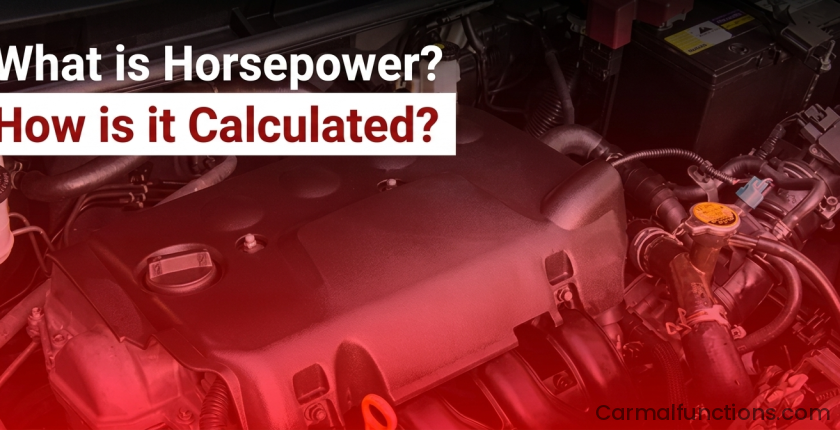
Horsepower (hp) is a fundamental unit of measurement for power, describing the rate at which work is done by an engine or motor. It quantifies how quickly an engine can perform work, influencing a vehicle’s acceleration, speed, and towing capability. This concept, initially established to compare the output of steam engines to the power of draft horses, remains crucial in automotive and industrial contexts today. You will find detailed tables and FAQs below.
- 1. What is Horsepower?
- 1.1. The Origins of Horsepower
- 1.2. Different Types of Horsepower
- 1.2.1. Indicated Horsepower (IHP)
- 1.2.2. Brake Horsepower (BHP)
- 1.2.3. Shaft Horsepower (SHP)
- 1.2.4. Metric Horsepower (PS)
- 2. How is Horsepower Calculated?
- 2.1. The Fundamental Formula
- 2.2. Calculating Brake Horsepower (BHP)
- 2.3. Understanding Torque and RPM
- 2.4. Practical Horsepower Measurement (Dynamometers)
- 3. Why is Horsepower Important?
- 3.1. Performance and Speed
- 3.2. Towing and Hauling Capacity
- 3.3. Fuel Efficiency Considerations
- 4. Horsepower vs. Torque: What’s the Difference?
- 4.1. Power Delivery Characteristics
- 4.2. Real-World Applications
- 5. Common Misconceptions About Horsepower
- 5.1. More Horsepower Always Means Faster
- 5.2. Horsepower is the Only Metric That Matters
- 6. Frequently Asked Questions (FAQs)
- 6.1. What is the SI unit for power?
- 6.2. Can horsepower change over time?
- 6.3. How does altitude affect horsepower?
- 6.4. Is higher horsepower always better?
What is Horsepower?
Horsepower is a unit defining power. It measures the rate at which work is performed, not just the raw effort involved. James Watt, a Scottish engineer, coined the term in the late 18th century. He needed a way to market his steam engines. Watt compared his machines to the familiar power of horses. He observed horses turning a mill wheel to establish a baseline. Watt defined one horsepower as the ability to lift 33,000 pounds one foot in one minute. This is equivalent to moving 550 foot-pounds per second.
In simple terms, horsepower tells you how fast an engine can apply torque over time. It is not solely about speed or strength. Instead, it focuses on how quickly work gets done. A strong machine moving slowly might produce less horsepower. A smaller machine moving quickly could produce more. Horsepower is a key indicator of an engine’s maximum running capacity. It directly relates to a vehicle’s overall performance.

The Origins of Horsepower
The story of horsepower begins with James Watt. He was a Scottish inventor, known for his steam engine improvements. Watt faced a marketing challenge. He needed to explain his engine’s power to people reliant on horses. Watt conducted experiments with strong dray horses. He measured their ability to pull loads. This led to his standardized definition of one horsepower.
Watt’s definition was practical. It was not about a horse’s peak sprinting performance. It focused on sustained, practical work. While a real horse can briefly generate more power, Watt’s figure was a reasonable average over long periods. This clever marketing metric became a global standard. It helped build the Boulton & Watt brand. The unit of power, the watt, is also named after him.
Different Types of Horsepower
The term horsepower has evolved. Different types exist to describe power at various stages. These measurements account for losses within a system. Understanding these distinctions is crucial for accurate performance analysis.
Indicated Horsepower (IHP)
Indicated horsepower (IHP) is the theoretical power produced inside an engine’s cylinders. It represents the total power generated by the engine before any losses. IHP is determined from the pressure within the cylinders. It measures the raw power available from the combustion process. This value does not account for friction or other mechanical inefficiencies.
Brake Horsepower (BHP)
Brake horsepower (BHP) measures the actual usable power. This power is available at the engine’s crankshaft. It accounts for power lost to friction within the engine itself. BHP is typically 10% or more less than indicated horsepower. It offers a more realistic view of an engine’s output. BHP is often measured using a dynamometer. This measurement is widely used in the automotive industry. It represents the true power a car delivers on the road.
Shaft Horsepower (SHP)
Shaft horsepower (SHP) is the power delivered to a propeller or turbine shaft. This term is common for turboshaft and turboprop engines. It is also used for industrial turbines and marine applications. SHP is a specific measurement for engines that transmit power through a rotating shaft. Equivalent shaft horsepower (ESHP) is sometimes used for turboprop engines. It includes power from residual jet thrust.
Metric Horsepower (PS)
Metric horsepower, often abbreviated as PS (Pferdestärke in German), is another unit of power. It is slightly different from imperial horsepower. One PS is defined as the power needed to lift 75 kilograms one meter in one second. This is equivalent to approximately 735.5 watts. Metric horsepower is common in continental Europe and many other regions. It is about 98.6% of an imperial horsepower. Kilowatts (kW) have superseded PS as the official measurement in European countries since 1972. However, manufacturers often quote both. A kilowatt (kW) equates to approximately 1.34 bhp.
How is Horsepower Calculated?
Understanding what is horsepower how is it calculated involves a key formula. Horsepower is derived from torque and engine speed. This relationship is fundamental to engine performance. The calculation allows engineers to quantify an engine’s output.
The Fundamental Formula
The most common formula for calculating horsepower in imperial units is:
Horsepower = (Torque × RPM) / 5,252
- Torque: This is the twisting force an engine produces. It is measured in pound-feet (lb-ft).
- RPM (Revolutions Per Minute): This is the speed at which the engine’s crankshaft rotates.
- 5,252: This is a constant. It converts the units of torque and RPM into horsepower. This constant arises from the definition of horsepower and the conversion between radians per second and revolutions per minute.
This formula shows that torque and horsepower are not separate entities. Horsepower is generated when torque is applied at a certain engine speed. Higher torque or higher RPMs (or both) lead to more horsepower.
Calculating Brake Horsepower (BHP)
Brake horsepower (BHP) is the most practical measurement for vehicles. It accounts for internal engine losses. BHP is measured directly using a dynamometer. This device applies a resistive load to the engine. It measures the torque produced at various RPMs. The horsepower is then calculated using the standard formula.
The process involves testing the engine under controlled conditions. The dynamometer provides real-time data. This data helps in tuning and diagnostics. BHP gives a clear picture of the power available to drive the wheels.
Understanding Torque and RPM
Torque is the rotational force an engine generates. It is what gets a car moving from a standstill. Imagine tightening a bolt; the force you apply to the wrench is torque. In an engine, torque is the “grunt” that helps a car accelerate, climb hills, or tow heavy loads.
RPM, or revolutions per minute, indicates how fast the engine spins. Horsepower combines torque with RPM. A high-torque engine at low RPM can feel strong but slow. An engine with lower torque but very high RPM can still make impressive horsepower. Torque provides the initial kick, while horsepower sustains speed. Both are crucial for overall vehicle performance.
Practical Horsepower Measurement (Dynamometers)
Horsepower is measured using a dynamometer, often called a “dyno”. Dynamometers are essential tools for engine testing and tuning. They measure an engine’s performance under controlled conditions.
There are two main types of dynamometers:
- Engine Dyno: This measures power directly at the crankshaft. The engine is removed from the vehicle for this test. It provides the most accurate measurement of the engine’s raw output.
- Chassis Dyno: This measures power at the wheels. The car is driven onto rollers that measure the force. Wheel horsepower (WHP) is always less than crank horsepower. This is due to drivetrain losses. These losses include friction from the transmission, differential, and other components. Drivetrain loss is typically between 10% and 15%. Chassis dynos are popular for tuning modified vehicles.
Dynamometers are crucial for vehicle development. They ensure engines meet performance standards. They also help in optimizing fuel efficiency. The dynamometer market is growing due to demand for precise testing. This includes testing for electric and hybrid powertrains.
Why is Horsepower Important?
Horsepower is more than just a number. It profoundly impacts a vehicle’s capabilities. It influences how a vehicle performs in various driving situations. Understanding its importance helps consumers choose the right vehicle.
Performance and Speed
Higher horsepower generally means better acceleration and higher top speeds. This is especially true for sports cars and performance vehicles. More horsepower allows a car to sustain higher speeds. It provides the power needed for quick overtaking on highways. For enthusiasts, high horsepower delivers an exhilarating driving experience. Modern hypercars, like the Koenigsegg Gemera and Rimac Nevera R, showcase extreme horsepower figures. Some exceed 2000 hp in 2026.
Towing and Hauling Capacity
Horsepower is also vital for vehicles that tow or haul heavy loads. Trucks and SUVs rely on sufficient horsepower. This ensures they can pull trailers, boats, or equipment effectively. While torque provides the initial pulling force, horsepower allows the vehicle to maintain momentum and speed with the load. For heavy-duty work, higher horsepower ratings are essential.
Fuel Efficiency Considerations
Traditionally, higher horsepower engines consumed more fuel. This is because they burn more air-fuel mixture. However, modern engineering has improved this relationship. Technologies like turbocharging, variable valve timing, and hybrid powertrains help balance power and efficiency. Many 2026 models offer strong horsepower. They also achieve respectable fuel economy ratings. The U.S. Energy Information Administration (EIA) forecasts continued fuel efficiency improvements in 2026 and 2027. This trend means vehicles can offer performance without sacrificing economy as much as in the past.
Horsepower vs. Torque: What’s the Difference?
Horsepower and torque are closely related. They are often discussed together. Yet, they represent different aspects of an engine’s output. Understanding their distinction is key to comprehending engine dynamics.
Torque is the twisting force. It is the force that causes rotation. Think of it as the raw “push” or “pull” an engine can exert. Torque gets a vehicle moving from a stop. It is crucial for initial acceleration and climbing hills. It is measured in pound-feet (lb-ft) or Newton-meters (Nm).
Horsepower is the rate at which that twisting force (torque) is applied over time. It measures how fast work is done. Horsepower determines how quickly a vehicle can sustain speed. It impacts top speed and acceleration once already moving.
Here is a simple analogy:
- Torque is like a weightlifter’s strength. It’s the maximum weight they can lift.
- Horsepower is like how quickly they can lift that weight repeatedly.
Power Delivery Characteristics
Different engine types deliver power differently.
- Petrol Engines: These often produce peak horsepower at higher RPMs. They offer an energetic and sporty feel.
- Diesel Engines: These typically generate peak torque at low to mid-RPMs. They provide strong pulling power and efficient cruising.
- Electric Cars: Electric motors deliver instant maximum horsepower and torque. This results in smooth, silent acceleration from a standstill.
The balance between horsepower and torque is critical. It determines how a vehicle feels to drive. A car with good low-end torque is easier to drive in the city or uphill. High horsepower with high RPM provides powerful acceleration on highways.
Real-World Applications
The importance of horsepower versus torque depends on the vehicle’s purpose.
- For a sports car, high horsepower contributes to thrilling speed and acceleration.
- For a pickup truck, both strong horsepower and torque are needed for towing and hauling.
- For everyday commuting, 150-250 horsepower is usually sufficient.
- Family SUVs often benefit from 250-350 horsepower for balanced performance.
Modern vehicles often aim for a harmonious balance. This ensures both quick acceleration and sustained speed. The 2026 Ford Mustang lineup, for example, offers various engine options. These cater to different needs, from fuel-efficient EcoBoost to powerful V8s.
Common Misconceptions About Horsepower
Horsepower is a widely recognized term. However, several misconceptions persist. Clarifying these helps in better understanding vehicle performance.
More Horsepower Always Means Faster
This is a common belief, but it is not always true. While horsepower contributes significantly to speed and acceleration, other factors play a large role. Vehicle weight is a major determinant. A lighter car with less horsepower can sometimes be faster than a heavier car with more horsepower. The power-to-weight ratio is crucial. Aerodynamics, gearing, and tire grip also affect overall speed. For instance, a 100 hp car weighing 2500 lbs can be fun to drive. A 300 hp car weighing 4500 lbs might feel less agile.
Horsepower is the Only Metric That Matters
Focusing solely on horsepower overlooks other vital performance metrics. Torque, as discussed, is equally important. It governs initial acceleration and pulling power. Transmission type, suspension, and braking systems also significantly impact a vehicle’s performance and handling. For electric vehicles, instant torque delivery is a major performance factor, often more noticeable than peak horsepower in daily driving.
Frequently Asked Questions (FAQs)
What is the SI unit for power?
The International System of Units (SI) unit for power is the watt (W). One mechanical horsepower is approximately 746 watts. One metric horsepower (PS) is about 735.5 watts.
Can horsepower change over time?
Yes, an engine’s horsepower can change. Factors like engine wear, poor maintenance, and environmental conditions can affect output. Regular servicing helps maintain peak power. Modern engines are designed for durability. However, performance can degrade without proper care.
How does altitude affect horsepower?
Higher altitudes generally reduce horsepower for naturally aspirated engines. This is because air density decreases with altitude. Less dense air means less oxygen for combustion. Turbocharged or supercharged engines are less affected. They can compensate for lower air pressure.
Is higher horsepower always better?
Not always. The ideal horsepower depends on your driving needs. For daily commuting, excessive horsepower might be unnecessary. It could lead to lower fuel efficiency. For towing or racing, higher horsepower is beneficial. A balanced approach, considering both horsepower and torque, is often best.
In conclusion, horsepower is a vital metric for understanding engine power and vehicle performance. It originated from James Watt’s innovative comparisons to horses. Today, it remains a cornerstone of automotive and industrial specifications. While the fundamental calculation links torque and RPM, various types of horsepower measurements exist. These provide a comprehensive view of an engine’s capabilities. Modern advancements continue to refine how horsepower is delivered and perceived. This ensures its enduring relevance in the rapidly evolving world of transportation.

Related Posts
Comments
-
Horsepower calculations always confuse me a bit. Does it really make that much difference in how a car performs?