What is Liquid Gasket? What is it used for and where is it used?
What is Liquid Gasket? What is it used for and where is it used? In the world of mechanical engineering, maintenance, and repair, sealing components effectively is paramount to ensuring longevity, preventing leaks, and maintaining operational efficiency. While traditional pre-cut gaskets have long been the standard, a modern, versatile alternative...

- 1. What is Liquid Gasket? What is it used for and where is it used?
- 2. Understanding the Fundamentals of Liquid Gasket Technology
- 2.1. The Chemistry Behind the Seal
- 2.2. Key Advantages Over Traditional Gaskets
- 3. What is Liquid Gasket Used For? Essential Applications
- 3.1. Automotive and Transportation Sealing
- 3.1.1. Engine Components
- 3.2. Industrial Machinery and Fluid Power
- 3.3. Electronics and Electrical Sealing
- 3.4. General Maintenance and Repair (MRO)
- 4. Where is Liquid Gasket Used? Industry-Specific Locations
- 4.1. In the Context of Internal Combustion Engines (ICE)
- 4.2. Aerospace and High-Performance Applications
- 4.3. Marine Environments
- 4.4. HVAC Systems
- 5. The Application Process: Ensuring a Successful Seal
- 5.1. Surface Preparation: The Foundation of Sealing
- 5.2. Dispensing Techniques
- 5.3. Curing Time and Assembly
- 6. Choosing the Right Liquid Gasket for the Job
What is Liquid Gasket? What is it used for and where is it used?
Understanding the Fundamentals of Liquid Gasket Technology
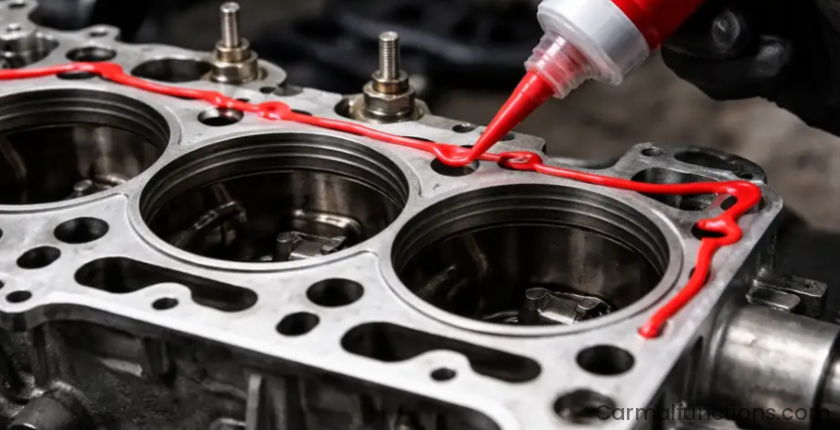
A liquid gasket, often referred to as form-in-place gasket (FIPG) or sealant, is a specialized chemical compound dispensed as a liquid or paste that cures in place to form a durable, flexible, and leak-proof seal between two mating surfaces. Unlike traditional gaskets that require precise cutting and fitting, liquid gaskets conform perfectly to the contours and imperfections of the surfaces they join, offering superior sealing capabilities in complex or irregular joint designs.

The Chemistry Behind the Seal
The performance of a liquid gasket hinges on its chemical composition, which dictates its curing mechanism, temperature resistance, and chemical compatibility. The most common types of liquid gaskets include:

- RTV Silicone (Room Temperature Vulcanizing): These are perhaps the most common. They cure when exposed to atmospheric moisture, forming a flexible rubber-like seal. They offer excellent temperature resistance and flexibility.
- Anaerobic Sealants: These cure in the absence of air (anaerobic conditions) and in the presence of metal ions. They are typically used for threadlocking and sealing rigid pipe fittings, often providing high-strength bonds.
- Polyurethane Sealants: Known for their high strength, abrasion resistance, and excellent adhesion to various substrates, though their temperature range might be narrower than silicone.
- MS Polymer (Modified Silane Polymer): These offer a balance of strength, flexibility, and environmental resistance, often curing through moisture reaction like RTV silicones but without the strong odor.
Key Advantages Over Traditional Gaskets
The shift towards utilizing liquid sealing compounds is driven by several distinct advantages they offer over their solid counterparts:
- Conformability: They fill microscopic scratches, pitting, and irregularities on machined surfaces that a pre-cut gasket cannot perfectly bridge.
- Reduced Inventory: Instead of stocking dozens of specific pre-cut gaskets for various engine or machinery components, maintenance staff can use a universal tube of liquid gasket, simplifying logistics.
- Vibration Resistance: The cured material often dampens vibration, helping to maintain the seal integrity in high-vibration environments, such as internal combustion engines.
- Customization: The bead thickness can be precisely controlled during application, allowing for optimal gap filling.
What is Liquid Gasket Used For? Essential Applications
The versatility inherent in liquid gasket technology means its applications span nearly every industry involving fluid containment or pressure sealing. Understanding what is liquid gasket used for requires looking at environments where reliability under stress is non-negotiable.
Automotive and Transportation Sealing
The automotive sector is arguably the largest consumer of FIPG technology. Modern engines rely heavily on these compounds due to high operating temperatures and the need for lightweight, complex component designs.
Engine Components
In engines, liquid gaskets replace traditional paper, cork, or rubber gaskets in areas subjected to extreme thermal cycling and aggressive fluids:
- Oil pans and transmission casings.
- Valve covers and timing chain covers.
- Water pumps and thermostat housings.
- Intake manifolds (where compatible with fuel vapors).
Industrial Machinery and Fluid Power
Heavy machinery, hydraulic systems, and industrial pumps require seals that can withstand high pressures and constant mechanical stress. Liquid sealants are crucial here for sealing:
- Flanges on pipelines carrying oils, coolants, or mild chemicals.
- Access panels on gearboxes and heavy-duty reduction units.
- Heat exchanger plate assemblies.
Electronics and Electrical Sealing
While not always used for mechanical sealing, certain silicone formulations serve as excellent potting or encapsulation compounds, protecting sensitive electronics from moisture, dust, and vibration. This ensures the long-term reliability of components housed in outdoor or harsh industrial settings.
General Maintenance and Repair (MRO)
For general maintenance, repair, and overhaul operations, liquid gaskets are indispensable for quick fixes and preventative maintenance. They are commonly used to reseal fittings, repair minor gasket tears on the spot, or create custom seals for non-standard equipment.
Where is Liquid Gasket Used? Industry-Specific Locations
Pinpointing exactly where is liquid gasket used involves examining the operational requirements of various industries. The choice of sealant depends heavily on the required temperature range, chemical exposure, and mechanical load.
In the Context of Internal Combustion Engines (ICE)
The modern engine block is a symphony of metal components bolted together. Liquid gaskets are strategically placed where a solid gasket might fail due to thermal expansion differences between materials (e.g., aluminum heads on cast iron blocks).
Table 1 details common engine locations and the typical sealant requirements:
| Component Location | Typical Temperature Range | Primary Function |
|---|---|---|
| Valve Cover | Medium (up to 300°F / 150°C) | Oil containment, low pressure |
| Oil Pan | Medium (up to 350°F / 175°C) | Oil containment, vibration damping |
| Water Pump Housing | Medium (Coolant exposure) | Coolant retention, corrosion resistance |
| Exhaust Flanges (Select Applications) | High (Up to 600°F+ / 315°C+) | Gas sealing, high-temperature stability |
Aerospace and High-Performance Applications
In aerospace, the demands on sealing materials are extreme, often involving rapid temperature fluctuations (from ground heat to high-altitude cold) and exposure to specialized fuels and hydraulic fluids. High-performance FIPGs, often specialized fluorosilicones or high-grade RTVs, are used to seal access ports, fluid reservoirs, and structural joints where weight saving and absolute leak prevention are critical.
Marine Environments
Marine engines and hull fittings face constant threats from saltwater corrosion, high humidity, and wide temperature swings. Liquid gaskets used here must possess superior resistance to moisture ingress and salt spray. They are frequently used to seal inspection hatches on boat hulls and around engine manifolds where condensation is a persistent issue.
HVAC Systems
Heating, Ventilation, and Air Conditioning (HVAC) systems rely on effective seals to maintain system efficiency, whether containing refrigerants or hot air. Sealants are applied to duct flanges, compressor housings, and evaporator units to prevent energy loss and moisture intrusion.
The Application Process: Ensuring a Successful Seal
Even the best chemical compound will fail if applied incorrectly. Proper surface preparation is the single most critical factor when using any form of liquid gasket. Knowing what is liquid gasket is only half the battle; knowing how to apply it correctly ensures its long-term success.
Surface Preparation: The Foundation of Sealing
Before application, the mating surfaces must be meticulously prepared:
- Removal of Old Material: All traces of old gasket material, sealant residue, oil, grease, and dirt must be completely removed. Scrapers and specialized chemical cleaners are often necessary.
- Degreasing: The surfaces should be wiped down with a suitable solvent (like isopropyl alcohol or acetone) to remove any residual oils that could inhibit curing or adhesion.
- Surface Finish: While liquid gaskets handle minor imperfections, excessively rough surfaces may require a thicker bead or surface priming for optimal adhesion.
Dispensing Techniques
The sealant must be applied in a continuous, uniform bead to one of the two mating surfaces (usually the larger or stationary component). The thickness should be consistent, typically ranging from 0.5 mm to 3 mm, depending on the manufacturer’s recommendation and the gap size being filled.
Curing Time and Assembly
Curing times vary dramatically based on the type of sealant and environmental conditions (temperature and humidity). Anaerobic sealants may require minutes, while RTV silicones might need 12 to 24 hours for a full cure. It is crucial to adhere strictly to the manufacturer’s specified “open time” (the time before assembly) and “full cure time” before subjecting the sealed joint to pressure or fluid flow.
Choosing the Right Liquid Gasket for the Job
Selecting the correct formulation is vital. Using a low-temperature silicone sealant on a high-temperature turbocharger housing, for instance, will lead to immediate failure. Key selection criteria include:
- Temperature Resistance: Does the sealant meet or exceed the maximum operating temperature of the joint?
- Chemical Compatibility: Will it resist degradation from the fluids it contains (e.g., engine oil, transmission fluid, brake fluid, or specific chemicals)?
- Flexibility vs. Strength: Do you need a highly flexible seal (like a valve cover) or a semi-rigid bond (like a thread locker)?
- Cure Mechanism: Does the assembly method allow for adequate time for moisture-cure (RTV) or anaerobic cure?
Liquid gaskets represent a significant technological advancement in sealing solutions, offering unparalleled flexibility, ease of use, and reliability across countless mechanical applications. From the intricate workings of a modern automobile engine to the robust demands of industrial piping, understanding what is liquid gasket, what is it used for, and where is it used allows technicians and engineers to select the appropriate chemical tool to ensure leak-free, efficient operation across virtually every industry that relies on joining two surfaces.