U0167 Vehicle Security Module Communication Problem
The U0167 Vehicle Security Module Communication Problem indicates a critical loss of communication between your vehicle’s Engine Control Module (ECM) and the Vehicle Immobilizer Control Module (VICM). This issue often prevents the engine from starting and illuminates the security warning light on your dashboard. Resolving this communication breakdown is essential...

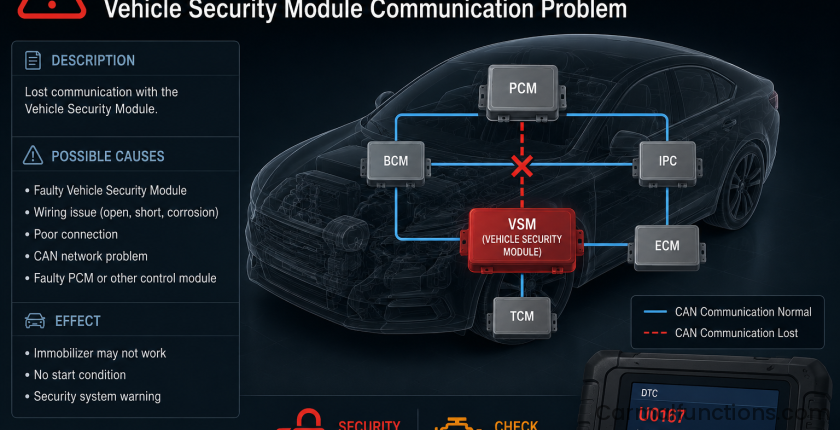
The U0167 Vehicle Security Module Communication Problem indicates a critical loss of communication between your vehicle’s Engine Control Module (ECM) and the Vehicle Immobilizer Control Module (VICM). This issue often prevents the engine from starting and illuminates the security warning light on your dashboard. Resolving this communication breakdown is essential for restoring vehicle functionality and ensuring proper anti-theft protection. You will find detailed tables and FAQs below.
- 1. What is the U0167 Vehicle Security Module Communication Problem?
- 1.1. Understanding the Vehicle Security Module
- 1.2. The Role of CAN Bus Communication
- 2.
- 3. Common Symptoms of U0167 Vehicle Security Module Communication Problem
- 3.1. Engine No-Start Condition
- 3.2. Security Light Illumination
- 3.3. Key Fob Malfunctions
- 3.4. Other Electrical Issues
- 4. Causes of U0167 Vehicle Security Module Communication Problem
- 4.1. Wiring and Connector Issues
- 4.2. Faulty Vehicle Security Module
- 4.3. CAN Bus System Problems
- 4.4. Powertrain Control Module (PCM) Issues
- 4.5. Body Control Module (BCM) Failures
- 4.6. Software Glitches or Corruptions
- 5. Diagnosing the U0167 Vehicle Security Module Communication Problem
- 5.1. Initial Diagnostic Steps
- 5.1.1. Using a Scan Tool
- 5.1.2. Visual Inspection
- 5.1.3. Continuity and Voltage Checks
- 5.2. Advanced Diagnostic Techniques
- 5.2.1. Pinpoint Testing
- 5.2.2. Oscilloscope Analysis
- 6. Solutions and Repairs for U0167 Vehicle Security Module Communication Problem
- 6.1. Wiring Repair or Replacement
- 6.2. Vehicle Security Module Replacement
- 6.3. CAN Bus System Repair
- 6.4. Module Reprogramming or Updates
- 6.5. PCM/BCM Repair or Replacement
- 7. Preventing U0167 Vehicle Security Module Communication Problem
- 7.1. Regular Vehicle Maintenance
- 7.2. Professional Diagnostic Checks
- 7.3. Avoiding Aftermarket Modifications
- 8. Frequently Asked Questions
What is the U0167 Vehicle Security Module Communication Problem?
The diagnostic trouble code (DTC) U0167 signifies that the engine’s main computer, the Engine Control Module (ECM), has lost its connection with the Vehicle Immobilizer Control Module (VICM). The immobilizer is a vital component of your car’s anti-theft system. It scans for a verified security chip inside your key. When communication fails, the ECM denies the ignition request. This action locks out the engine to prevent theft. This issue can manifest as a “Lost Communication With Vehicle Immobilizer Control Module”. The serial data link, typically the CAN bus, drops for a specific period, usually a few seconds. This problem directly impacts your vehicle’s ability to start and operate safely.
Understanding the Vehicle Security Module
The Vehicle Security Module (VSM), often referred to as the Immobilizer Control Module or Keyless Operation System-ECU (KOS-ECU), is central to your vehicle’s anti-theft capabilities. It manages key functions like the immobilizer, keyless entry, and various anti-theft features. The VSM communicates with the ignition’s transponder chip. This communication verifies if the correct key is in use. If the key signal is incorrect or missing, the system prevents the engine from starting. Modern vehicle security systems, in 2026, integrate real-time GPS tracking, smartphone alerts, and engine immobilizers. These systems offer multi-layered defense against increasingly sophisticated theft methods. Hardware-rooted trust, like Hardware Security Modules (HSMs), is becoming a baseline for new vehicle ECU platforms. This enhances ECU authentication and key management. The VSM is often integrated into the instrument cluster, steering column module, or as a standalone unit. Its proper function is non-negotiable for vehicle operation.
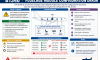
The Role of CAN Bus Communication
The Controller Area Network (CAN) bus is the primary communication network in modern vehicles. It acts like the nervous system, allowing various electronic control units (ECUs) to exchange data. This includes the ECM, VSM, and other modules. The CAN bus enables quick and reliable sharing of information. For example, it facilitates communication between your car’s brakes and engine. The CAN bus operates on a two-wire twisted pair, CAN high and CAN low. Data transmission occurs via CAN frames. However, the CAN bus has limitations in modern connected vehicles. It supports up to 1 Mbps (Classical CAN). Today’s vehicles exchange gigabytes of data. CAN bus also lacks native encryption and authentication. This makes it vulnerable to cyberattacks. Automotive Ethernet and Time-Sensitive Networking (TSN) are emerging alternatives for higher bandwidth and security. A healthy CAN bus is critical for all modules to function correctly, especially the VSM.
Common Symptoms of U0167 Vehicle Security Module Communication Problem
Identifying the symptoms of a U0167 Vehicle Security Module Communication Problem is the first step toward diagnosis. These symptoms often directly relate to the vehicle’s anti-theft system preventing normal operation. The issues can be frustrating and may leave you stranded.
Engine No-Start Condition
The most prominent symptom is a no-start condition. Your engine may crank normally but fail to fire. The starter motor engages, but no combustion occurs. This happens because the ECM cannot verify the key’s security chip. The immobilizer system physically cuts fuel or ignition. You might hear rapid clicking from the starter relay. This indicates repeated attempts to verify the key. The engine lockout is an immediate response to the communication failure. This prevents unauthorized vehicle operation.
Security Light Illumination
A steady “security” or “immobilizer” warning light on your dashboard is another common indicator. This light stays illuminated rather than flashing. It signals that the anti-theft system is active. The system perceives an issue with key verification. Other error messages may also appear on the dashboard. These warnings alert the driver to a critical system malfunction.
Key Fob Malfunctions
Issues with your key fob can also point to a U0167 Vehicle Security Module Communication Problem. A dead key fob battery or a damaged transponder chip can prevent the key from sending the correct security code. The system interprets this as a communication failure. While the key itself is not a module, its inability to communicate properly triggers the DTC. Modern digital key systems, like Ford’s 2026 system, use smartphones as keys. These systems rely on advanced encryption and authentication. Problems with these advanced systems could also lead to similar communication errors.
Other Electrical Issues
The U0167 Vehicle Security Module Communication Problem can sometimes lead to other electrical anomalies. These might include interruptions in the operation of various electronic functions. The vehicle may also enter a reduced power mode, known as “limp mode”. Intermittent start attempts are also possible. The car might start once, then refuse to start again. These varied symptoms underscore the widespread impact of a VSM communication failure.
Causes of U0167 Vehicle Security Module Communication Problem
The root causes of a U0167 Vehicle Security Module Communication Problem can vary significantly. A thorough diagnostic process is crucial to pinpoint the exact issue. Many problems stem from electrical integrity or module functionality.
Wiring and Connector Issues
Damaged wiring or loose connections are very common culprits. Corrosion in connectors, fuse boxes, or CAN bus wiring can block communication signals. Moisture from leaks or road salt can accelerate this corrosion. Bent pins, broken wires, or worn insulation can create intermittent issues. The physical layer of the CAN bus defines cable types and connections. Faulty wiring disrupts these signals. Always inspect the wiring harness connected to the VSM. Look for frayed wires, corrosion, or loose pins. These physical damages increase electrical resistance. They disrupt the communication path between the immobilizer and the ECM.
Faulty Vehicle Security Module
The VSM itself can fail internally. This can be due to water damage, component burnout from voltage spikes, or age. A dead module cannot send or receive CAN bus signals. If a scan tool cannot communicate with the VSM, it strongly indicates internal failure. In such cases, module replacement is often necessary. However, replacement modules typically require dealer-level programming. This pairs them with the vehicle’s ECM. Repairing the original VSM, when possible, can be a cost-effective solution. It ensures full compatibility with the vehicle.
CAN Bus System Problems
Broader issues within the CAN bus system can also trigger a U0167 code. The CAN bus is a complex network. Problems like a short circuit, open circuit, or excessive electrical interference (EMI) can disrupt communication. The CAN bus protocol ensures data integrity. Errors like bit errors or stuff errors indicate faults in the communication process. An overloaded network, with too many messages, can cause delays or data loss. A CAN bus problem often affects multiple modules. Diagnosing CAN bus issues requires specialized tools like an oscilloscope to analyze signal integrity.
Powertrain Control Module (PCM) Issues
The PCM (also known as ECM or ECU) is the central control unit for the engine. It constantly communicates with the VSM. If the PCM itself has an internal fault, it may fail to communicate with the VSM. This can trigger the U0167 code. Sometimes, the PCM might not communicate due to a lack of power or ground supply. It is crucial to check the power supply and ground connections to the PCM. A faulty PCM requires careful diagnosis and potentially replacement or reprogramming.
Body Control Module (BCM) Failures
The Body Control Module (BCM) manages various body electrical functions. It often acts as a gateway or intermediary for communication between different vehicle systems. In some vehicles, the VSM might communicate through the BCM to reach the PCM. A malfunction in the BCM could therefore interrupt the communication path to the VSM. This could present as a U0167 Vehicle Security Module Communication Problem. Related codes like U0184 (Lost Communication with Body Control Module) might appear alongside U0167. This indicates a broader network issue.
Software Glitches or Corruptions
Software issues within the VSM or ECM can cause communication problems. Corrupted flash memory or software bugs can lead to erratic behavior. Module reprogramming or updates can often resolve these software-related glitches. Modern vehicles rely heavily on complex software. Over-the-air (OTA) updates are becoming common. However, these systems can also introduce vulnerabilities or bugs if not properly managed. Ensuring all modules run the latest, stable software version is important.
Diagnosing the U0167 Vehicle Security Module Communication Problem
Diagnosing a U0167 Vehicle Security Module Communication Problem requires a systematic approach. It involves using diagnostic tools and performing physical inspections. A precise diagnosis avoids unnecessary part replacements.
Initial Diagnostic Steps
Begin with basic checks. First, test your car battery. Low battery voltage (below 12.0V) is a leading cause of U0167 communication failures. Control modules need a steady 12-volt power supply and a solid ground connection. Check for a blown immobilizer fuse or a corroded ground strap. These can cause the module to shut down. Perform a “hard reset” by disconnecting the battery terminals in the correct order. This can sometimes clear transient electrical glitches.
Using a Scan Tool
An OBD-II scanner is essential. Use an OEM-level scan tool to read the DTC U0167. Also, check for any related communication codes. These might include U0155 (Transmission Control Module) or U0184 (Body Control Module). A bidirectional communication test with the scan tool can request live data from the immobilizer. This confirms if the module is present on the CAN bus. Modern diagnostic tools can also test the key transponder. They confirm the key’s chip transmits the correct ID.
Visual Inspection
Visually inspect the wiring and connections. Focus on the immobilizer and engine control unit. Look for signs of wear, corrosion, or loose connections. Check the module’s pins for corrosion or bent contacts. Water intrusion can damage connectors and wiring. Inspect areas prone to moisture, like sunroof drains.
Continuity and Voltage Checks
Use a multimeter to verify power and ground at the immobilizer module. Measure voltage at the module’s power pin with the ignition on. Confirm a stable 12V supply and a solid chassis ground. Test the continuity of CAN bus wires. Check for open circuits or shorts. This helps confirm the physical integrity of the communication lines.
Advanced Diagnostic Techniques
For persistent or complex issues, advanced diagnostics may be necessary.
Pinpoint Testing
Pinpoint testing involves detailed electrical checks. This isolates the exact point of failure. It often follows manufacturer-specific diagnostic flow charts. These charts guide technicians through a series of tests. Each test eliminates potential causes. This methodical approach ensures accurate problem identification.
Oscilloscope Analysis
An oscilloscope can visualize CAN bus signals. It helps detect signal degradation or interference. This tool shows the waveform of the communication signals. Irregular patterns or voltage drops indicate a problem. An oscilloscope can identify intermittent issues that a multimeter might miss. This is especially useful for diagnosing subtle CAN bus errors.
Solutions and Repairs for U0167 Vehicle Security Module Communication Problem
Once the cause of the U0167 Vehicle Security Module Communication Problem is identified, appropriate repairs can begin. Solutions range from simple wiring fixes to complex module replacements and programming.
| Problem Identified | Repair Solution | Estimated Cost (Parts + Labor, USD) |
|---|---|---|
| Low Battery Voltage / Power/Ground Issues | Battery replacement, fuse replacement, ground strap cleaning/repair | $150 – $300 |
| Damaged Wiring / Corroded Connectors | Wiring repair or replacement, connector repair | $150 – $300 |
| Faulty Vehicle Security Module | Module replacement and programming (VIN-matched) | $800 – $1200 ($600-$900 for unit, $200-$300 labor) |
| Faulty Key / Dead Key Fob Battery | Key battery replacement, key reprogramming, or key replacement | $50 – $300 (depending on key type and programming) |
| Software Glitches / Corruptions | Module reprogramming or software update (re-flash) | $150 – $300 ($100-$200 labor, $50-$100 software access) |
| CAN Bus System Damage | Wiring repair, component replacement (if bus line components are faulty) | Varies greatly, $300 – $1000+ |
Wiring Repair or Replacement
If damaged cables or loose connections are found, repair or replace the affected components. Address any corrosion on connectors or wiring. Ensuring clean, tight connections is vital for proper electrical flow. This often resolves communication interruptions.
Vehicle Security Module Replacement
When the VSM is faulty internally, replacement is usually necessary. Install a VIN-matched replacement module. This new module must be programmed to the vehicle’s security database. This process often requires dealer-level programming tools. Repairing the original module, if possible, can be a more cost-effective option. It avoids programming complexities with new units.
CAN Bus System Repair
Repairing CAN bus system damage involves addressing the specific fault. This might include repairing shorted or open wires. It could also mean replacing faulty CAN bus components. If the problem is due to electronic interference, isolating the source is necessary. This ensures uninterrupted data flow across the network.
Module Reprogramming or Updates
If software glitches are suspected, attempt a software update or re-flash procedure. This often resolves corrupted flash memory issues. Manufacturers frequently release software updates. These updates address known bugs and improve system stability. Ensure you use the manufacturer’s specific re-flash procedure.
PCM/BCM Repair or Replacement
If the PCM or BCM is diagnosed as the root cause, repair or replacement may be needed. Similar to the VSM, these modules often require programming after replacement. Always verify power and ground to these modules first. A faulty ground or power supply can mimic a module failure.
Preventing U0167 Vehicle Security Module Communication Problem
Proactive measures can help prevent a U0167 Vehicle Security Module Communication Problem. Regular maintenance and careful attention to your vehicle’s electrical system are key.
Regular Vehicle Maintenance
Maintain your vehicle’s battery health. A weak battery is a common cause of communication failures. Ensure battery terminals are clean and tight. Regularly inspect wiring harnesses and connectors for signs of wear or corrosion. Address any water leaks promptly. Water intrusion can cause significant electrical damage. Adhere to your vehicle’s service schedule. This includes checks of electronic systems. Modern cars are increasingly complex. Their security systems integrate advanced technologies. Regular checks help identify potential issues early.
Professional Diagnostic Checks
Consider periodic professional diagnostic checks. A professional can identify potential communication issues before they escalate. They use specialized scan tools. These tools can detect intermittent problems. They can also verify module statuses. These checks are especially beneficial for older vehicles. They might lack modern “smart key” security features. Early detection prevents costly repairs and inconvenience.
Avoiding Aftermarket Modifications
Be cautious with aftermarket electronic modifications. Poorly installed devices can interfere with the CAN bus. They can introduce electronic interference. This disrupts communication signals. Always ensure any modifications are professionally installed. They should be compatible with your vehicle’s existing electronic architecture. This prevents unintended communication problems. The automotive cybersecurity market is growing rapidly. Integrating cybersecurity solutions in connected vehicles is a major opportunity. This underscores the importance of a secure and stable electronic environment.
Frequently Asked Questions
- What is the direct meaning of DTC U0167?
DTC U0167 means “Lost Communication With Vehicle Immobilizer Control Module”. It indicates the Engine Control Module (ECM) cannot communicate with the anti-theft immobilizer system. - Can I drive my car with a U0167 code?
No, typically you cannot drive your car with a U0167 code. The immobilizer system prevents the engine from starting to prevent theft. - What are the most common causes of a U0167 code?
Common causes include low battery voltage, damaged wiring or corroded connectors, a faulty Vehicle Security Module (immobilizer), or issues within the CAN bus system. - How is a U0167 code diagnosed?
Diagnosis involves using an OBD-II scan tool to read the code, visual inspection of wiring and connectors, testing power and ground to the module, and sometimes advanced tests like oscilloscope analysis. - Do I need to replace my key fob if I have a U0167 code?
Not necessarily. A weak key fob battery or a damaged transponder chip can cause the issue. Try replacing the battery first, and if needed, test or reprogram the key. - Is a U0167 repair expensive?
Repair costs vary depending on the cause. Simple fixes like battery or fuse replacement are less expensive ($150-$300). Module replacement and programming can range from $800 to $1200. - Can I fix a U0167 code myself?
Basic checks like battery voltage and fuse inspection can be done at home. Professional diagnosis is recommended. - What role does the CAN bus play in this problem?
The CAN bus is the communication network linking the ECM and the immobilizer module. Any disruption, damage, or interference on the CAN bus can prevent these modules from communicating, triggering the U0167 code.
The U0167 Vehicle Security Module Communication Problem is a significant issue that directly impacts your vehicle’s operability and security. Understanding its symptoms, potential causes, and proper diagnostic procedures is essential for any vehicle owner or technician. From ensuring stable battery voltage and inspecting wiring integrity to utilizing advanced scan tools and considering module reprogramming, a systematic approach is key to resolving this complex communication error. Modern vehicle security systems are continuously evolving, with new technologies emerging in 2026 to combat sophisticated theft methods. Prioritizing thorough diagnostics and professional repairs will safeguard your investment and restore your peace of mind on the road.