Why does the car misfire when it’s cold
A frustrating experience for any driver is when their vehicle sputters, shakes, or seems to hesitate right after a cold start. This phenomenon, known as a cold-start misfire, is a common automotive complaint that can range from a minor annoyance to a sign of a serious underlying issue. Understanding why...


- 1. Understanding the Cold Start Challenge for Engines
- 1.1. The Role of Fuel Atomization in Cold Weather
- 2. Common Culprits Behind Why Does the Car Misfire When It’s Cold
- 2.1. Ignition System Weaknesses
- 2.1.1. Worn or Fouled Spark Plugs
- 2.1.2. Faulty Ignition Coils or Wires
- 2.2. Fuel Delivery Problems
- 2.2.1. Clogged or Leaking Fuel Injectors
- 2.2.2. Low Fuel Pressure
- 2.3. Air Intake and Vacuum Leaks
- 2.3.1. Vacuum Leaks
- 2.3.2. Dirty Mass Airflow (MAF) Sensor
- 2.4. Sensor Inaccuracies and Engine Management
- 2.4.1. Faulty Engine Coolant Temperature (ECT) Sensor
- 2.4.2. Oxygen (O2) Sensor Issues
- 3. Diagnostic Steps When Asking Why Does the Car Misfire When It’s Cold
- 3.1. Using Scan Tool Data for Cold Start Analysis
- 4. Solutions and Preventative Maintenance
- 4.1. Addressing Ignition System Faults
- 4.2. Fuel System Maintenance
- 4.3. Vacuum and Air System Integrity
- 4.4. The Importance of Oil Viscosity
Understanding the Cold Start Challenge for Engines
Internal combustion engines are designed to operate most efficiently at their optimal running temperature. When ambient temperatures drop significantly, the engine faces several challenges that can disrupt the perfect stoichiometric air-fuel mixture required for clean combustion. Cold metal components contract, fuel atomization becomes less effective, and the engine management system must work harder to compensate. This initial struggle is often when the symptoms of an underlying fault become most apparent.
The Role of Fuel Atomization in Cold Weather
One of the most significant hurdles when the engine is cold is proper fuel atomization. Gasoline needs to be vaporized into a fine mist to mix thoroughly with air and ignite reliably. In cold conditions, especially when the engine block and intake manifold are chilly, fuel droplets tend to cling to the cold metal surfaces. This results in a fuel mixture that is too rich (too much liquid fuel) or too lean (not enough vaporized fuel) at the point of ignition, leading directly to a misfire.
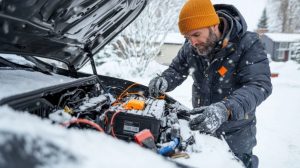
Common Culprits Behind Why Does the Car Misfire When It’s Cold
A misfire occurs when one or more cylinders fail to combust the air-fuel mixture properly. While this can happen anytime, cold weather often exacerbates existing weaknesses in the ignition, fuel, or air systems. Pinpointing the exact cause requires systematic troubleshooting.
Ignition System Weaknesses
The spark plug needs sufficient voltage and a strong spark duration to jump the gap, especially when the air-fuel mixture is dense during a cold start. Issues in the ignition system are among the most frequent reasons why does the car misfire when it’s cold.
Worn or Fouled Spark Plugs
Old or incorrectly gapped spark plugs offer a weak spark. When the engine is cold and running rich, these weak sparks struggle to ignite the dense mixture, resulting in intermittent or consistent misfires until the engine warms up and combustion pressures increase.
Faulty Ignition Coils or Wires
Coil packs provide the high voltage necessary for the spark plugs. If a coil is developing internal resistance due to age or heat cycling, it might deliver enough voltage for a warm engine but fail under the higher load demands of a cold start. Similarly, cracked or degraded spark plug wires can leak voltage to the engine block instead of delivering it to the plug tip.
Fuel Delivery Problems
The engine control unit (ECU) commands the fuel injectors to deliver a richer mixture when cold (using the choke function analogy). If the fuel system cannot deliver the correct amount or pressure, misfires will occur.
Clogged or Leaking Fuel Injectors
A partially clogged fuel injector might spray poorly, leading to inadequate fuel delivery for proper combustion. Conversely, a leaking injector, even a small drip, can over-saturate the cylinder when the car is off, causing rough running or a hard start immediately upon ignition due to excessive fuel.
Low Fuel Pressure
The fuel pump or the fuel pressure regulator might be failing. If fuel pressure drops slightly, the injectors may not deliver the required volume of fuel, leading to a lean condition, which is particularly problematic during cold starts when more fuel is needed.
Air Intake and Vacuum Leaks
The engine requires precise measurement of incoming air to calculate the necessary fuel injection. Any unmetered air entering the system after the mass airflow sensor (MAF) throws off this calculation.
Vacuum Leaks
A vacuum leak, often caused by cracked or disconnected hoses, intake manifold gaskets, or a faulty PCV valve, introduces extra air into the combustion chamber. This dilutes the mixture, leading to a lean misfire. Cold temperatures can sometimes cause rubber components to contract, temporarily worsening existing small leaks.
Dirty Mass Airflow (MAF) Sensor
A dirty MAF sensor misreads the volume of incoming air, causing the ECU to command too little fuel. This lean condition is often more pronounced during the high-demand period of a cold start.
Sensor Inaccuracies and Engine Management
Modern engines rely heavily on sensors to adjust fuel maps for varying conditions. If these sensors provide incorrect data when cold, the ECU will make the wrong adjustments.
Faulty Engine Coolant Temperature (ECT) Sensor
The ECT sensor is crucial for cold starts. It tells the ECU how cold the engine is so the system can enrich the mixture accordingly. If the ECT sensor reports an incorrect, warmer temperature, the ECU will inject too little fuel, causing a lean misfire until the engine physically warms up and corrects the discrepancy.
Oxygen (O2) Sensor Issues
While O2 sensors are usually ignored by the ECU until the engine reaches closed-loop operation (i.e., warms up), a severely malfunctioning sensor can sometimes feed bad data early on, confusing the cold-start enrichment strategy.
Diagnostic Steps When Asking Why Does the Car Misfire When It’s Cold
Diagnosing a cold-start misfire often requires recreating the conditions under which the problem occurs. Here is a systematic approach.
| Diagnostic Step | Purpose | Common Findings |
|---|---|---|
| Check Engine Light (CEL) Codes | Use an OBD-II scanner to check for stored misfire codes (P030X). | Specific cylinder misfire (P0301, P0302, etc.) or random misfire codes. |
| Inspect Spark Plugs | Remove plugs to check condition, gap, and fouling. | Oil fouling, carbon buildup, or incorrect gap indicate ignition issues. |
| Test Ignition Components | Test coil resistance or use an oscilloscope (if available) to check spark quality. | Weak spark signal or incorrect resistance readings. |
| Check for Vacuum Leaks | Use smoke machine or carburetor cleaner spray around intake gaskets while idling. | Engine RPM change when spraying cleaner indicates a leak location. |
| Measure Fuel Pressure | Attach a fuel pressure gauge to the fuel rail (if accessible). | Pressure below manufacturer specifications when cold. |
Using Scan Tool Data for Cold Start Analysis
Modern diagnostics rely heavily on real-time data. When diagnosing why does the car misfire when it’s cold, paying close attention to the ECT sensor reading immediately after a cold start is vital. If the ambient temperature is 30°F, the ECT sensor should read close to 30°F. If it reads 150°F, the ECU will not enrich the mixture enough.
Solutions and Preventative Maintenance
Once the root cause is identified, the repair is usually straightforward, though some components are more labor-intensive to replace than others.
Addressing Ignition System Faults
If spark plugs are the issue, replace them with the manufacturer-recommended type and ensure the gap is precise. If coils are weak, replace the failing unit or the entire set if they are near the end of their service life, especially on older vehicles where coil failure often becomes progressive.
Fuel System Maintenance
For fuel injector issues, try a high-quality fuel system cleaner first. If the problem persists, professional ultrasonic cleaning or replacement of the affected injector may be necessary. Fuel filter replacement should be done proactively to ensure consistent fuel flow.
Vacuum and Air System Integrity
Replacing cracked vacuum hoses and ensuring all intake manifold gaskets are sealed properly resolves air/vacuum leak misfires. Cleaning the MAF sensor with specialized MAF cleaner can restore accurate air readings, often resolving rough idling and cold start hesitation.
The Importance of Oil Viscosity
While not a direct cause of combustion failure, the viscosity of engine oil plays a role in cold starts. Thicker oils (higher first number, e.g., 10W-40 vs. 0W-20) take longer to circulate when cold. This increased resistance can slightly slow the cranking speed, making ignition harder until the oil thins out. Always use the manufacturer-specified viscosity grade.
Ultimately, when troubleshooting why does the car misfire when it’s cold, remember that the engine requires a perfect storm of timing, fuel, and air to start reliably in low temperatures. Any component that is slightly worn or degraded will show its weakness first under these stressful cold-start conditions. Regular preventative maintenance, focusing on the ignition and fuel systems, is the best defense against this common cold-weather frustration. Addressing these issues promptly not only restores smooth operation but also prevents potential long-term damage caused by prolonged running on an overly rich or lean mixture.