Tire Pressure Sensor Malfunction
A tire pressure sensor malfunction typically means your Tire Pressure Monitoring System (TPMS) is not functioning correctly, often indicated by a warning light on your dashboard. This system is crucial for alerting you to significant changes in tire pressure, which is vital for safety and vehicle performance. You will find...

- 1. Understanding the Tire Pressure Monitoring System (TPMS)
- 1.1. Types of TPMS
- 2. Common Causes of Tire Pressure Sensor Malfunction
- 2.1. Sensor Battery Issues
- 2.2. Physical Damage
- 2.3. Corrosion
- 2.4. Sensor Age and Wear
- 2.5. Environmental Factors
- 2.6. Improper Installation or Programming
- 2.7. Faulty Wiring or Module Issues
- 3. Symptoms of a Tire Pressure Sensor Malfunction
- 3.1. The TPMS Warning Light
- 3.2. Inaccurate Tire Pressure Readings
- 3.3. Frequent or False Alerts
- 3.4. Engine Check Light
- 3.5. Steering Wheel Jerking or Handling Issues
- 4. Troubleshooting and Fixing a Tire Pressure Sensor Malfunction
- 4.1. Step 1: Manually Check Tire Pressure
- 4.2. Step 2: Adjust Tire Pressure
- 4.3. Step 3: Reset the TPMS System
- 4.4. Step 4: Inspect Sensors and Valve Stems
- 4.5. Step 5: TPMS Diagnostic Scan
- 4.6. Step 6: Replace Faulty Sensors
- 5. Can You Drive with a Tire Pressure Sensor Malfunction?
- 6. TPMS Sensor Lifespan and Replacement
- 6.1. Cost of Replacement
- 7. Frequently Asked Questions (FAQs)
Understanding the Tire Pressure Monitoring System (TPMS)
The Tire Pressure Monitoring System, or TPMS, is a safety feature in modern vehicles. Its primary purpose is to monitor the air pressure inside your tires. It alerts the driver via a dashboard indicator if the pressure drops significantly below the recommended level. This system became standard on vehicles in the United States starting in 2008, following a mandate by the TREAD Act.
Types of TPMS
There are two main types of TPMS:

- Direct TPMS (dTPMS): This system uses individual pressure sensors mounted inside each tire. These sensors directly measure the air pressure and temperature within each tire and wirelessly transmit this data to the vehicle’s computer. Direct systems are generally more accurate as they provide specific readings for each tire.
- Indirect TPMS (iTPMS): This system does not use individual pressure sensors in the wheels. Instead, it relies on the vehicle’s Anti-lock Braking System (ABS) wheel speed sensors. By comparing the rotational speeds of the wheels, the system can infer if a tire is underinflated because an underinflated tire will spin at a different rate than a properly inflated one. Indirect systems are typically less expensive but require resetting after tire pressure adjustments or rotations.
Common Causes of Tire Pressure Sensor Malfunction
Several factors can lead to a tire pressure sensor malfunction:
Sensor Battery Issues
TPMS sensors are powered by small, non-replaceable batteries integrated within the sensor. These batteries typically last between 5 to 10 years. When the battery weakens or dies, the sensor can no longer transmit data, triggering a TPMS warning light. Factors like driving habits, extreme temperatures, and battery quality can affect lifespan.
Physical Damage
The sensors are located inside the tire or mounted near the valve stem. They can be damaged by road debris, potholes, curbs, or during tire changes. Such damage can compromise the sensor’s internal components or its ability to function.
Corrosion
Exposure to road salt, moisture, and other environmental elements can cause corrosion on the sensor’s metal components or electrical connections. This corrosion can interfere with the sensor’s performance and lead to a tire pressure sensor malfunction.
Sensor Age and Wear
Like any electronic component, TPMS sensors have a limited lifespan. Over time, they can wear out, leading to inaccurate readings or complete failure. The average lifespan of an OE TPMS sensor is about 7 years, though they can last from 5 to 12 years.
Environmental Factors
Extreme temperatures, both hot and cold, can affect tire pressure and, consequently, the TPMS. Cold weather can cause tire pressure to drop, potentially triggering the warning light even if there isn’t a leak. While the system might self-correct as temperatures rise, persistent fluctuations can sometimes cause issues.
Improper Installation or Programming
If TPMS sensors are not installed correctly after tire changes or rotations, they may not function properly. Similarly, issues with the vehicle’s TPMS software or programming can lead to false alerts or malfunctions.
Faulty Wiring or Module Issues
Less commonly, a malfunction in the vehicle’s wiring harness connected to the TPMS module or a failure of the TPMS module itself can cause system errors.
Symptoms of a Tire Pressure Sensor Malfunction
Recognizing the signs of a tire pressure sensor malfunction is key to addressing the issue promptly:
The TPMS Warning Light
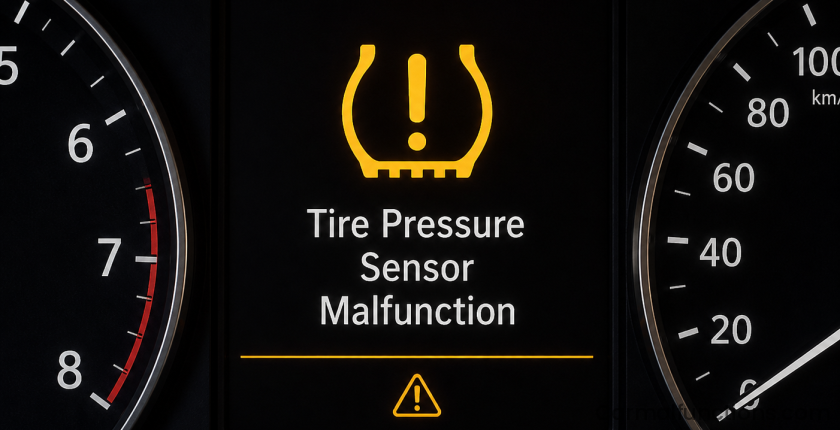
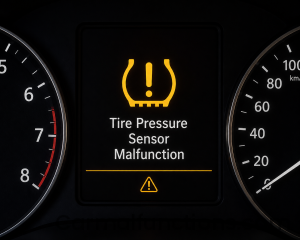
The most obvious symptom is the TPMS warning light illuminating on your dashboard. This light is typically yellow and shaped like a tire cross-section with an exclamation point inside.
- Solid Light: A solid TPMS light usually indicates that one or more tires are significantly under-inflated (25% below the recommended pressure).
- Flashing Light: If the TPMS light flashes for about 60-90 seconds upon startup and then remains illuminated, it generally signals a fault within the TPMS system itself, such as a sensor malfunction.
Inaccurate Tire Pressure Readings
If your vehicle has a direct TPMS system, the dashboard display might show incorrect tire pressure readings for one or more tires, or it might show no data at all for a specific tire.
Frequent or False Alerts
A malfunctioning sensor might send erratic data, leading to repeated false alarms about low or high tire pressure, even when the actual pressure is correct.
Engine Check Light
In some vehicles, a TPMS issue can be severe enough to trigger the engine check light.
Steering Wheel Jerking or Handling Issues
While not a direct symptom of sensor malfunction, driving with underinflated tires due to a faulty TPMS can lead to poor handling, steering wheel jerking, and reduced vehicle control.
Troubleshooting and Fixing a Tire Pressure Sensor Malfunction
Addressing a tire pressure sensor malfunction involves a systematic approach:
Step 1: Manually Check Tire Pressure
Before assuming a sensor fault, always manually check the air pressure in all your tires using a reliable tire pressure gauge. Ensure the tires are cold (checked at least three hours after driving) for the most accurate reading. Compare the readings to the manufacturer’s recommended pressure, usually found on a sticker in the driver’s door jamb or in the owner’s manual. Do not use the pressure listed on the tire sidewall, as this is the maximum pressure.
Step 2: Adjust Tire Pressure
If any tires are under- or over-inflated, add or release air until they reach the recommended pressure. Even a slight difference can sometimes keep the TPMS light on.
Step 3: Reset the TPMS System
After adjusting tire pressure, the TPMS light may turn off automatically. If it doesn’t, a manual reset might be necessary. The procedure varies by vehicle, but common methods include:
- Driving: Drive at speeds of 50 mph or higher for about 10-15 minutes. Some systems reset automatically after this drive.
- Using the Reset Button: Locate the TPMS reset button (often under the steering wheel or in the glove box). With the ignition on (but engine off), press and hold the button until the TPMS light blinks. Then, start the car.
- Infotainment System: Some vehicles allow resetting through the car’s infotainment system menu (e.g., Settings > Vehicle > TPMS Calibration).
- Battery Disconnect: In some cases, disconnecting the car battery for a few minutes can reset the system. Reconnect and start the car.
Consult your owner’s manual for the specific reset procedure for your vehicle.
Step 4: Inspect Sensors and Valve Stems
If the warning light persists after adjusting pressure and attempting a reset, inspect the valve stems for any visible damage or corrosion. Also, check for any signs of physical damage to the sensors, if visible.
Step 5: TPMS Diagnostic Scan
A professional mechanic can use a specialized TPMS diagnostic tool to scan the system. This tool can identify which sensor, if any, is malfunctioning, check battery status, and detect communication issues.
Step 6: Replace Faulty Sensors
If a diagnostic scan confirms a faulty sensor, it will need to be replaced. TPMS sensors have a finite lifespan, primarily due to their internal batteries. Replacing a single TPMS sensor can cost between $50 to $350, including parts and labor. The cost of the sensor itself typically ranges from $40 to $200. Dealerships may charge more than independent repair shops.
Can You Drive with a Tire Pressure Sensor Malfunction?
While it is technically possible to drive with a faulty TPMS sensor, it is not advisable. A malfunctioning TPMS means you won’t be alerted to dangerously low tire pressure, which can lead to:
- Reduced Safety: Under-inflated tires compromise handling, braking, and stability, increasing the risk of accidents.
- Decreased Fuel Efficiency: Improperly inflated tires increase rolling resistance, leading to higher fuel consumption.
- Accelerated Tire Wear: Incorrect pressure causes uneven wear, shortening the lifespan of your tires and leading to premature replacement costs.
- Potential for Blowouts: Severely under-inflated tires can overheat, increasing the risk of tread separation or blowouts, especially at higher speeds.
If your TPMS light is on, and you’ve confirmed your tire pressure is correct, it’s best to have the system inspected and repaired as soon as possible.
TPMS Sensor Lifespan and Replacement
TPMS sensors are designed to last for a significant period, typically between 5 to 10 years. This lifespan is largely determined by the internal battery. When the battery dies, the sensor must be replaced, as these batteries are not designed to be user-replaceable. It is often recommended to replace TPMS sensors proactively around the 5-7 year mark, especially when replacing tires, to avoid future issues.
Cost of Replacement
The cost to replace a TPMS sensor can vary. A single sensor replacement, including parts and labor, typically ranges from $50 to $350. The sensor itself might cost between $40 and $200, with labor adding $50 to $150. Dealerships generally charge more than independent repair shops. If all four sensors need replacement, the cost will naturally be higher.
Frequently Asked Questions (FAQs)
| Question | Answer |
|---|---|
| What does the TPMS light mean? | The TPMS light indicates that one or more tires are significantly under-inflated (solid light) or that there is a malfunction within the TPMS system itself (flashing light). |
| Can I ignore the TPMS light? | No, you should not ignore the TPMS light. It’s a critical safety warning that ensures your tires are properly inflated, which affects handling, fuel economy, and tire longevity. |
| How often should I check my tire pressure? | You should check your tire pressure manually at least once a month and before long trips, regardless of the TPMS warning light. |
| Why is my TPMS light on after filling my tires? | This can happen if the tires are still slightly underinflated, or if the TPMS system needs time to recalibrate. Try driving at highway speeds for 10-15 minutes, or perform a manual reset. If the light persists, a sensor may be faulty. |
| Do I need to replace TPMS sensors when getting new tires? | It’s not always necessary, but it’s a good time to inspect them. Since the tires are already off the wheels, replacing aging sensors (5-7 years old) can be cost-effective and prevent future issues. |
| How long do TPMS sensor batteries last? | TPMS sensor batteries typically last between 5 to 10 years. |
| What is the difference between direct and indirect TPMS? | Direct TPMS uses sensors inside each tire to measure pressure directly. Indirect TPMS uses ABS wheel speed sensors to infer pressure by measuring wheel rotation speed. |
A tire pressure sensor malfunction is a common issue that can arise from various factors, including sensor age, battery failure, or physical damage. Recognizing the symptoms, particularly the TPMS warning light, is the first step toward resolution. Always begin by manually checking and adjusting your tire pressure. If the issue persists, a TPMS reset might be necessary. For persistent problems, a diagnostic scan by a professional can pinpoint faulty sensors that require replacement. Addressing TPMS malfunctions promptly is crucial for maintaining vehicle safety, optimizing fuel efficiency, and extending tire life, ensuring a more secure and economical driving experience.