Why do particle filters get clogged?
Why do particle filters get clogged? A particle filter clogs primarily due to the accumulation of soot and ash that cannot be completely burned off during the regeneration process. This buildup obstructs exhaust gas flow, leading to reduced engine performance and potential damage. You will find detailed tables and FAQs...

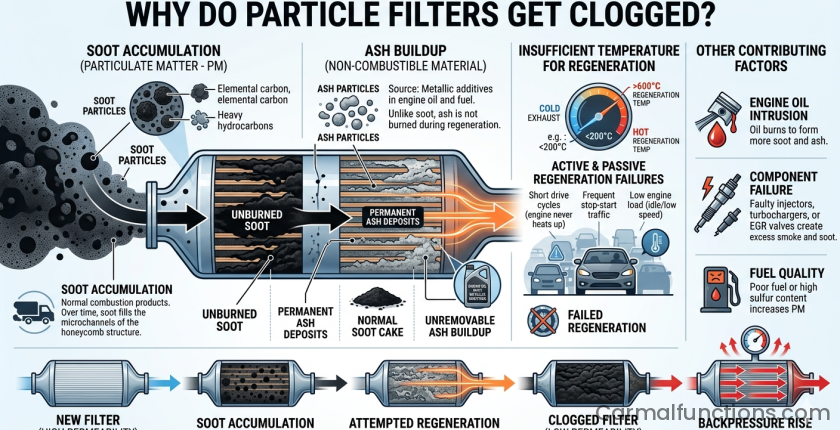
Why do particle filters get clogged? A particle filter clogs primarily due to the accumulation of soot and ash that cannot be completely burned off during the regeneration process. This buildup obstructs exhaust gas flow, leading to reduced engine performance and potential damage. You will find detailed tables and FAQs below.
- 1. Understanding Particle Filter Clogging
- 2. Why Do Particle Filters Get Clogged? The Primary Culprits
- 2.1. Frequent Short Trips and Low-Speed Driving
- 2.2. Incomplete Regeneration Cycles
- 2.3. Engine Component Failures and Malfunctions
- 2.4. Using the Wrong Engine Oil or Low-Quality Fuel
- 2.5. High Mileage and Aging Components
- 2.6. Clogged Air Filters
- 2.7. Additive Tank Issues
- 3. Symptoms of a Clogged Particle Filter
- 3.1. Dashboard Warning Lights
- 3.2. Reduced Engine Performance
- 3.3. Poor Fuel Economy
- 3.4. Excessive Exhaust Smoke and Odors
- 3.5. Starting Problems
- 3.6. Abnormal Noises or Turbocharger Issues
- 3.7. Frequent Regeneration Cycles
- 4. Consequences of Ignoring a Clogged Particle Filter
- 5. Preventing Particle Filter Clogging
- 5.1. Driving Habits
- 5.2. Maintenance Practices
- 6. Particle Filter Regeneration Explained
- 6.1. Passive Regeneration
- 6.2. Active Regeneration
- 6.3. Forced or Parked Regeneration
- 7. Particle Filter Cleaning Methods
Understanding Particle Filter Clogging
Particle filters, most commonly known as Diesel Particulate Filters (DPFs) in diesel vehicles and Gasoline Particulate Filters (GPFs) in some modern gasoline cars, are critical emission control devices. Their primary function is to trap soot and other particulate matter produced during combustion, preventing these harmful substances from entering the atmosphere. While essential for environmental protection, these filters have a finite capacity and require a self-cleaning process called regeneration to function effectively.
When the regeneration process is incomplete or hindered, soot and ash accumulate within the filter. This accumulation gradually reduces the filter’s efficiency and can lead to a complete blockage. A clogged particle filter significantly impacts a vehicle’s performance, fuel economy, and can ultimately cause severe engine damage if not addressed.

Why Do Particle Filters Get Clogged? The Primary Culprits
The clogging of particle filters is rarely due to a single factor. Instead, it’s often a combination of driving habits, engine condition, and maintenance practices. Understanding these causes is the first step toward prevention.
Frequent Short Trips and Low-Speed Driving
One of the most common reasons particle filters clog is frequent short trips and low-speed city driving. Vehicles used primarily for these types of journeys do not reach the optimal operating temperature required for passive regeneration. Passive regeneration occurs naturally when the exhaust system reaches high temperatures, allowing the trapped soot to burn off. Without sustained high speeds and temperatures, the soot accumulates, leading to a blocked filter. Extended idling also contributes to this issue, as it does not generate sufficient heat for effective regeneration.
Incomplete Regeneration Cycles
Regeneration is the process where the trapped soot is burned off at high temperatures, converting it into less harmful ash. This can happen passively during normal driving or actively when the engine management system initiates it. If regeneration cycles are frequently interrupted or fail to complete, soot will build up within the filter. This can happen if the vehicle is turned off before a regeneration cycle finishes or if there are underlying issues preventing the process from starting or completing effectively.
Engine Component Failures and Malfunctions
Various engine problems can lead to increased soot production, accelerating particle filter clogging. These include:
- Faulty Fuel Injectors: Worn or malfunctioning fuel injectors can lead to incomplete fuel combustion, producing more soot.
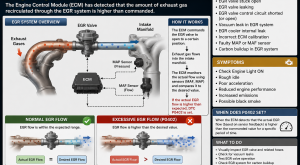
- EGR Valve Issues: A defective or sticking Exhaust Gas Recirculation (EGR) valve can disrupt the air-fuel mixture, leading to increased soot generation.
- Turbocharger Problems: A failing turbocharger can leak oil into the exhaust system. This oil residue burns and contributes to soot buildup in the DPF.
- Faulty Sensors: Sensors that monitor exhaust temperature, pressure, or flow are crucial for initiating regeneration. If these sensors fail, the regeneration process may not be triggered, allowing soot to accumulate.
- Thermostat and Glow Plug Issues: A faulty thermostat or bad glow plugs can prevent the engine from reaching its optimal operating temperature, leading to poor combustion and increased soot.
Using the Wrong Engine Oil or Low-Quality Fuel
The type of engine oil and fuel used can significantly impact particle filter health. Using engine oil with a high ash content can accelerate clogging, as ash is a non-combustible residue that accumulates in the filter. Similarly, low-quality diesel fuel may contain impurities that produce more soot or do not burn efficiently, contributing to faster filter blockage.
High Mileage and Aging Components
As vehicles accumulate mileage, engine components naturally wear down. This wear can lead to increased soot production and a less efficient regeneration process, making the particle filter more susceptible to clogging.
Clogged Air Filters
A clogged air filter restricts the amount of air entering the engine. This disrupts the air-fuel ratio, leading to incomplete combustion and, consequently, increased soot production.
Additive Tank Issues
Some diesel vehicles use a fuel additive (like Eolys) to lower the combustion temperature of soot, aiding regeneration. If the additive tank is low or empty, regeneration attempts can become unsuccessful, leading to premature blocking.
Symptoms of a Clogged Particle Filter
Recognizing the signs of a clogged particle filter early can prevent more serious and costly problems. Common symptoms include:
Dashboard Warning Lights
The most obvious indicator is a warning light on the dashboard. This is often an amber DPF warning light, but some vehicles may use the general check engine light. It typically signals excess soot or rising back pressure in the filter.
Reduced Engine Performance
A clogged filter restricts exhaust gas flow. This forces the engine to work harder, resulting in noticeable power loss, sluggish acceleration, and a delayed response when pressing the accelerator. In severe cases, the vehicle may enter “limp mode,” significantly limiting power to prevent engine damage.
Poor Fuel Economy
When the engine has to work harder due to a restricted exhaust, it consumes more fuel. This leads to decreased fuel economy, meaning more frequent visits to the gas station and higher operational costs.
Excessive Exhaust Smoke and Odors
A severely clogged filter may lead to excessive black smoke from the exhaust. A strong, burning smell from the engine or exhaust can also indicate that soot is not burning off properly.
Starting Problems
High backpressure from a blocked filter can make it difficult to start the engine. In critical cases, the engine may fail to start altogether.
Abnormal Noises or Turbocharger Issues
Increased backpressure from a clogged filter can strain the turbocharger, leading to unusual noises or even damage.
Frequent Regeneration Cycles
If the vehicle is attempting to regenerate the filter much more often than usual, it can be a sign that the filter is becoming saturated and struggling to clear itself.
Consequences of Ignoring a Clogged Particle Filter
Driving with a clogged particle filter is not advisable and can lead to several serious issues:
- Turbocharger Damage: Excessive backpressure can damage the turbocharger’s bearings and seals.
- Exhaust System Overheating: The trapped gases can cause the exhaust system to overheat.
- Engine Oil Contamination: Soot particles can contaminate the engine oil, increasing wear and reducing lubrication effectiveness.
- Catalytic Converter Damage: High exhaust temperatures can damage the catalytic converter.
- Internal Engine Damage: In severe cases, the extreme backpressure and heat can lead to significant internal engine damage.
- Costly Repairs or Replacement: A severely clogged filter may require professional cleaning or complete replacement, which can be very expensive, often costing over $1,000 to $2,000 or more.
- Failed Emissions Tests: A malfunctioning DPF will likely cause the vehicle to fail emissions tests.
Preventing Particle Filter Clogging
Preventive maintenance and mindful driving habits are key to avoiding particle filter clogging:
Driving Habits
- Regular Highway Driving: Aim for at least one longer drive (e.g., 30-45 minutes) at highway speeds weekly. This helps the exhaust system reach temperatures necessary for passive regeneration.
- Avoid Excessive Idling and Short Trips: Minimize prolonged idling and short journeys that do not allow the engine to warm up sufficiently.
Maintenance Practices
- Use High-Quality Fuel and Oil: Always use ultra-low sulfur diesel (ULSD) and manufacturer-recommended engine oil, preferably low-ash variants, to minimize soot and ash production.
- Regular Engine Maintenance: Ensure timely oil changes, air filter replacements, and check for issues with fuel injectors, EGR valves, and turbochargers. Addressing engine problems promptly reduces soot generation.
- Use DPF Cleaning Additives: Periodically using a DPF cleaning additive can help lower soot combustion temperatures and support the regeneration process.
- Professional Cleaning: If you primarily drive in urban conditions, consider scheduling professional DPF cleaning periodically, even if no warning lights appear.
Particle Filter Regeneration Explained
Regeneration is the process of burning off accumulated soot within the particle filter. There are two main types:
Passive Regeneration
This occurs automatically when the vehicle is driven under conditions that produce high exhaust temperatures (typically above 250-400°C or 480-750°F), allowing soot to oxidize. Catalysts can lower the required temperature.
Active Regeneration
Initiated by the engine control unit (ECU) when passive regeneration is insufficient, active regeneration involves injecting extra fuel into the exhaust system to raise the temperature significantly (often above 550°C or 1020°F) to burn off the soot. This process may temporarily reduce engine power and can be detected by a change in engine sound or increased fan activity.
Forced or Parked Regeneration
In some cases, a manual or parked regeneration may be necessary, often requiring a diagnostic tool. This is typically performed by a mechanic to clear a heavily clogged filter when the vehicle’s automatic systems cannot complete the process.
Particle Filter Cleaning Methods
When regeneration is no longer effective, professional cleaning methods are available:
- Chemical Cleaning: Specialized cleaning fluids or additives are applied directly to the filter or mixed with fuel to dissolve soot and facilitate its removal.
- Thermal Cleaning: Filters are heated in specialized ovens to burn off soot and ash. This is an effective method for cleaning filters without disassembly.
- Aqueous or Ultrasonic Cleaning: These methods use water or high-frequency sound waves to dislodge and remove particulate matter and ash.
- Professional DPF Cleaning Services: Many workshops offer comprehensive cleaning services using advanced equipment to ensure the filter is restored to optimal performance.
It is crucial to use approved cleaning methods, as improper techniques can damage the filter and void warranties.
In conclusion, particle filters get clogged due to a combination of factors, primarily incomplete soot burn-off during regeneration cycles. Driving habits like frequent short trips and neglecting engine maintenance are major contributors. Recognizing the symptoms such as reduced power, warning lights, and poor fuel economy is vital for timely intervention. By adopting good driving practices, using quality fluids, and performing regular maintenance, vehicle owners can significantly extend the life of their particle filters and avoid costly repairs.