How to Clear Tire Sensor Faults in 4 Steps
Experiencing a tire sensor fault can be concerning, but you can often clear tire sensor faults in 4 steps. The most common solution involves checking and adjusting tire pressure, followed by a system reset. You will find detailed tables and FAQs below. Understanding Tire Pressure Sensor Faults A tire pressure...

Experiencing a tire sensor fault can be concerning, but you can often clear tire sensor faults in 4 steps. The most common solution involves checking and adjusting tire pressure, followed by a system reset. You will find detailed tables and FAQs below.
- 1. Understanding Tire Pressure Sensor Faults
- 1.1. Common Causes of TPMS Faults
- 1.2. Symptoms of a Faulty Tire Pressure Sensor
- 2. How to Clear Tire Sensor Faults in 4 Steps
- 2.1. Step 1: Verify and Adjust Tire Pressure
- 2.2. Step 2: Reset the TPMS System
- 2.3. Step 3: Drive to Allow Recalibration
- 2.4. Step 4: Evaluate and Seek Professional Help if Needed
- 3. Alternative Reset Methods
- 3.1. Battery Disconnect Method
- 3.2. Driving Above 50 MPH
- 4. When to Seek Professional Assistance
- 5. Conclusion
Understanding Tire Pressure Sensor Faults
A tire pressure sensor fault, often indicated by a dashboard warning light, signals an issue with your vehicle’s Tire Pressure Monitoring System (TPMS). This system is crucial for safety. It alerts you to low tire pressure, preventing potential accidents and improving fuel efficiency. Ignoring these warnings can lead to tire damage and reduced control. Common causes for a TPMS fault include low battery voltage in the sensor, physical damage from road debris, extreme temperature fluctuations, corrosion, sensor age, and faulty wiring. Sometimes, the fault isn’t with the sensor itself but with the vehicle’s TPMS software, leading to system glitches.

Common Causes of TPMS Faults
- Dead or Weak Sensor Battery: TPMS sensors have internal batteries that typically last 5 to 10 years. Once depleted, the sensor stops transmitting data.
- Physical Damage: Potholes, curbs, or even improper tire installation can damage the sensors.
- Corrosion: Exposure to moisture and road salts can corrode sensor components, especially around the valve stem.
- Sensor Age: Like any component, sensors wear out over time, leading to inaccurate readings or complete failure.
- Faulty Wiring: Issues with the wiring connecting the sensors to the vehicle’s computer can cause malfunctions.
- Software Glitches: Sometimes, the problem lies with the vehicle’s TPMS software rather than the sensors themselves.
- Extreme Temperatures: Both high and low temperatures can affect sensor performance and battery life.
Symptoms of a Faulty Tire Pressure Sensor
- The TPMS warning light stays illuminated even when tires are properly inflated.
- Inaccurate or missing tire pressure readings on the dashboard display.
- The TPMS light flashes intermittently, especially during temperature changes or at highway speeds.
- Dashboard displays a “Tire Sensor Fault” message.
- The system fails to alert you to actual low tire pressure.
How to Clear Tire Sensor Faults in 4 Steps
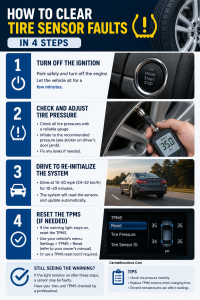
Clearing a tire sensor fault often involves a straightforward process. The most effective method usually includes checking tire pressure, resetting the system, and then verifying the fix. Here’s a breakdown of how to clear tire sensor faults in 4 steps.
Step 1: Verify and Adjust Tire Pressure
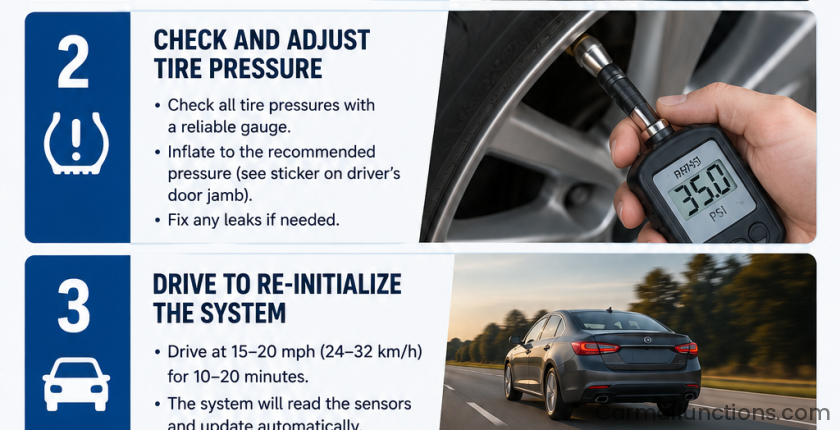
The most common reason for a TPMS warning light is simply low tire pressure. Before attempting any reset procedures, ensure all your tires, including the spare, are inflated to the manufacturer’s recommended PSI. You can find this information on a sticker located on the driver’s side doorjamb or in your vehicle’s owner’s manual. Do not rely solely on the pressure listed on the tire sidewall, as this is usually the maximum pressure the tire can hold. Use a reliable tire pressure gauge to check each tire. Adjust the pressure by adding air or releasing it as needed. Some methods suggest overinflating tires slightly (3 PSI over recommended) and then deflating them completely before reinflating to the correct pressure. This can sometimes help recalibrate the system.
Step 2: Reset the TPMS System
After confirming correct tire pressure, you’ll likely need to reset the TPMS. Many vehicles have a dedicated reset button. This button is often found under the steering wheel, in the glove compartment, or within the dashboard’s settings menu. To perform a manual reset:
- Turn the vehicle’s ignition to the “ON” position, but do not start the engine.
- Locate and press and hold the TPMS reset button. Continue holding it until the tire pressure light blinks three times, then release it.
- Start the engine. The TPMS light should turn off after a few minutes or after driving for a short period.
If your vehicle does not have a physical reset button, you might find a TPMS recalibration option within the infotainment system or dashboard menu. Navigate through your vehicle’s settings to find and initiate the TPMS calibration or reset function.
Step 3: Drive to Allow Recalibration
In many cases, the TPMS system needs a short drive to recalibrate and recognize the correct tire pressures. After performing the reset, drive your vehicle for at least 10-15 minutes at a consistent speed, typically above 30 mph or 50 mph. This allows the sensors to communicate with the vehicle’s computer and confirm the pressure readings. After your drive, turn off the vehicle and restart it. If the reset was successful, the TPMS warning light should remain off.
Step 4: Evaluate and Seek Professional Help if Needed
If the TPMS warning light persists after completing the above steps, it indicates a more significant issue than just low tire pressure. This could be due to a faulty sensor, a dead sensor battery, or a problem with the vehicle’s TPMS module. Signs that a sensor might be failing include the light staying on despite correct pressure, intermittent warnings, or incorrect PSI readings. In such cases, it is recommended to consult a professional mechanic or a specialized tire shop. Technicians use diagnostic tools to pinpoint the exact cause, which may involve replacing one or more TPMS sensors. A single TPMS sensor replacement typically costs between $50 and $150, including parts and labor.
Alternative Reset Methods
Some sources suggest alternative methods for resetting the TPMS, particularly if the standard reset button procedure doesn’t work. These can be helpful but should be approached with caution.
Battery Disconnect Method
One method involves disconnecting the vehicle’s battery. This can sometimes reset electronic systems. To try this:
- Turn off the vehicle.
- Disconnect the positive battery cable using a wrench.
- Turn the car on and honk the horn for about three seconds. This helps discharge any residual power in the system.
- Reconnect the battery cable.
- Start the vehicle and check if the TPMS light has turned off.
This method is more invasive and should only be attempted if you are comfortable working with your vehicle’s electrical system.
Driving Above 50 MPH
For some vehicles, driving at highway speeds for an extended period can trigger an automatic reset. If your vehicle doesn’t have a manual reset button or if the dashboard reset doesn’t work, driving at or above 50 mph for about 10 minutes might be sufficient to reset the sensor the next time you turn on the car.
When to Seek Professional Assistance
While many TPMS issues can be resolved with the steps outlined above, some situations require expert intervention. If the TPMS light continues to illuminate after you’ve followed all reset procedures and verified tire pressure, it’s time to visit a professional. Persistent warning lights can indicate a faulty sensor that needs replacement, issues with the TPMS control module, or even problems with the vehicle’s wiring harness. Professional technicians have specialized tools to diagnose TPMS faults accurately. They can test individual sensors, check for communication errors within the system, and perform necessary repairs or replacements. Ignoring persistent TPMS faults can compromise your safety and lead to more costly repairs down the line.
Conclusion
Addressing a tire sensor fault doesn’t have to be complicated. By following a systematic approach, you can often resolve the issue yourself. The key steps involve ensuring your tires are correctly inflated, utilizing your vehicle’s TPMS reset function, and taking the vehicle for a short drive to allow for recalibration. Understanding the common causes of TPMS faults, such as sensor age or battery depletion, helps in diagnosing persistent problems. If these simple steps don’t clear the fault, seeking professional diagnosis and repair is the next best course of action to ensure your safety and the optimal performance of your vehicle’s tire pressure monitoring system.