P0117 Engine Temperature Sensor Low Signal
The P0117 Engine Temperature Sensor Low Signal diagnostic trouble code indicates that your vehicle’s Powertrain Control Module (PCM) has detected a voltage input from the Engine Coolant Temperature (ECT) sensor that is lower than its expected operating range. This means the engine computer interprets the engine coolant as being extremely...

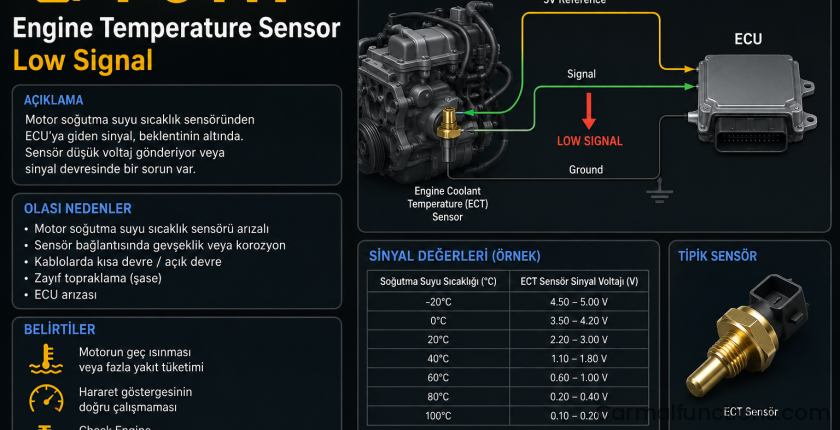
The P0117 Engine Temperature Sensor Low Signal diagnostic trouble code indicates that your vehicle’s Powertrain Control Module (PCM) has detected a voltage input from the Engine Coolant Temperature (ECT) sensor that is lower than its expected operating range. This means the engine computer interprets the engine coolant as being extremely cold, often below -40°C, even if it is not. This low signal can significantly impact engine performance and fuel efficiency. You will find detailed tables and FAQs below.
- 1. What Does the P0117 Engine Temperature Sensor Low Signal Code Mean?
- 1.1. Understanding the Engine Coolant Temperature (ECT) Sensor
- 1.2. How the PCM Interprets the Signal
- 2. Common Symptoms of P0117 Engine Temperature Sensor Low Signal
- 3. Causes of P0117 Engine Temperature Sensor Low Signal
- 3.1. Wiring and Connector Issues
- 3.2. Faulty ECT Sensor
- 3.3. PCM Malfunction (Less Common)
- 4. Diagnosing P0117 Engine Temperature Sensor Low Signal
- 4.1. Tools Needed for Diagnosis
- 4.2. Step-by-Step Diagnostic Process
- 5. How to Fix P0117 Engine Temperature Sensor Low Signal
- 5.1. Replacing the ECT Sensor
- 5.2. Repairing Wiring and Connectors
- 5.3. Addressing Other Potential Issues
- 6. Preventative Measures Against P0117 Engine Temperature Sensor Low Signal
- 7. Frequently Asked Questions (FAQs) About P0117 Engine Temperature Sensor Low Signal
- 7.1. Can I Drive with a P0117 Code?
- 7.2. What is the Cost to Fix P0117?
- 7.3. How Long Does an ECT Sensor Last?
What Does the P0117 Engine Temperature Sensor Low Signal Code Mean?
The P0117 code, officially known as “Engine Coolant Temperature (ECT) Sensor 1 Circuit Low,” signals a critical issue. It tells you that the PCM receives an abnormally low voltage reading from the ECT sensor. This low voltage typically corresponds to an extremely cold temperature reading. The ECT sensor is a thermistor. Its electrical resistance changes with temperature. As coolant temperature rises, the sensor’s resistance decreases, and the voltage signal it sends to the PCM increases. Conversely, a very low voltage suggests either an open circuit or a short to ground within the sensor or its wiring. When the PCM sees this low voltage, it defaults to a “cold engine” operating strategy. This strategy involves enriching the fuel mixture and altering ignition timing. It aims to protect the engine but reduces efficiency and performance.
Understanding the Engine Coolant Temperature (ECT) Sensor
The Engine Coolant Temperature (ECT) sensor is a vital component. It monitors the temperature of the engine coolant. This small sensor is usually a two-wire thermistor. It is typically threaded into the cylinder head or thermostat housing. The sensor’s tip directly contacts the coolant. Its primary job is to relay accurate temperature data to the PCM. This data is crucial for various engine functions. These include fuel injection, ignition timing, and cooling fan operation. Most ECT sensors use a negative temperature coefficient (NTC) thermistor. This means their electrical resistance decreases as the temperature increases. The PCM supplies a 5-volt reference voltage to the sensor. It then measures the voltage drop across the sensor. This voltage drop is converted into a temperature reading.

How the PCM Interprets the Signal
The PCM constantly monitors the ECT sensor’s voltage signal. It expects a voltage range, typically between 0.5 V (hot) and 4.5 V (cold). When the ECT sensor’s voltage drops below a calibrated threshold, the PCM registers the P0117 code. A reading below 0.2 V under any condition strongly suggests a short or sensor failure. This low voltage tells the PCM that the engine is colder than it likely is. In response, the PCM enters a “failsafe” or “limp mode”. In this mode, it enriches the air-fuel mixture. It also adjusts ignition timing and idle speed. This protective measure prevents potential engine damage. However, it leads to noticeable performance issues. The engine may consume more fuel and produce higher emissions.
Common Symptoms of P0117 Engine Temperature Sensor Low Signal
Detecting the P0117 code often involves observing several symptoms. These signs indicate that the engine’s control system is receiving incorrect temperature data. Addressing these symptoms promptly prevents further complications. Here are the common indicators:
- Check Engine Light Illumination: The most obvious symptom is the activation of the Check Engine Light (CEL) on your dashboard. This light signals a diagnostic trouble code is stored.
- Hard or Prolonged Cold Starts: The engine may crank longer than usual before starting. This happens because the PCM thinks the engine is very cold, demanding a richer fuel mixture.
- Rough Idle or Hesitation: The engine might run roughly or hesitate, especially when cold. The idle may smooth out as the engine warms up.
- Reduced Fuel Economy: A significant drop in miles-per-gallon (5-10%) is common. The PCM enriches the fuel mixture based on the false “cold” reading.
- Engine Temperature Gauge Issues: The temperature gauge might show erratic readings. It could be stuck at a high reading or fluctuate unusually.
- Engine Overheating: In some cases, the engine might actually overheat. A faulty sensor can fail to trigger the cooling fans. This can lead to severe engine damage.
- Engine Cooling Fans Running Constantly: The cooling fans may run continuously. This is another failsafe mechanism, activated due to the PCM’s incorrect temperature perception.
- Black Exhaust Smoke: Excess fuel in the combustion chamber can lead to black smoke from the exhaust. This indicates an overly rich fuel mixture.
- Failed Emissions Test: Increased emissions due to rich fuel conditions can cause a vehicle to fail an emissions test.
Causes of P0117 Engine Temperature Sensor Low Signal
The P0117 code can stem from various issues. These problems affect the ECT sensor circuit. Understanding the root cause is crucial for an accurate repair. Here are the most frequent causes:
- Faulty Engine Coolant Temperature (ECT) Sensor: This is the most common culprit. The sensor itself can fail internally. It then sends an inaccurate low voltage signal.
- Damaged or Corroded Wiring: Issues with the wiring harness are frequent. Chafed wires, burnt insulation, or a short to ground can disrupt the signal.
- Corroded or Loose Connectors: Corrosion on the sensor pins or a loose connector can cause a low-resistance path to ground. This pulls the sensor voltage down.
- Open Circuit in Sensor Wiring: An open circuit can also cause the PCM to read a default low value. This means the signal cannot complete its path.
- Air Pockets in the Cooling System: Trapped air instead of coolant can cause the sensor to read incorrectly. This is especially true after recent cooling system work.
- Low or Contaminated Coolant: Insufficient coolant levels or old, dirty coolant can affect the sensor’s ability to measure temperature accurately.
- PCM (Powertrain Control Module) Malfunction: While less common, a faulty PCM can misinterpret the sensor signal. Internal circuitry failure or software issues can cause this.
Wiring and Connector Issues
Wiring problems are a significant cause of the P0117 Engine Temperature Sensor Low Signal. The ECT sensor wiring harness is exposed to engine heat and vibrations. This can lead to wear and tear over time. Look for frayed wires, burnt insulation, or signs of rodent damage. A short to ground in the wiring can pull the sensor’s signal voltage down to zero. Corroded connector pins also create high resistance. This impedes the proper flow of the signal. Always inspect the connector for bent pins or contamination. A simple wiggle test of the connector can sometimes reveal a loose connection.
Faulty ECT Sensor
An ECT sensor is a consumable part. It can simply wear out over time. Internal electrical failures prevent it from accurately measuring coolant temperature. This results in a consistently low voltage signal. Even if the wiring is perfect, a bad sensor will send incorrect data. Testing the sensor’s resistance at different temperatures is crucial. This helps confirm if the sensor is operating within specifications. A sensor that reads too hot or too cold compared to the actual engine temperature is likely faulty.
PCM Malfunction (Less Common)
A faulty PCM is a rare cause for the P0117 code. However, it is a possibility. The PCM’s internal circuitry might fail to process the ECT sensor data correctly. This could involve issues with the analog front-end that amplifies the sensor signal. Cracked solder joints or damaged operational amplifiers can lead to a low voltage reading. If all other potential causes are ruled out, PCM diagnosis becomes necessary. Replacing or reprogramming the control module might be required.
Diagnosing P0117 Engine Temperature Sensor Low Signal
Proper diagnosis of the P0117 code requires a systematic approach. It involves using specific tools and following clear steps. Rushing to replace parts without proper testing often leads to wasted time and money.
Tools Needed for Diagnosis
Gathering the right tools before you start is essential. These tools help you accurately pinpoint the problem:
- OBD-II Scan Tool: This tool reads diagnostic trouble codes and views live data. It shows the ECT sensor’s voltage and temperature readings in real-time.
- Digital Multimeter (DMM): A multimeter measures resistance (Ohms), voltage (Volts), and continuity. It is indispensable for testing the sensor and wiring.
- Service Manual: The vehicle-specific service manual provides critical information. It includes wiring diagrams, sensor location, and expected resistance/voltage values.
- Thermometer: A separate thermometer can verify the actual coolant temperature. This helps compare it with the sensor’s reported temperature.
- Electrical Contact Cleaner: Used for cleaning corroded connector pins.
- Basic Hand Tools: Wrenches, screwdrivers, and pliers for accessing the sensor.
Step-by-Step Diagnostic Process
Follow these steps carefully to diagnose the P0117 Engine Temperature Sensor Low Signal:
- Scan for Codes and Freeze Frame Data:
- Connect your OBD-II scanner.
- Record all stored codes and freeze frame data. Freeze frame data shows engine conditions when the code was set.
- Note the ECT sensor reading. Compare it to the Intake Air Temperature (IAT) sensor reading if available. They should be similar on a cold engine.
- Clear the code. Then retest the vehicle to see if the code returns immediately.
- Visual Inspection:
- Locate the ECT sensor. It is usually on the thermostat housing or cylinder head.
- Inspect the sensor’s wiring harness and connector. Look for fraying, cuts, burnt insulation, or signs of rodent damage.
- Check the connector for corrosion, bent pins, or loose connections. Clean any corrosion with electrical contact cleaner.
- Ensure the coolant level is correct and clean. Low coolant or air pockets can cause false readings.
- Multimeter Testing (Key On, Engine Off – KOEO):
- Test Sensor Voltage: Reconnect the wiring harness. Turn the ignition ON (engine OFF). Back-probe the ECT signal wire with the positive multimeter lead. Connect the negative lead to a good chassis ground. Expect a voltage between 0.5V and 4.5V. A reading below 0.2V indicates a short or sensor failure.
- Test Sensor Resistance (Sensor Disconnected): Disconnect the ECT sensor’s electrical connector. Set your multimeter to measure resistance (Ohms). Place the probes on the sensor terminals. Compare the reading to the manufacturer’s specifications for the current ambient temperature. As temperature increases, resistance should decrease (for NTC sensors).
- Test Wiring Continuity and Short to Ground: With the sensor disconnected, test for continuity in the signal and ground wires back to the PCM. Check for any shorts to ground by placing one probe on the signal wire and the other on a known good ground. There should be no continuity.
Here is a generic example of ECT sensor resistance values. Always refer to your vehicle’s specific service manual for exact figures.
| Coolant Temperature (°C) | Resistance (Ohms) | Voltage (Approx. 5V Ref) |
|---|---|---|
| -20 | 14,000 – 16,000 | 4.5 – 4.8V |
| 0 | 5,000 – 6,000 | 3.8 – 4.2V |
| 20 (Room Temp) | 2,000 – 3,000 | 2.0 – 3.0V |
| 40 | 900 – 1,200 | 1.0 – 1.8V |
| 80 | 250 – 350 | 0.5 – 0.8V |
| 100 | 150 – 200 | 0.2 – 0.5V |
Note: These values are illustrative. Actual specifications vary by vehicle manufacturer and sensor type.
How to Fix P0117 Engine Temperature Sensor Low Signal
Once you have accurately diagnosed the cause of the P0117 code, you can proceed with the repair. The fix depends entirely on the identified problem.
Replacing the ECT Sensor
If your diagnosis points to a faulty ECT sensor, replacement is the most direct solution.
- Locate the Sensor: Identify the specific ECT sensor that is faulty. Some vehicles have multiple sensors.
- Drain Coolant (if necessary): If the sensor is located low on the engine or radiator, you may need to drain some coolant. Sensors on top of the engine often do not require draining.
- Disconnect and Remove: Disconnect the electrical connector. Use an appropriate wrench to unscrew the old sensor.
- Install New Sensor: Apply a small amount of thread sealant to the new sensor threads if recommended. Screw in the new sensor by hand to avoid cross-threading. Tighten it to specifications.
- Reconnect and Refill: Reconnect the electrical connector. Refill any drained coolant. Bleed the cooling system to remove air pockets.
- Clear Codes and Test Drive: Clear the P0117 code with your scan tool. Take the vehicle for a test drive. Monitor live data to confirm the issue is resolved.
Repairing Wiring and Connectors
If the problem is with the wiring or connectors, focus on repairing these components.
- Identify Damage: Pinpoint the exact location of the damaged wiring or corroded connector.
- Repair Wiring: For frayed or cut wires, use appropriate soldering and heat-shrink tubing for a secure, weather-resistant repair. Do not use electrical tape for permanent repairs.
- Clean or Replace Connectors: If the connector pins are corroded, clean them thoroughly with electrical contact cleaner. If the connector body is cracked or pins are severely damaged, replace the entire connector. Ensure a solid ground strap to the chassis.
- Secure Wiring: Route and secure the repaired wiring to prevent future damage from heat or vibration.
- Clear Codes and Test Drive: Clear the P0117 code. Test drive the vehicle to verify the repair.
Addressing Other Potential Issues
- Air Pockets: If air pockets are suspected, thoroughly bleed the cooling system. Consult your vehicle’s service manual for the correct bleeding procedure.
- Low/Contaminated Coolant: If the coolant level is low, top it off. If it’s old or dirty, perform a coolant flush and refill with the correct type of coolant for your vehicle.
- PCM Replacement/Reprogramming: If all other diagnostics confirm a PCM fault, replacement or reprogramming is needed. This is typically a job for a qualified technician or dealership. Ensure any replacement PCM is VIN-matched and programmed correctly.
Preventative Measures Against P0117 Engine Temperature Sensor Low Signal
Preventative maintenance helps avoid the P0117 code and prolongs engine health. Simple steps can make a big difference.
- Regular Wiring Inspection: Inspect ECT sensor wiring during routine maintenance. Look for wear, moisture, or corrosion.
- Use OEM Coolant: Always use the manufacturer-recommended coolant. Proper corrosion inhibitors protect sensors and wiring.
- Maintain Coolant Level: Ensure the coolant level is always at the correct mark. Low coolant can cause sensor overheating.
- Clean Cooling System: Periodically clean the thermostat housing area. This prevents sludge buildup around the sensor.
- Diagnostic Scans: Run a diagnostic scan after any major service. This verifies the ECT circuit is within specification.
- Proper Bleeding: Always bleed the cooling system correctly after any service. This removes air pockets that can affect sensor readings.
Frequently Asked Questions (FAQs) About P0117 Engine Temperature Sensor Low Signal
Can I Drive with a P0117 Code?
While you can technically drive with a P0117 code, it is not recommended. The engine will operate in a protective “cold-engine” mode. This reduces power and fuel efficiency significantly. You may experience poor fuel economy and increased emissions. Prolonged driving can lead to additional codes or even engine damage. Addressing the code promptly is crucial for your vehicle’s health and performance.
What is the Cost to Fix P0117?
The cost to fix a P0117 code varies widely. It depends on the root cause and your vehicle’s make and model.
- ECT Sensor Replacement: An ECT sensor itself is relatively inexpensive, often ranging from $20 to $50. Labor costs typically add $50 to $150, making the total $70-$200.
- Wiring/Connector Repair: This can range from $50 to $250, depending on the extent of the damage.
- Coolant Flush/Refill: If low or dirty coolant is the issue, a flush and refill can cost $100-$200.
- PCM Replacement: This is the most expensive repair, costing $600-$900 for the part and an additional $200-$300 for labor and programming.
Always get a proper diagnosis to avoid unnecessary expenses.
How Long Does an ECT Sensor Last?
An ECT sensor typically lasts for many years and tens of thousands of miles. However, like any electronic component, it can fail due to age, exposure to extreme temperatures, or corrosion. Regular maintenance and using the correct coolant can help extend its lifespan. There is no fixed replacement interval; sensors are generally replaced when they malfunction.
The P0117 Engine Temperature Sensor Low Signal code is a clear indicator that your engine’s control system is receiving incorrect temperature data. This can severely impact your vehicle’s performance, fuel efficiency, and long-term reliability. Understanding the meaning of this code, recognizing its symptoms, and knowing the potential causes are the first steps toward an effective resolution. A thorough diagnostic process, utilizing an OBD-II scanner and a multimeter, is essential to accurately pinpoint the underlying problem. Whether the issue is a faulty sensor, damaged wiring, or a less common PCM malfunction, addressing it promptly with the correct repair ensures your engine operates optimally and avoids more significant damage down the road. Regular maintenance practices, such as inspecting wiring and maintaining proper coolant levels, can also help prevent this code from appearing.