P0402 Excessive EGR Flow
P0402 Excessive EGR Flow indicates a critical engine issue. The powertrain control module (PCM) detects too much exhaust gas entering the engine’s intake manifold. This problem can severely impact engine performance and emissions. You will find detailed tables and FAQs below. What is P0402 Excessive EGR Flow? DTC P0402 stands...

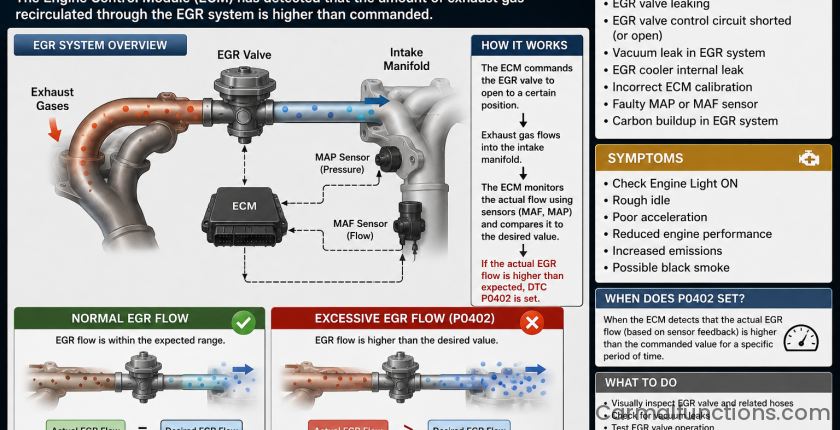
P0402 Excessive EGR Flow indicates a critical engine issue. The powertrain control module (PCM) detects too much exhaust gas entering the engine’s intake manifold. This problem can severely impact engine performance and emissions. You will find detailed tables and FAQs below.
- 1. What is P0402 Excessive EGR Flow?
- 1.1. EGR System Basics
- 1.2. Understanding P0402
- 1.3. Why Excessive Flow is a Problem
- 2. Common Symptoms of P0402 Excessive EGR Flow
- 2.1. Check Engine Light
- 2.2. Engine Performance Issues
- 2.3. Other Indicators
- 3. Key Causes of P0402 Excessive EGR Flow
- 3.1. Faulty EGR Valve
- 3.2. DPFE Sensor Malfunction
- 3.3. EGR Control Solenoid/Vacuum Leaks
- 3.4. Carbon Buildup
- 3.5. PCM Software Issues
- 4. Diagnosing P0402 Excessive EGR Flow
- 4.1. Initial Steps
- 4.2. Using a Scan Tool
- 4.3. Component-Specific Tests
- 4.4. Professional Diagnostic Techniques
- 5. Effective Solutions for P0402 Excessive EGR Flow
- 5.1. EGR Valve Repair or Replacement
- 5.2. DPFE Sensor Replacement
- 5.3. Addressing Control Circuit Issues
- 5.4. Software Updates
- 5.5. Cleaning EGR Components
- 6. Preventing P0402 Excessive EGR Flow
- 6.1. Regular Maintenance
- 6.2. Fuel Quality and Driving Habits
- 7. Frequently Asked Questions (FAQs) about P0402 Excessive EGR Flow
- 7.1. Is P0402 a serious problem?
- 7.2. Can I drive with P0402?
- 7.3. How much does it cost to fix P0402?
- 7.4. Why does P0402 keep coming back?
What is P0402 Excessive EGR Flow?
DTC P0402 stands for “Exhaust Gas Recirculation ‘A’ Flow Excessive Detected”. The engine computer identifies an abnormal amount of exhaust gas. This gas flows into the intake manifold. This happens when it should be limited.
EGR System Basics
Modern vehicles use an Exhaust Gas Recirculation (EGR) system. It reduces harmful nitrogen oxide (NOx) emissions. This system recirculates a small portion of exhaust gases. It sends them back into the engine’s combustion chambers. This process lowers combustion temperatures. Lower temperatures decrease NOx formation significantly. The EGR valve controls this flow.

Understanding P0402
The PCM constantly monitors EGR system operation. It uses various sensors for this task. The P0402 code triggers when flow exceeds expected parameters. This indicates an uncontrolled or excessive recirculation. It happens at times when minimal or no EGR flow is desired.
Why Excessive Flow is a Problem
Excessive EGR flow disrupts the crucial air-fuel mixture. The engine receives too much inert exhaust gas. This displaces necessary oxygen for combustion. This imbalance causes noticeable drivability problems. It leads to poor engine performance and increased emissions. It can also contribute to further engine damage over time.
Common Symptoms of P0402 Excessive EGR Flow
Drivers often notice specific symptoms. These signs point to an excessive EGR flow issue. Recognizing them early is very important. It helps prevent more severe problems.
Check Engine Light
The illuminated check engine light is the most common indicator. The PCM stores the P0402 code. It then activates this warning light.
Engine Performance Issues
Excessive EGR flow directly impacts engine operation. Symptoms include a rough or unstable idle. The engine may stall, especially at idle or low speeds. Drivers might experience reduced engine power or poor acceleration. Engine hesitation or surging can also occur. In some cases, the engine may even fail to start.
Other Indicators
Some vehicles may show additional signs. Engine knocking or pinging (detonation) can happen. Increased fuel consumption is also possible. Diesel engines might produce black smoke. These issues indicate improper combustion. They highlight the need for prompt diagnosis.
Here is a table summarizing common symptoms:
| Symptom | Description |
|---|---|
| Check Engine Light | The Malfunction Indicator Lamp (MIL) illuminates. |
| Rough/Unstable Idle | Engine runs unevenly, especially when stopped. |
| Engine Stalling | Engine shuts off unexpectedly, often at idle. |
| Reduced Power | Noticeable decrease in acceleration and overall performance. |
| Engine Knocking/Pinging | Unusual metallic sounds from the engine. |
| Increased Fuel Consumption | Vehicle uses more fuel than usual. |
Key Causes of P0402 Excessive EGR Flow
Several components within the EGR system can malfunction. This leads to the P0402 code. Understanding these causes helps in accurate diagnosis.
Faulty EGR Valve
A failing or sticking EGR valve is a very common cause. If the valve gets stuck open, it allows constant exhaust gas flow. This happens even when it should be closed. Carbon buildup often causes this sticking. This is especially true in diesel engines.
DPFE Sensor Malfunction
The Differential Pressure Feedback EGR (DPFE) sensor monitors exhaust gas flow. It sends signals to the PCM. A faulty DPFE sensor can send incorrect readings. It might report excessive flow even if the actual flow is normal. This is a common issue in Ford vehicles. The sensor measures pressure differences across the EGR valve. Heat and moisture in exhaust gases can corrode the sensor.
EGR Control Solenoid/Vacuum Leaks
Many EGR valves operate with vacuum. A faulty EGR vacuum solenoid can apply too much vacuum. This forces the valve open excessively. Vacuum leaks in connected lines also cause uncontrolled EGR valve operation. A malfunctioning control solenoid might fail to regulate the valve properly.
Carbon Buildup
Carbon deposits are a primary culprit. They accumulate in the EGR valve and passages. This buildup prevents proper valve closure. It can also clog EGR ports or lines. This disruption leads to unregulated or excessive flow. Carbon buildup is more prevalent in high-mileage vehicles.
PCM Software Issues
In some modern vehicles, PCM software anomalies can trigger P0402. Diagnostic parameters might be overly sensitive. This causes incorrect code detection. Software updates from the manufacturer can resolve these issues. For instance, certain 2020-2025 GMC Sierra 1500 3.0L Duramax models often experience this.
Here is a table detailing the common causes:
| Cause | Description | Probability (General) |
|---|---|---|
| Stuck Open EGR Valve | Carbon buildup or mechanical failure prevents valve closure. | High (60%) |
| Faulty DPFE Sensor | Sensor sends incorrect flow readings to the PCM. | Medium (15%) |
| EGR Vacuum Solenoid Issue | Solenoid applies excessive vacuum or fails to regulate the valve. | Medium (25%) |
| Clogged EGR Passages | Carbon deposits block the passages, causing backflow. | Medium |
| PCM Software Anomaly | Overly sensitive software triggers the code incorrectly. | Low (but high for specific models like Duramax) |
| Wiring Problems | Damaged wires or poor electrical connections in the control circuit. | Low |
Diagnosing P0402 Excessive EGR Flow
Accurate diagnosis is crucial. It ensures correct repairs. A systematic approach helps pinpoint the exact cause.
Initial Steps
First, confirm the P0402 code with an OBD-II scanner. Check for any related codes. Visual inspection is also very important. Look for damaged wiring or vacuum lines. Inspect the EGR valve for obvious issues.
Using a Scan Tool
An advanced scan tool provides valuable data. It monitors EGR commanded versus actual position or flow. This comparison helps identify discrepancies. You can also command the EGR valve closed with the tool. Observe if the engine idle smooths out. This confirms excessive EGR flow.
Component-Specific Tests
Testing individual components is essential. For vacuum-type EGR systems, perform a vacuum test. Check if the valve diaphragm holds vacuum. Ensure it is not stuck open. Test the DPFE sensor voltage. Compare readings to manufacturer specifications. A multimeter can measure output voltage. Typically, it’s 0.4–0.8V at idle, rising to ~2.5V under acceleration. Test the EGR control solenoid. Apply 12V directly to its terminals. Listen for an audible click. No click means a faulty solenoid.
Professional Diagnostic Techniques
Mechanics often use smoke tests. These reveal hidden vacuum leaks. They also perform comprehensive electrical checks. This ensures all circuits are sound. Some specific vehicles, like the 3.0L Duramax, often require checking Technical Service Bulletins (TSBs). A software reflash may be the primary fix.
Effective Solutions for P0402 Excessive EGR Flow
Fixing the P0402 code depends on the identified underlying cause. Several common repair paths exist. They address various component failures.
EGR Valve Repair or Replacement
If carbon buildup causes the EGR valve to stick, cleaning is often the first step. Disassemble the valve. Soak it in a carb cleaner. Gently use a wire brush to remove deposits. If cleaning does not resolve the issue, or if the valve is mechanically damaged, replacement becomes necessary. New gaskets are essential during reinstallation.
DPFE Sensor Replacement
If diagnostic tests confirm a faulty DPFE sensor, replace it. This is a common fix, especially for Ford vehicles. Ensure proper wiring connections after replacement. Refer to your vehicle’s service manual for specific procedures.
Addressing Control Circuit Issues
Repair damaged wiring or poor electrical connections. Replace a faulty EGR vacuum solenoid. Repair any vacuum leaks by sealing or replacing damaged lines. These steps restore proper control to the EGR valve.
Software Updates
For vehicles with PCM software issues, a manufacturer-specific software update is crucial. Dealerships typically perform these updates. This can be a no-cost fix under warranty for some models. Always check for TSBs related to your vehicle’s make and model.
Cleaning EGR Components
Beyond the valve, cleaning EGR ports and lines is vital. Carbon deposits can clog these passages. This prevents proper flow. The EGR cooler also requires cleaning. Neglecting the cooler can lead to thousands in repair costs. Use EGR-specific cleaners for best results.
Preventing P0402 Excessive EGR Flow
Proactive maintenance can prevent the P0402 code. It keeps the EGR system functioning correctly. This saves time and money in the long run.
Regular Maintenance
Integrate EGR checks into routine oil changes. Inspect the EGR valve and passages periodically. Clean them to remove carbon buildup. Recommended cleaning intervals are every 30,000-50,000 miles for normal driving. For severe conditions, clean every 20,000-30,000 miles. Annually clean high-mileage vehicles.
Fuel Quality and Driving Habits
Use high-quality fuel. This minimizes carbon deposits significantly. Avoid excessive short-distance driving. Short trips do not allow the engine to reach optimal operating temperatures. This promotes carbon accumulation. Weekly highway drives at sustained RPM can help prevent fouling.
Frequently Asked Questions (FAQs) about P0402 Excessive EGR Flow
Is P0402 a serious problem?
Yes, P0402 is a serious problem. It is not just an emissions-related code. Excessive EGR flow causes rough idle, stalling, and poor engine performance. Long-term neglect degrades engine performance. It increases fuel consumption and emissions. It can even damage engine components.
Can I drive with P0402?
Driving may be possible for short trips. However, it is not recommended for long distances. Continued operation can worsen drivability issues. It may cause frequent stalling or significant power loss. Stop driving immediately if you experience these severe symptoms.
How much does it cost to fix P0402?
Repair costs vary. DIY fixes can range from $50-$200. Professional repairs typically cost $150-$500. EGR valve replacement costs $200 to $600 (parts + labor). Sensor replacement is usually $50 to $200. Software updates might cost $100 to $250 at a dealer. Cleaning often saves owners around $400 compared to replacement.
Why does P0402 keep coming back?
The code often returns if the root cause was not fully addressed. This happens if only the EGR valve was cleaned but passages remained clogged. An overlooked faulty EGR solenoid or DPFE sensor can also cause recurrence. Ensure a thorough diagnosis and complete repair of all affected components.
The P0402 Excessive EGR Flow code demands your immediate attention. It signals an imbalance in your engine’s critical emissions system. Ignoring this diagnostic trouble code can lead to significant drivability problems. It also causes increased fuel consumption and potential long-term engine damage. Timely and accurate diagnosis is paramount. It helps identify the specific component causing the excessive flow. Whether it is a stuck EGR valve, a faulty DPFE sensor, or a software anomaly, prompt repair is essential. Regular maintenance, including EGR system cleaning and using quality fuel, helps prevent this code from appearing. Protect your vehicle’s performance and longevity by addressing P0402 effectively.