P0303 3rd Cylinder Ignition Problem
Here is the complete, professionally formatted translation of the diagnostic guide into English, optimized for automotive technical accuracy and scannability: P0303 3rd Cylinder Misfire Detected: Comprehensive Guide The P0303 diagnostic trouble code (DTC) indicates a misfire condition in the third cylinder of your engine. This fault causes erratic engine operation,...

- 1. P0303 3rd Cylinder Misfire Detected: Comprehensive Guide
- 1.1. What Does P0303 3rd Cylinder Misfire Mean?
- 1.2. Decoding Misfire Trouble Codes
- 1.3. Why Specifically Cylinder 3?
- 2. Symptoms of DTC P0303
- 2.1. 1. Engine Performance Degradation
- 2.2. 2. Warning Indicators
- 3. Primary Causes of a Cylinder 3 Misfire
- 3.1. 1. Ignition System Component Failures
- 3.2. 2. Fuel System Anomalies
- 3.3. 3. Air Induction and Vacuum Leaks
- 3.4. 4. Engine Mechanical Issues
- 3.5. 5. Wiring and ECM Glitches
- 4. Diagnostic Process for DTC P0303
- 4.1. Recommended Diagnostic Arsenal
- 4.2. Step-by-Step Troubleshooting Routine
- 4.2.1. 1. Scan and Analyze Live Data
- 4.2.2. 2. Execute the Component Swap Test
- 4.2.3. 3. Test the Fuel Injector
- 4.2.4. 4. Check for Intake Vacuum Leaks
- 4.2.5. 5. Perform a Mechanical Compression Test
- 5. Repair and Cost Considerations
- 5.1. Estimated Repair Costs
- 6. Preventive Maintenance Protocols
- 7. Frequently Asked Questions (FAQ)
- 7.1. Conclusion
Here is the complete, professionally formatted translation of the diagnostic guide into English, optimized for automotive technical accuracy and scannability:
P0303 3rd Cylinder Misfire Detected: Comprehensive Guide
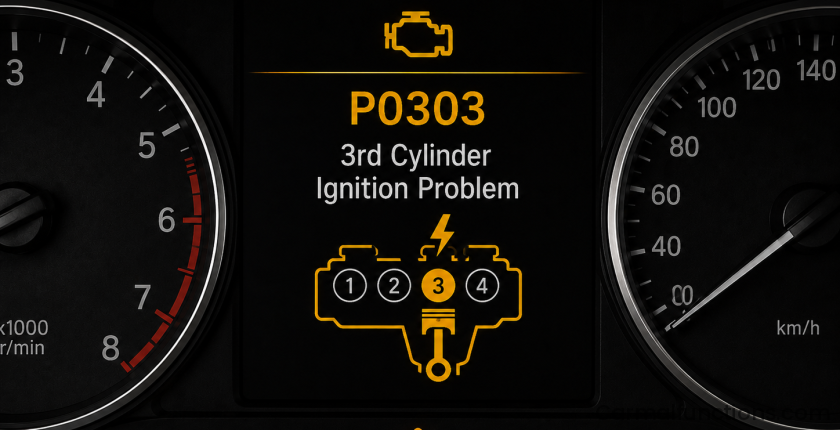
The P0303 diagnostic trouble code (DTC) indicates a misfire condition in the third cylinder of your engine. This fault causes erratic engine operation, rough idling, and a noticeable loss of power. When the Engine Control Module (ECM) detects this combustion failure, it logs the P0303 code. The issue typically originates from component failures within the spark plug, ignition coil, or fuel injector.
This article provides an in-depth breakdown of the causes, symptoms, diagnostic strategies, and effective repair solutions for a Cylinder 3 misfire, along with detailed tables and a Frequently Asked Questions (FAQ) section.
What Does P0303 3rd Cylinder Misfire Mean?
The P0303 trouble code translates technically to “Cylinder 3 Misfire Detected.” This means your vehicle’s Engine Control Module (ECM) has detected that the air-fuel mixture in the third cylinder is failing to ignite or burn efficiently.
For an internal combustion engine to run smoothly, every individual cylinder must execute a complete, well-timed combustion stroke. When a misfire occurs in Cylinder 3:
-
Engine balance is severely disrupted.
-
Thermal efficiency drops, resulting in a shuddering sensation.
-
Unburned fuel exits the cylinder, compromising downstream components.
Decoding Misfire Trouble Codes
Onboard Diagnostic (OBD-II) architecture continuously tracks engine crankshaft rotation speed to catch minor operational fluctuations. The P030X series of trouble codes points specifically to the exact cylinder experiencing a failure. For example, a P0301 code indicates an issue in Cylinder 1, while a P0303 code focuses exclusively on Cylinder 3. This pinpoint precision simplifies troubleshooting, helping technicians bypass broad systems and jump straight to localized component testing.
Why Specifically Cylinder 3?
Engine cylinders are assigned a specific numbering sequence depending on the engine configuration (e.g., Inline or V-pattern). A persistent P0303 code means that while cylinders 1, 2, and 4 might be burning fuel perfectly, a localized failure exists on the Cylinder 3 station. This isolating factor usually points directly to the dedicated hardware serving that specific cylinder cylinder chamber.
Symptoms of DTC P0303
The symptoms of a P0303 code vary based on the severity of the ignition or mechanical failure. Salsbury conditions range from subtle performance dips to dangerous driving dynamics.
1. Engine Performance Degradation
-
Rough Idle: The engine shakes, vibrates, or shudders heavily when the vehicle is stopped at a red light or idling.
-
Loss of Power: Acceleration feels sluggish, and the vehicle struggles significantly when climbing hills or overtaking.
-
Hesitation or Stumbling: The engine jerks or stumbles when you press the gas pedal, particularly under heavy loads or towing.
-
Engine Stalling: In severe misfire scenarios, the engine may die completely while idling or slowing down to a stop.
-
Decreased Fuel Economy: Because the engine must work harder to compensate for a dead cylinder, fuel consumption climbs rapidly.
-
Raw Fuel Odor from Exhaust: Unburned fuel traveling down the exhaust stream produces a distinct gasoline smell, posing an immediate threat to the catalytic converter.
2. Warning Indicators
-
Check Engine Light (MIL): The warning light will illuminate on the dashboard.
-
Flashing Check Engine Light: If the misfire count is exceptionally high and melting temperatures are imminent within the catalytic converter due to raw fuel dumping, the light will flash continuously. A flashing MIL demands that you pull over immediately to prevent catastrophic exhaust system damage.

Primary Causes of a Cylinder 3 Misfire
A P0303 code can stem from failures across three core disciplines: ignition delivery, fuel delivery, or internal engine mechanics.
1. Ignition System Component Failures
Statistically, ignition issues are the most frequent culprit behind a localized misfire:
-
Spark Plugs: An old, worn-out, carbon-fouled, or improperly gapped spark plug will generate a weak spark or fail to arc entirely.
-
Ignition Coils: Modern Coil-on-Plug (COP) systems utilize a dedicated transformer unit for each cylinder. A failing coil boot or internal winding failure cuts off high-voltage delivery to the plug.
-
Spark Plug Wires: On older ignition designs utilizing a distributor, cracked or brittle plug wires leak electrical current before it reaches Cylinder 3.
2. Fuel System Anomalies
An incorrect air-fuel ratio within the combustion chamber prevents proper flame propagation:
-
Clogged or Faulty Fuel Injector: If the Cylinder 3 fuel injector nozzle is restricted by carbon or suffers an internal electrical short, it cannot mist fuel properly, creating an ultra-lean condition.
-
Fuel Pressure Fluctuations: Low overall system fuel pressure often shows up first on the cylinder furthest from the inlet feed line on the fuel rail.
-
Contaminated Fuel: Water or debris in the fuel tank disrupts smooth combustion across all cylinders intermittently.
3. Air Induction and Vacuum Leaks
Unmetered air entering the system skews individual cylinder chemistry:
-
Intake Manifold Gasket Leaks: A localized failure in the intake manifold gasket near the Cylinder 3 port draws extra air into that runner, leaning out that specific combustion chamber.
-
Cracked Vacuum Lines: Damaged vacuum hoses throw off overall manifold absolute pressure parameters.
4. Engine Mechanical Issues
Internal mechanical wear prevents the cylinder from sealing and squeezing the air-fuel mixture:
-
Loss of Compression: If Cylinder 3 cannot build adequate pressure, combustion fails. This stems from worn piston rings, burned exhaust valves, or a blown head gasket leaking compression into an adjacent cylinder or coolant jacket.
-
Valvetrain Wear: Worn camshaft lobes, bent pushrods, or sticking lifters prevent the valves from opening and closing on time.
5. Wiring and ECM Glitches
-
Harness Damage: Broken or loose connector clips at the ignition coil or fuel injector interrupt the control signal from the computer.
-
Failing PCM/ECM: In rare instances, the vehicle’s central computer suffers a driver circuit failure, preventing it from pulsing the firing line for Cylinder 3.
Diagnostic Process for DTC P0303
Isolating a P0303 misfire requires a systematic elimination process to avoid the expensive habit of replacing functional parts.
Recommended Diagnostic Arsenal
To accurately isolate the fault, you will need the following tools:
-
OBD-II Scanner: For viewing real-time misfire counters and fuel trim metrics.
-
Digital Multimeter (DMM): For verifying circuit resistance and voltage supply.
-
Inline Spark Tester: To verify high-voltage output from the ignition coil.
-
Fuel Pressure Gauge: To verify stable fuel rail pressure.
-
Engine Compression Tester: To evaluate the mechanical health of the cylinder.
Step-by-Step Troubleshooting Routine
[Scan OBD-II Port] ─> [Perform Component Swap Test] ─> [Check Fuel Injector Resistance] ─> [Run Compression Test]
1. Scan and Analyze Live Data
Plug your scanner into the vehicle’s OBD port. Check for any accompanying codes (such as oxygen sensor codes or lean codes). Access Freeze Frame Data to pinpoint exactly when the misfire happens: Does it occur only at a cold start? Or does it happen under highway acceleration? Check the live misfire counter for Cylinder 3 to verify the fault is active.
2. Execute the Component Swap Test
The fastest way to isolate an ignition fault is to swap parts with a known healthy cylinder:
-
Clear the trouble codes.
-
Move the Cylinder 3 ignition coil to Cylinder 1.
-
Move the Cylinder 3 spark plug to Cylinder 2.
-
Test-drive the vehicle until the Check Engine Light returns.
-
If the code changes to P0301: Your ignition coil is defective.
-
If the code changes to P0302: Your spark plug is defective.
-
If the code stays P0303: The ignition components are fine; proceed to check fuel and compression.
3. Test the Fuel Injector
Use a multimeter to measure the electrical resistance (ohms) across the two pins of the Cylinder 3 fuel injector. Compare this reading against manufacturer specs. Next, use a mechanic’s stethoscope or a long screwdriver pressed against the injector body while the engine runs; you should hear a crisp, consistent clicking sound indicating mechanical operation.
4. Check for Intake Vacuum Leaks
Inspect the intake runners around Cylinder 3. You can use a dedicated smoke machine or spray a small amount of carburetor cleaner around the intake manifold gasket area while watching fuel trims on your scan tool. If the engine idle levels out or the trims change sharply, a vacuum leak is present.
5. Perform a Mechanical Compression Test
If ignition and fuel components check out, thread a compression tester into the Cylinder 3 spark plug hole. Crank the engine 5–6 times and record the peak pressure. Repeat the test on neighboring cylinders. Cylinder 3 must read within 10–15% of the other cylinders. A low reading confirms an internal mechanical failure (valves, rings, or head gasket).
Repair and Cost Considerations
The correct fix for a P0303 code depends entirely on your diagnostic findings:
-
Spark Plug Service: Replace the faulty plug. It is best practice to install a fresh, pre-gapped set across all cylinders simultaneously.
-
Ignition Coil Replacement: Replace the failing individual coil pack.
-
Fuel Injector Service: Clean a restricted injector using professional equipment, or replace the injector if it suffers an internal electrical short.
-
Gasket Replacement: Replace a leaking intake manifold gasket to reseal the intake runner.
-
Internal Engine Reconstruction: Addressing low compression requires complex mechanical work, such as replacing a blown head gasket, performing a valve job, or replacing worn piston rings.
Estimated Repair Costs
| Repair Procedure | Estimated Parts Cost (DIY) | Estimated Professional Shop Cost |
| Spark Plug Replacement (Set) | $20 – $50 | $100 – $250 |
| Ignition Coil Replacement (Single) | $30 – $90 | $150 – $300 |
| Fuel Injector Replacement | $60 – $150 | $350 – $600 |
| Intake Manifold Gasket Repair | $15 – $40 | $250 – $500 |
| Engine Mechanical (Head Gasket / Valves) | $150 – $400 | $1,500 – $3,500+ |
Preventive Maintenance Protocols
To mitigate the risk of encountering sudden engine misfires, adhere to these preventive guidelines:
-
Timely Spark Plug Replacement: Do not exceed the service interval specified by your vehicle manufacturer (typically every 30,000 to 100,000 miles, depending on copper, platinum, or iridium composition).
-
Keep Filters Clean: Replace your engine air filter and fuel filter according to service schedules to optimize combustion conditions.
-
Use Premium Tier-1 Fuel: Cheap, low-quality fuel leaves behind carbon deposits on valve seats and fuel injector nozzles, causing restrictions over time.
-
Address Oil Leaks Early: Leaking valve cover gaskets can flood spark plug wells with engine oil, degrading ignition coil boots and causing spark grounding shorts.
Frequently Asked Questions (FAQ)
Is it safe to drive my car with a P0303 code?
Driving short distances to a repair facility is acceptable, but prolonged driving is highly discouraged. A misfire allows unburned gasoline to flood into the hot exhaust system, which can melt the internal structure of your catalytic converter within miles, turning a simple repair into an expensive replacement.
Will a P0303 code cause me to fail an emissions test?
Yes. A stored P0303 code will trigger the Check Engine Light immediately, resulting in an automatic failure during any state emissions or safety inspection.
What should I do if my Check Engine Light is flashing?
Safely pull over to the side of the road, shut off the engine immediately, and have the vehicle towed to a shop. A flashing light indicates a severe, destructive misfire condition.
Can a dirty engine air filter cause a specific P0303 code?
A completely clogged air filter typically causes random multiple misfires (P0300) or system lean codes (P0171/P0174) because it limits airflow to the entire engine. If you have an isolated P0303 code, the issue is almost certainly localized to Cylinder 3 component groups.
Why does my car misfire only when cold?
Metal expands as it heats up. Small intake manifold vacuum leaks or marginal valvetrain sealing issues often manifest only when the engine block is dead cold. Once components reach normal operating temperature and expand, the leak can seal itself temporarily, causing the misfire to clear.
Conclusion
A P0303 trouble code is a clear indicator that your engine requires immediate attention to restore smooth operation and preserve downstream emission controls. By stepping systematically through visual checks, component swap tests, and compression verifications, you can pinpoint the core breakdown efficiently. Never ignore a rough idle or stumbling acceleration—early intervention safeguards your vehicle’s longevity and keeps your repair bills manageable.