What is a water leak test?
A water leak test is a procedure designed to detect the presence and location of unintended water or fluid passage through a material, seal, or system. This essential diagnostic process helps identify breaches that could lead to damage, contamination, or operational failure. You will find detailed tables and FAQs below....

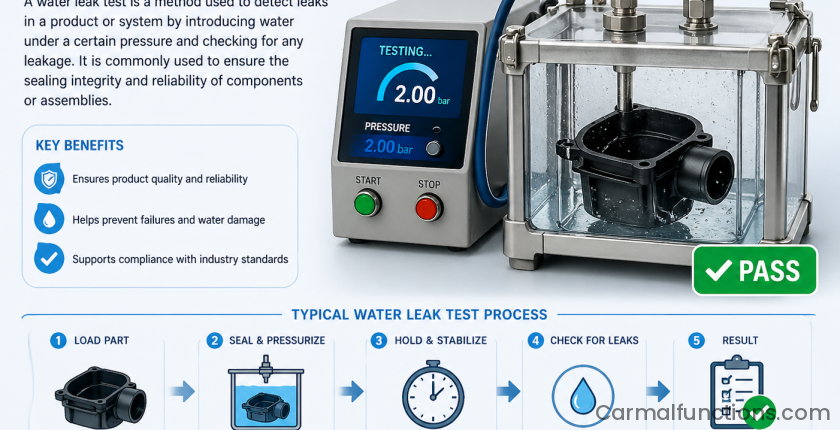
A water leak test is a procedure designed to detect the presence and location of unintended water or fluid passage through a material, seal, or system. This essential diagnostic process helps identify breaches that could lead to damage, contamination, or operational failure. You will find detailed tables and FAQs below.
- 1. Understanding What a Water Leak Test Is
- 2. The Importance of Water Leak Tests
- 3. Common Methods for Performing a Water Leak Test
- 3.1. Visual Inspection
- 3.2. Water Meter Test
- 3.3. Acoustic Leak Detection
- 3.4. Infrared Thermal Imaging
- 3.5. Pressure Testing
- 3.6. Vacuum Decay Testing
- 3.7. Bubble Leak Test (Water Bath Test)
- 3.8. Video Pipe Inspection Cameras
- 3.9. Tracer Gas Detection
- 4. Applications of Water Leak Tests Across Industries
- 4.1. Plumbing and Construction
- 4.2. Automotive Manufacturing
- 4.3. Medical Device Manufacturing
- 4.4. Packaging Industry
- 4.5. Aerospace and Automotive Components
- 4.6. Electronics and Consumer Products
- 5. Choosing the Right Water Leak Test Method
- 6. Cost of Water Leak Detection Services
- 7. Common Signs of Water Leaks
- 8. Conclusion
- 9. Frequently Asked Questions (FAQs)
- 9.1. What is the simplest way to check for a water leak at home?
- 9.2. Can I perform a water leak test myself?
- 9.3. What are the risks of not performing a water leak test?
- 9.4. Are there different types of water leak tests for different materials?
- 9.5. What is a bubble leak test?
- 9.6. How does thermal imaging detect water leaks?
- 9.7. Is leak detection covered by home insurance?
- 9.8. What is the most advanced water leak detection method?
- 9.9. Can I use my smartphone to detect water leaks?
Understanding What a Water Leak Test Is
At its core, a water leak test is a method to ensure the integrity of a sealed system or structure by checking for any unwanted escape or entry of water. These tests are vital across numerous sectors, from plumbing and construction to automotive manufacturing and medical device production. The primary goal is to prevent water damage, ensure safety, maintain product quality, and conserve resources. By systematically applying various techniques, professionals can pinpoint even the smallest breaches that might otherwise go unnoticed until significant problems arise.
The Importance of Water Leak Tests
The significance of conducting regular water leak tests cannot be overstated. Undetected leaks can lead to a cascade of negative consequences. In homes, they can cause extensive structural damage, promote mold and mildew growth, and lead to exorbitant water bills. For manufacturers, leaks in products like medical devices can have life-threatening implications, while in the automotive industry, they can cause corrosion and electrical failures. Water utility providers rely on leak detection to conserve water resources, as millions of liters are wasted daily due to undetected leaks. Early detection through a water leak test is a proactive measure that saves money, prevents damage, and ensures safety and reliability.

Common Methods for Performing a Water Leak Test
Various techniques are employed for water leak tests, with the chosen method depending on the application, the type of system being tested, and the desired level of accuracy.
Visual Inspection
This is often the first line of defense. It involves a thorough examination of accessible areas for visible signs of water damage, such as stains, mold, pooling water, or damp spots. While simple, it is most effective for easily observable leaks.
Water Meter Test
A common DIY method for home plumbing involves monitoring the water meter. By ensuring all water-using appliances are off and then observing the meter for any change in reading over a period, a leak can be inferred. If the meter registers usage when no water is being consumed, a leak is likely present.
Acoustic Leak Detection
This method uses sensitive microphones to amplify the sound of escaping water. Technicians can pinpoint leaks by listening for the distinct sounds of dripping or flowing water, even through walls or underground pipes. The effectiveness can depend on pipe material and diameter, as sound travels differently through various substances.
Infrared Thermal Imaging
Infrared cameras detect temperature variations on surfaces. Areas with water leaks often exhibit different temperatures than surrounding dry areas, allowing technicians to identify moisture buildup behind walls or under floors. This non-invasive technique is highly effective for locating hidden leaks.
Pressure Testing
In this method, a system is pressurized, and then the pressure is monitored for a drop. A decrease in pressure indicates a leak. This can be done with water (hydrostatic pressure test) or air. It’s effective for identifying if a leak exists but may not always pinpoint the exact location. For plumbing, a hydrostatic pressure test involves filling the system with water and observing for any drop in pressure over time.
Vacuum Decay Testing
This technique works in reverse to pressure testing. A vacuum is applied to the system or a test chamber, and an increase in pressure indicates a leak as external air is drawn in. It’s often used for parts susceptible to external leaks.
Bubble Leak Test (Water Bath Test)
This is a widely used, simple, and cost-effective method, especially for packaging and sealed components. The item to be tested is submerged in water, and a pressure differential (vacuum or internal pressure) is applied. If leaks are present, air or gas escapes, forming visible bubbles. This method is valuable for identifying the location of leaks and assessing seal integrity. However, it has limitations, such as difficulty in accurately measuring leak size and potential subjectivity.
Video Pipe Inspection Cameras
A miniature camera attached to a flexible cable is inserted into pipes. Technicians view the feed on a monitor to visually inspect the interior and pinpoint leaks with high precision. This is particularly useful for diagnosing issues within drain and sewer lines.
Tracer Gas Detection
A safe, non-toxic gas (often a mixture of hydrogen and nitrogen) is injected into the plumbing system. Specialized detectors then identify where the gas escapes from leaks. This method is highly reliable for detecting even the smallest leaks in various pipe materials.
Applications of Water Leak Tests Across Industries
The versatility of water leak tests makes them indispensable in a wide array of applications.
Plumbing and Construction
In residential and commercial buildings, water leak tests are crucial for identifying leaks in pipes, fixtures, and appliances. This prevents water damage, mold growth, and structural issues. Acoustic detection, thermal imaging, and video inspections are common methods used by plumbers.
Automotive Manufacturing
Vehicles undergo rigorous leak testing, often called water testing or monsoon testing, to ensure the interior remains dry under various conditions. This prevents corrosion, electrical failures, and mold growth within the vehicle. Simulated heavy rain or car washes are used to test seals and seams.
Medical Device Manufacturing
Ensuring the sterility and functionality of medical devices is paramount. Leak testing is vital for devices that come into contact with bodily fluids or medications. Methods like the bubble test, pressure decay, and mass flow testing are employed to guarantee device integrity and patient safety.
Packaging Industry
For food, pharmaceutical, and consumer products, leak testing ensures packaging integrity. This prevents contamination, spoilage, and maintains product quality. The bubble leak test is frequently used due to its simplicity and visual feedback.
Aerospace and Automotive Components
Components like fuel tanks, radiators, and air conditioning systems in vehicles and aircraft require leak testing to ensure safety and performance.
Electronics and Consumer Products
Sealed enclosures for electronics and various consumer products are tested to prevent water ingress, which could lead to device failure.
Choosing the Right Water Leak Test Method
Selecting the appropriate water leak test method involves considering several factors:
Expected Leak Rate: Are you looking for microscopic leaks or larger breaches?
Environment: Is the test performed in a controlled lab or on-site?
Material: The material being tested can influence the method’s effectiveness.
Cost and Time Constraints: Some methods are faster and more economical than others.
Destructive vs. Non-Destructive: Some tests, like dye penetration, are destructive, while others, like thermal imaging, are non-destructive.
* Regulatory Requirements: Specific industries have standards that dictate the testing methods.
For instance, while the bubble leak test is straightforward for packaging, acoustic leak detection is more suitable for hidden underground pipes. Thermal imaging excels at locating moisture behind walls, and video inspections provide definitive proof within pipes.
Cost of Water Leak Detection Services
The cost of professional water leak test services can vary widely based on several factors, including the complexity of the leak, the accessibility of the area, the technology used, and the geographic location.
* General Detection Services: These can range from $100 to $500 for indoor leaks and $175 to $350 for outdoor or underground leaks. More complex issues, like slab leaks, can cost between $300 and $800.
* Specific Methods: Acoustic leak detection might cost $200-$500, while thermal imaging can range from $300-$600. Video pipe inspections can be $250-$1,000.
* Factors Influencing Cost: The type of leak (indoor vs. underground), equipment used (high-tech tools increase cost), accessibility (leaks behind walls or underground are more expensive), and the service provider’s expertise all play a role.
* Emergency Services: After-hours or emergency leak detection can incur additional fees.
Despite the costs, investing in professional leak detection is often significantly cheaper than the extensive repairs and remediation required for undetected or long-term leaks.
Common Signs of Water Leaks
Being aware of the signs of a water leak can help in early detection. These include:
* Unexplained increases in water bills.
* The sound of dripping or running water when no fixtures are in use.
* Visible water stains on walls, ceilings, or floors.
* Mold or mildew growth, often accompanied by a musty odor.
* Damp or warped spots on walls or ceilings.
* Pooling water around appliances, sinks, or toilets.
* Reduced water pressure.
* Changes in the water meter reading when all water is off.
Conclusion
A water leak test is a critical diagnostic procedure employed across numerous industries to identify and locate unintended water pathways. From simple visual checks and water meter readings to sophisticated acoustic, thermal, and pressure-based methods, these tests are indispensable for preventing costly water damage, ensuring product integrity, safeguarding health, and conserving vital resources. Whether applied to household plumbing, automotive manufacturing, medical devices, or industrial packaging, understanding and implementing the appropriate water leak test is a proactive investment that yields significant returns in safety, reliability, and financial savings. Early detection through a thorough water leak test is not merely a repair strategy; it is an essential preventative measure in today’s world.
Frequently Asked Questions (FAQs)
What is the simplest way to check for a water leak at home?
The simplest way is often the water meter test. Turn off all water-using appliances, record your meter reading, wait for an hour or more, and check the reading again. If it has changed, you likely have a leak.
Can I perform a water leak test myself?
Yes, for many common household plumbing leaks, simple tests like the water meter test or a visual inspection can be performed by homeowners. How often should I perform a water leak test?
Manufacturers in industries like automotive and medical devices conduct leak tests as part of their routine quality control processes.
What are the risks of not performing a water leak test?
The risks include significant water damage to property, structural issues, mold and mildew growth leading to health problems, increased water bills, potential contamination of water supply, product failures, and safety hazards.
Are there different types of water leak tests for different materials?
Yes, the method chosen often depends on the material and application. Medical devices may use pressure decay or mass flow tests.
What is a bubble leak test?
Any leaks will cause air or gas to escape, forming visible bubbles.
How does thermal imaging detect water leaks?
Thermal imaging cameras detect temperature differences on surfaces.
Is leak detection covered by home insurance?
Coverage varies by policy. Some policies may cover repairs resulting from sudden, accidental water damage, but often exclude damage from gradual leaks or lack of maintenance. It’s best to check your specific policy details.
What is the most advanced water leak detection method?
Advanced methods include tracer gas detection, high-definition video pipe inspections, and sophisticated acoustic or thermal imaging systems. The “most advanced” can depend on the specific application, but these technologies offer high precision for locating difficult leaks.
Can I use my smartphone to detect water leaks?
Some apps claim to assist in leak detection, often by using the phone’s microphone for acoustic detection or by integrating with smart sensors. However, their effectiveness for complex leaks can be limited compared to professional tools.
| Method | Description | Primary Applications | Pros | Cons |
|---|---|---|---|---|
| Visual Inspection | Direct observation for signs of water damage. | Accessible plumbing, visible surfaces. | Simple, low-cost, immediate. | Only detects visible leaks, may miss hidden ones. |
| Water Meter Test | Monitoring water meter for changes when water is off. | Home plumbing systems. | Easy DIY, cost-effective. | Requires all water to be off, may not detect very slow leaks. |
| Acoustic Detection | Listening for leak sounds with sensitive microphones. | Pipes (underground, in walls), plumbing systems. | Locates hidden leaks, non-invasive. | Affected by ambient noise, requires expertise. |
| Thermal Imaging | Detecting temperature variations caused by moisture. | Walls, floors, ceilings, building envelopes. | Non-invasive, detects hidden moisture. | Requires temperature differences, can be influenced by insulation. |
| Pressure Testing | Pressurizing a system and monitoring for pressure drop. | Pipes, tanks, sealed components. | Confirms leak presence, relatively simple. | May not pinpoint exact location. |
| Vacuum Decay | Applying vacuum and monitoring for pressure increase. | Sealed parts, electronic enclosures, components. | Sensitive, good for external leaks. | Can be affected by evaporation, less common for large systems. |
| Bubble Leak Test (Water Bath) | Submerging an item in water and observing for bubbles under pressure/vacuum. | Packaging, medical devices, automotive parts, consumer products. | Simple, visual, cost-effective, locates leaks. | Subjective, difficult to measure leak size accurately. |
| Video Pipe Inspection | Using a camera probe inside pipes. | Drain lines, sewer lines, inaccessible pipes. | Visual confirmation, precise location. | Requires access point, can be costly. |
| Tracer Gas Detection | Injecting a gas and detecting its escape. | Pipes (various materials), complex systems. | Highly accurate, detects very small leaks. | Requires specialized equipment and gas. |