B1081 Indicator Lighting Circuit Fault
What is the B1081 Indicator Lighting Circuit Fault? The B1081 Indicator Lighting Circuit Fault is known as a Diagnostic Trouble Code (DTC). This code indicates that the vehicle’s computer has detected an issue within a specific system. Despite its misleading name, B1081 typically has nothing to do with the vehicle’s...

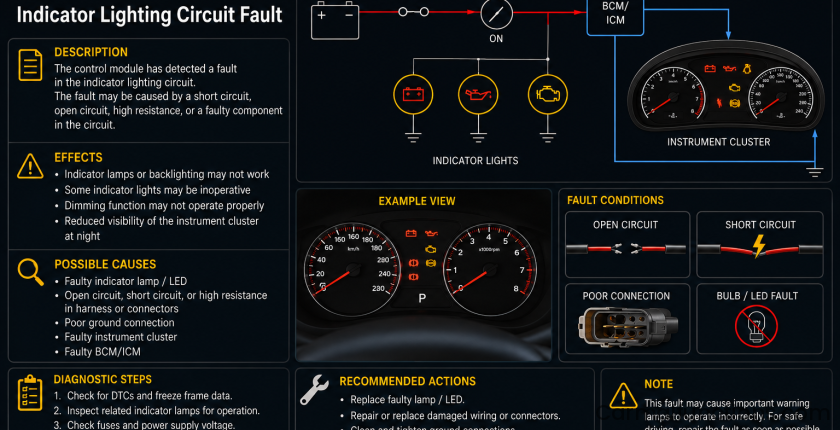
- 1. What is the B1081 Indicator Lighting Circuit Fault?
- 2. Symptoms of B1081 Indicator Lighting Circuit Fault
- 3. Causes of B1081 Indicator Lighting Circuit Fault
- 4.
- 5. Diagnosing B1081 Indicator Lighting Circuit Fault
- 5.1. Required Diagnostic Tools
- 5.2. Step-by-Step Diagnostic Guide
- 6. Repair Solutions for B1081
- 7. Preventative Measures and Maintenance
- 8. B1081 Code Summary Table
- 9. Frequently Asked Questions (FAQ)
- 9.1. Q: What exactly does “B1081 Indicator Lighting Circuit Fault” mean?
- 9.2. Q: Is it safe to drive with a B1081 code?
- 9.3. Q: Can I fix the B1081 code myself?
- 9.4. Q: My dashboard lights are flickering, but my scanner pulled a B1081 code. Are they related?
What is the B1081 Indicator Lighting Circuit Fault?
The B1081 Indicator Lighting Circuit Fault is known as a Diagnostic Trouble Code (DTC). This code indicates that the vehicle’s computer has detected an issue within a specific system. Despite its misleading name, B1081 typically has nothing to do with the vehicle’s exterior or dashboard lighting. Instead, it is most frequently linked to the vehicle’s climate control system.
Specifically, in vehicles like the Ford F-150, Ranger, and Super Duty, the B1081 code points to a fault in the driver-side temperature blend door actuator circuit. The blend door is a small flap inside the dashboard that mixes hot and cold air to adjust the cabin temperature. The actuator is the electric motor that moves this door. The B1081 code triggers when the actuator fails to operate correctly or when there is an electrical issue in its circuit.
In some other vehicle makes, B1081 can take on different meanings. For example, in Nissan and Infiniti vehicles, it can indicate an open circuit in the passenger-side seat belt pretensioner. In General Motors (GM) vehicles, it might point to an audio output fault. However, its association with the HVAC system remains the most common and well-documented scenario.
Symptoms of B1081 Indicator Lighting Circuit Fault
The symptoms of the B1081 code vary based on which system is affected. When related to the HVAC system, the signs usually revolve around cabin temperature control.
-
Inability to Adjust Temperature: The most common symptom is being unable to change the air temperature on the driver’s side. The vents may only blow entirely hot or entirely cold air.
-
Noises from Behind the Dashboard: You might hear clicking, popping, or knocking sounds from behind the dash, especially when changing temperature settings or right after starting the vehicle. This is caused by a failing blend door actuator attempting to force the door to move.
-
Inconsistent Cabin Temperature: The actual temperature inside the cabin might fluctuate wildly or fail to match the digital setting.
-
Airflow Direction Issues: Occasionally, the airflow might fail to switch properly between different modes (such as defrost, floor, or dash vents).
In rarer, brand-specific scenarios:
-
Nissan/Infiniti Seat Belt Pretensioner: The airbag or seat belt warning light may illuminate, or the seat belt system might become disabled. This poses a safety risk and requires immediate professional attention.
-
GM Audio System: Specific speakers might stop working, or the audio system could malfunction.
While this code generally does not affect engine performance or immediate drivability, any safety-related triggers (like seat belt pretensioners) should be addressed immediately.
Causes of B1081 Indicator Lighting Circuit Fault
Several issues can trigger the B1081 code, mostly centered around the actuator, the blend door housing, or the electrical network connecting them.
-
Failing Temperature Blend Door Actuator: This is the primary culprit. The internal plastic gears of the actuator wear out or snap over time, preventing the motor from turning the blend door.
-
Stuck or Bound Blend Door: The physical blend door or the plastic HVAC housing can warp over time, or become jammed with debris. This forces the actuator to work harder, eventually burning it out. Ford Technical Service Bulletins (TSBs) note that some models (like the 2019-2020 Ranger) suffer from warped HVAC housings causing this issue.
-
HVAC Module Software Bug: In newer vehicles—specifically certain production windows of the 2021 Ford F-150—a software glitch within the HVAC control module can falsely trigger this code. The physical parts are fine, but the module needs a reflash.
-
Electrical Circuit Problems:
-
Open or Short Circuit: Broken wires (open circuit) or wires rubbing against each other/ground (short circuit) disrupt the signals.
-
Corrosion or Loose Connections: Moisture or loose pins inside the wiring connectors cut off electrical flow.
-
Bad Grounding: Faulty ground connections cause unstable voltage signals in the circuit.
-
-
Faulty HVAC Control Module: In rare cases, the main climate control unit in the dash fails internally.
Diagnosing B1081 Indicator Lighting Circuit Fault
Properly diagnosing the B1081 code ensures you do not waste money replacing perfectly good components.
Required Diagnostic Tools
-
OBD-II Scanner: A tool capable of reading manufacturer-specific body codes and viewing live data stream parameters.
-
Digital Multimeter (DMM): Essential for checking voltage, resistance, and wire continuity.
-
Wiring Diagrams: Vehicle-specific schematics to locate pins, wires, and connectors.
-
Basic Hand Tools: Screwdrivers, trim removal tools, and small sockets.
Step-by-Step Diagnostic Guide
-
Read and Document DTCs: Hook up your OBD-II scanner to read the B1081 code alongside any sub-codes (e.g., B1081:07 for mechanical failures or B1081:11 for electrical shorts). Note down freeze frame data.
-
Visual Inspection: Inspect the actuator location, visible wiring harnesses, and relevant fuses. Look for signs of chafing, corrosion, melted plastic, or loose plugs.
-
Test Actuator Functionality: Turn on the ignition and cycle the driver-side temperature settings from full cold to full hot. Listen closely near the footwell or center console for clicking sounds. If you can safely access and see the actuator, watch if its shaft moves when settings are adjusted.
-
Manual Blend Door Test: Remove the actuator from its mounting position and manually turn the blend door axle by hand. If it turns smoothly without binding, the door is fine and the actuator is bad. If it binds or refuses to move, the issue lies within the HVAC housing.
-
Multimeter Testing:
-
Voltage Check: Unplug the actuator and test the power supply pins with the ignition on. It should match your battery voltage (approx. 11–14V).
-
Continuity & Resistance Check: Test the wires back to the HVAC module for open circuits or excessive resistance (which points to hidden corrosion or partial wire breaks).
-
Voltage Drop Test: Perform voltage drop tests across the circuit connections to identify hidden bottlenecks. A drop higher than 0.4 volts indicates a faulty connection point.
-
-
Check for TSBs and Software Updates: If you are working on a 2021 Ford F-150, check if your vehicle falls under the TSB requiring an HVAC module software flash before replacing parts.
Repair Solutions for B1081
Once you have pinned down the root cause, you can proceed with the targeted fix:
-
Replacing the Blend Door Actuator: This is the most common and often easiest fix if the internal gears are stripped. The part itself is affordable, making it a highly manageable DIY task on many vehicles.
-
Repairing or Lubricating a Jammed Blend Door: If the door is sticking, the HVAC housing might need to be partially disassembled to clear debris or lubricate pivot points. If the housing is warped, the entire assembly may need replacement—a labor-intensive and costly fix.
-
HVAC Module Software Flash: If a software bug is a culprit (common in Ford trucks), a dealership or specialized shop will need to reprogram the HVAC module using factory software.
-
Wiring Harness Repair: Damaged wires must be cut, soldered, and insulated with heat-shrink tubing, or corroded pins within connectors must be cleaned/replaced.
-
Replacing the Climate Control Module: If all wiring and actuators test perfectly, the internal circuitry of the HVAC module itself must be replaced.
Note on Costs: While an actuator part costs roughly $30 to $80, labor rates can vary wildly. Some actuators are located deep behind the dashboard, requiring the entire dash assembly to be pulled out, which can drive professional labor costs from $100 up to $1,200+.
Preventative Measures and Maintenance
While electrical and mechanical component fatigue happens naturally, a few habits can mitigate these failures:
-
Listen for Early Warnings: If you start hearing faint clicking or popping noises behind your dash when you change your AC or heater settings, investigate it early. Catching a failing actuator before it jams can save other components.
-
Keep Electrical Systems Clean: Ensure your cabin air filter is replaced regularly to prevent heavy dust and debris from entering the internal ductwork and jamming the blend doors.
-
Maintain Battery and Alternator Health: Low or fluctuating voltage from a dying battery or failing alternator stresses delicate electronic modules and actuators, triggering false or real electrical codes.
-
Stay Updated on Factory Recalls/TSBs: Check your vehicle manufacturer’s owner portal periodically for updates, especially regarding module software re-flashes.
B1081 Code Summary Table
| Feature | Description |
| Code Name | B1081 Indicator Lighting Circuit Fault |
| Most Common Meaning | HVAC Temperature Blend Door Actuator Circuit Malfunction |
| Primary Symptoms | Cabin temperature stuck on hot or cold, clicking noises behind the dash |
| Common Causes | Stripped actuator gears, warped or jammed blend door, wiring defects, software bugs |
| Diagnostic Tools | OBD-II Scanner, Digital Multimeter (DMM), Electrical Schematics |
| Primary Solutions | Actuator replacement, wiring repair, software re-flash, or blend door lubrication |
Frequently Asked Questions (FAQ)
Q: What exactly does “B1081 Indicator Lighting Circuit Fault” mean?
A: B1081 is an automotive diagnostic trouble code. Despite its highly misleading name, it rarely indicates an issue with your interior or exterior lights. In the vast majority of vehicles (especially Ford models), it means the computer has detected a fault in the circuit that controls the temperature blend door actuator inside your heating and air conditioning (HVAC) system.
Q: Is it safe to drive with a B1081 code?
A: Yes, in most cases it is perfectly safe to drive your vehicle because a blend door malfunction does not impact engine performance, braking, or steering. However, your driving comfort will be heavily compromised since you won’t be able to properly regulate cabin temperature. Exception: If you drive a Nissan or Infiniti and the B1081 code is explicitly tied to the passenger-side seat belt pretensioner, it means an essential safety system is offline, and it should be serviced immediately.
Q: Can I fix the B1081 code myself?
A: Yes, if the issue is a failed blend door actuator. On many vehicles, the actuator is accessible under the footwell or behind the glove box, making it an easy, inexpensive DIY replacement. However, if the issue requires pulling the entire dashboard to fix a warped HVAC housing or tracing a complex wiring harness short, you may want to hand it over to a professional technician.
Q: My dashboard lights are flickering, but my scanner pulled a B1081 code. Are they related?
A: No, they are highly unlikely to be related. As noted, the B1081 code name is a misnomer and points to your HVAC system. If your dashboard lights are flickering or failing, you are likely dealing with a completely separate issue—such as a blown fuse, a bad ground wire, a failing headlight/dimmer switch, or an alternator/battery problem. You should diagnose the lighting issue independently of the B1081 code.