225 70R 15C Tire Air Pressure
Comprehensive Guide: 225/70R 15C Tire Air Pressure Maintaining the correct 225/70R 15C Tire Air Pressure is vital for your vehicle’s performance, safety, and tire longevity. This tire size is typically found on heavy-duty vehicles such as light commercial vans and motorhomes. Ideal pressure varies based on the manufacturer’s recommendations and...

- 1. Comprehensive Guide: 225/70R 15C Tire Air Pressure
- 1.1. Why is Correct 225/70R 15C Tire Pressure So Important?
- 1.1.1. 1. Safety and Handling
- 1.1.2. 2. Tire Life and Durability
- 1.1.3. 3. Fuel Efficiency
- 1.1.4. 4. Driving Comfort
- 1.2. Factors Determining 225/70R 15C Tire Pressure
- 1.3. How to Check 225/70R 15C Tire Pressure
- 1.3.1. Step-by-Step Process:
- 1.4. Recommended Pressure Table (General Reference)
- 1.5. Frequently Asked Questions (FAQ)
Comprehensive Guide: 225/70R 15C Tire Air Pressure
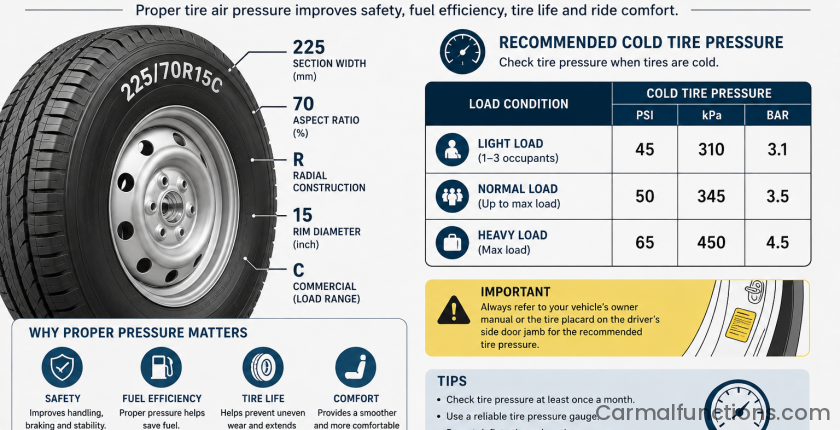
Maintaining the correct 225/70R 15C Tire Air Pressure is vital for your vehicle’s performance, safety, and tire longevity. This tire size is typically found on heavy-duty vehicles such as light commercial vans and motorhomes. Ideal pressure varies based on the manufacturer’s recommendations and the load status. Regular checks optimize fuel consumption and enhance driving comfort.
Why is Correct 225/70R 15C Tire Pressure So Important?
Your tires are the only point of contact between your vehicle and the road. Therefore, maintaining correct pressure values is paramount.
1. Safety and Handling
Proper pressure ensures an optimum contact patch with the road. This shortens braking distances and reduces the risk of skidding during cornering.
-
Under-inflation: Leads to sluggish handling and increased risk of losing control.
-
Over-inflation: Reduces the contact area, increasing the risk of hydroplaning on wet surfaces.
2. Tire Life and Durability
-
Low pressure: Causes excessive heat build-up and wear on the sidewalls, which can lead to irreversible structural damage.
-
High pressure: Causes the center of the tread to wear out prematurely.
Both scenarios result in early tire replacement and unnecessary costs.
3. Fuel Efficiency
Low pressure increases rolling resistance, forcing the engine to work harder. Experts suggest that every 3-4 PSI drop in pressure can increase fuel consumption by approximately 2%.
4. Driving Comfort
Tires act as the primary suspension. Over-inflated tires result in a harsh, bumpy ride where every pothole is felt, leading to driver fatigue on long trips.
Factors Determining 225/70R 15C Tire Pressure
There is no “one-size-fits-all” value. Several factors influence the ideal pressure:
-
Manufacturer Recommendations: Your primary reference. Check the sticker on the driver’s door pillar, the fuel filler flap, or the owner’s manual.
-
Load Index (The “C” Marking): The “C” stands for Commercial, meaning these are reinforced for heavy loads. If you are carrying a full load, you must increase the pressure (without exceeding the “Max Press” on the sidewall).
-
Climate: For every 10°C change in temperature, tire pressure changes by about 1-2 PSI. Check pressure more frequently during seasonal transitions.
How to Check 225/70R 15C Tire Pressure
Step-by-Step Process:
-
Start with Cold Tires: Measure at least three hours after the vehicle has been parked.
-
Find Recommended Values: Locate the PSI/bar values for front and rear tires (loaded vs. unloaded).
-
Remove Valve Cap: Unscrew the cap and keep it in a safe place.
-
Use a Gauge: Press the tire pressure gauge firmly onto the valve.
-
Adjust: Add air using a compressor if low; release air by pressing the center pin of the valve if high.
-
Don’t Forget the Spare: Always check your spare tire’s pressure as well.
Recommended Pressure Table (General Reference)
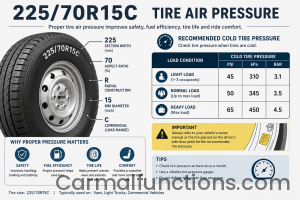
| Load Condition | Front Pressure (PSI / bar) | Rear Pressure (PSI / bar) | Notes |
| Normal Load (Summer) | 45-50 PSI / 3.1-3.4 bar | 50-55 PSI / 3.4-3.8 bar | Daily use, light loads. |
| Full Load (Summer) | 50-55 PSI / 3.4-3.8 bar | 55-60 PSI / 3.8-4.1 bar | Near max capacity. |
| Normal Load (Winter) | 46-51 PSI / 3.2-3.5 bar | 51-56 PSI / 3.5-3.9 bar | Compensating for cold. |
| Peugeot Boxer (Specific) | 59 PSI / 4.1 bar | 65 PSI / 4.5 bar | Specific OEM spec. |
Important Note: Always prioritize the values printed on your vehicle’s placard over general charts. Never exceed the “Max Press” indicated on the tire sidewall.
Frequently Asked Questions (FAQ)
What is the ideal PSI for 225/70R 15C tires?
It usually ranges between 40-65 PSI (2.8-4.5 bar) depending on the vehicle and load. Check your door jamb for the specific number.
How much should I increase pressure for a loaded van?
Typically, you should increase it by 5-10 PSI compared to the empty weight, following the manufacturer’s “Full Load” guidelines.
Does using Nitrogen help?
Nitrogen is more stable against temperature changes and leaks slower than regular air, but it does not eliminate the need for monthly manual checks.
Should I bleed air from “hot” tires?
No. Tire pressure naturally rises during a trip due to heat. If you bleed air while they are hot, the tires will be under-inflated once they cool down.