C0550 Steering Assist Module Malfunction
C0550 Steering Assist Module Malfunction: Comprehensive Guide The C0550 Steering Assist Module Malfunction diagnostic trouble code (DTC) indicates a significant issue within your vehicle’s electric power steering assist system. This code specifies that the steering assist module has experienced an internal performance error. For your driving safety, this condition must...

- 1. C0550 Steering Assist Module Malfunction: Comprehensive Guide
- 1.1. What is a C0550 Steering Assist Module Malfunction?
- 1.2. Function of the Steering Assist Module
- 1.3. EPS System Overview
- 2. Symptoms of C0550 Steering Assist Module Malfunction
- 2.1. 1. Hard Steering and Increased Effort
- 2.2. 2. Warning Lights and Messages
- 2.3. 3. Other Potential Symptoms
- 3. Causes of C0550 Steering Assist Module Malfunction
- 3.1. Possible Causes and Descriptions
- 4. Diagnostic Process for C0550
- 4.1. OBD-II Scanner Utilization
- 4.2. Visual Inspection and Wiring Tests
- 4.3. Battery and Charging System Check
- 5. Repair and Replacement Options
- 5.1. Wiring Repairs
- 5.2. Module Reprogramming or Updating
- 5.3. Steering Assist Module Replacement
- 5.4. Estimated Costs
- 6. Preventive Measures
- 7. Safety Implications and Action Plan
- 7.1. Driving Risks
- 7.2. Immediate Next Steps
- 7.3. Safety and Action Plan Matrix
- 8. Frequently Asked Questions (FAQ)
- 8.1. Summary
C0550 Steering Assist Module Malfunction: Comprehensive Guide
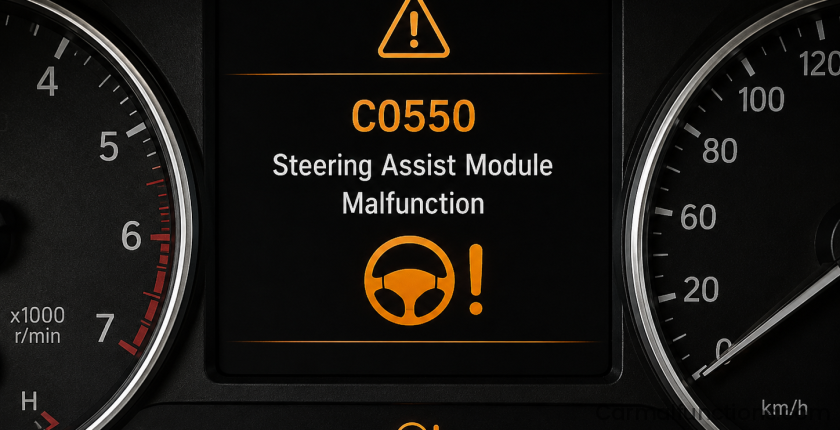
The C0550 Steering Assist Module Malfunction diagnostic trouble code (DTC) indicates a significant issue within your vehicle’s electric power steering assist system. This code specifies that the steering assist module has experienced an internal performance error. For your driving safety, this condition must be addressed promptly. Below you will find detailed tables and an FAQ section.
What is a C0550 Steering Assist Module Malfunction?
The C0550 code is a diagnostic trouble code encountered in vehicle onboard diagnostic systems. It signifies an internal fault within the steering assist module itself. This is typically related to the Electric Power Steering (EPS) system or the Rear Wheel Steering Control Module (RWSCM). The module detects an internal malfunction during its self-test procedure, which prevents the steering system from operating correctly and severely compromises the vehicle’s safe maneuverability.
Function of the Steering Assist Module
The steering assist module is a vital component in modern vehicles. It reduces the physical effort required by the driver to turn the steering wheel, making parking particularly effortless at low speeds. The module processes real-time data from steering torque sensors and vehicle speed sensors to calculate exactly how much assistance the electric motor should provide.
This ensures a smooth and controlled driving experience:
-
At high speeds: It reduces assistance to stiffen the steering, thereby increasing vehicle stability.
-
At low speeds: It increases assistance to maximize maneuverability.
EPS System Overview
Electric Power Steering (EPS) systems are far more efficient than traditional hydraulic systems. They are lighter and require less maintenance. EPS utilizes an electric motor to provide steering assistance, which reduces engine load and improves fuel economy. An EPS system primarily consists of a steering angle sensor, a torque sensor, and an Electronic Control Unit (ECU). The ECU controls the electric motor based on sensor inputs to apply the necessary torque directly to the steering gear.

Symptoms of C0550 Steering Assist Module Malfunction
The C0550 code manifests through several noticeable symptoms that can directly impact your driving safety. Early diagnosis and intervention are critical.
1. Hard Steering and Increased Effort
-
The steering wheel feels significantly heavier than usual.
-
Turning the vehicle requires substantially more physical effort.
-
Difficulty increases sharply during low-speed maneuvers or parking.
-
Executing sudden evasive maneuvers becomes extremely challenging.
2. Warning Lights and Messages
-
The EPS (Electric Power Steering) warning light illuminates on the dashboard.
-
Some vehicles may display a “Service Power Steering System” or similar text message.
-
On vehicles equipped with rear-wheel steering, a “Service 4-Wheel Steering” indicator may appear.
-
The ABS or traction control warning lights may also illuminate concurrently.
3. Other Potential Symptoms
-
Intermittent loss of power steering assistance.
-
Unusual noises or whining when turning the steering wheel.
-
Difficulty keeping the vehicle traveling in a straight line.
-
On vehicles with rear-wheel steering, the rear wheels may default and lock into their straight, centered position.
Causes of C0550 Steering Assist Module Malfunction
The C0550 code is typically triggered by electrical or electronic system failures. The primary causes include:
-
Internal Steering Assist Module Fault: The microprocessors or electronic circuits inside the module fail due to heat, vibration, or component aging. This prevents the module from passing its own self-test and registers as an internal performance error, usually requiring module replacement.
-
Wiring and Connection Issues: Damaged wiring harnesses, cracked insulation, corrosion, or loose connections create issues. Water intrusion can corrode connector pins, disrupting critical signals. Weak ground or power supply connections to the module can also trigger the fault.
-
Low Battery Voltage or Voltage Fluctuation: A weak battery provides inconsistent voltage to sensitive electronic modules, which can trigger an internal fault code. Improper battery jump-starting can also cause voltage spikes.
-
Software or Calibration Errors: Corrupted calibration files or outdated software can misinterpret sensor data, triggering a false internal fault status during self-testing. This can often be resolved by reprogramming the module.
-
Conflicting Data from Other Sensors: Plausibility errors from an external source—such as a faulty wheel speed sensor or steering angle sensor—can mislead the module, causing its self-test to fail.
Possible Causes and Descriptions
| Cause | Description |
| Internal Steering Assist Module Fault | Degradation or failure of internal electronic components (microprocessor, circuitry). |
| Wiring and Connection Issues | Damage, corrosion, loose connections, or water intrusion in the module’s wiring harness. |
| Low Battery Voltage / Fluctuations | Inconsistent power supply originating from a weak battery or failing charging system. |
| Software / Calibration Errors | Corruption in the module’s software or outdated calibration parameters. |
| Conflicting Sensor Data | Incorrect or implausible data sent from external sources like wheel speed or steering angle sensors. |
Diagnostic Process for C0550
Accurately diagnosing the C0550 code is essential to resolve the issue effectively and avoid unnecessary parts replacement.
OBD-II Scanner Utilization
The first step is to read the trouble codes using an OBD-II scanner to confirm the presence of the C0550 code. Take note of any accompanying codes, as they can point to a broader sensor network issue. Monitoring live data streams with the scanner—especially the reference voltages—is highly beneficial.
Visual Inspection and Wiring Tests
Perform a thorough visual inspection of the module and its associated wiring harnesses. Look for signs of chafing, corrosion, or pinched wires. Ensure all connectors are clean, dry, and securely seated. Use a multimeter to check for continuity between the sensor connector and the ECU pins. Infinite resistance indicates an open circuit, while a short to battery voltage or ground indicates a circuit fault.
Battery and Charging System Check
Completely test the battery and alternator. Ensure the battery health is optimal, as low voltage frequently causes electronic module glitches. Replace the battery if it fails load testing.
When is Professional Help Required?
Steering systems are complex safety-critical systems that demand specialized expertise. If the code persists after basic electrical verifications, consult a certified repair facility. Authorized service centers possess advanced diagnostic equipment and factory-trained technicians to pinpoint the exact root cause.
Repair and Replacement Options
The remedy for a C0550 code depends entirely on the root cause of the malfunction.
Wiring Repairs
If damaged wiring or corrosion is detected, the harness must be repaired. Tighten loose connections and replace damaged wires professionally. This is generally the most cost-effective solution.
Module Reprogramming or Updating
For software-related errors or outdated calibration data, the module must be reflashed. Reprogramming the module with the manufacturer’s latest software release can resolve the issue without needing to replace any hardware. Authorized dealerships typically perform these software updates.
Steering Assist Module Replacement
If an unfixable internal hardware fault is diagnosed within the module, it must be replaced. This is usually the most expensive path. New modules must be programmed specifically to the vehicle, matching the VIN (Vehicle Identification System). A wheel alignment is typically performed following the component replacement.
Estimated Costs
Repair costs vary significantly depending on the nature of the issue. Wiring repairs are affordable, module reprogramming carries a moderate software/labor fee, while full module replacement is the most expensive option. Depending on the vehicle’s make and model, repair expenses can vary widely.
Preventive Measures
You can take several preventive steps to avoid encountering steering assist module malfunctions and prolong the lifespan of the system:
-
Regular Vehicle Maintenance: Do not skip periodic vehicle inspections. Ensure steering system components, tie rods, and linkages are checked for wear, play, or damage during routine servicing.
-
Maintain Battery Health: The battery is the critical power source for the steering assist module. Have your battery tested regularly, especially before cold weather sets in. Keep battery terminals clean, free of corrosion, and tightly secured. Replace aging batteries proactively.
-
Mindful Driving Habits: Avoid forcing the steering wheel to its absolute limits (full lock) with excessive force. Sudden, violent steering inputs place unnecessary stress on electronic components.
-
Maintain Correct Tire Pressure: Incorrect tire pressure increases the physical load placed on the electric power steering system, forcing the module and motor to work harder.
Safety Implications and Action Plan
The C0550 code is not merely a convenience issue; it carries serious safety risks. Immediate action is required if this code is triggered.
Driving Risks
The loss of power steering assistance makes controlling the vehicle very difficult, particularly at low speeds. During sudden evasive maneuvers or emergency braking, reduced steering responsiveness increases accident risks. Vehicle stability can be compromised, potentially leading to a loss of control on slippery road surfaces.
Immediate Next Steps
If you notice symptoms of a steering assist module failure while driving, reduce your speed immediately and safely pull over to the side of the road. Do not panic; the steering system will generally not lock up completely, but it will become heavily manual. While cycling the ignition (turning the engine off and on) can sometimes temporarily reset the system, a professional diagnosis is mandatory for a permanent fix.
Safety and Action Plan Matrix
| Scenario | Safety Impact | Required Action |
| Hard Steering | Reduced maneuverability, increased collision risk. | Reduce speed immediately and park the vehicle in a safe location. |
| Warning Light Illuminates | System malfunction; related safety systems may be affected. | Verify codes with an OBD-II scanner and seek professional assistance. |
| Malfunctioning Module | Power steering assist could cut out completely at any moment. | Take the vehicle out of service and have it towed to a repair facility. |
Frequently Asked Questions (FAQ)
What is the C0550 code and what does it mean?
The C0550 code indicates that the steering assist module has experienced an internal malfunction or performance error, pointing to a fault within the electric power steering infrastructure.
Is it safe to drive with a C0550 code?
No, it is not safe to drive with a C0550 code active. The steering becomes significantly heavier and harder to control, which substantially elevates the risk of an accident.
What causes the C0550 fault?
It can be caused by internal electronic component failure within the module, wiring harness damage, corroded connectors, low system voltage from a weak battery, or corrupted module software.
How do I diagnose the C0550 trouble code?
Begin by retrieving codes using an OBD-II diagnostic scanner. Visually inspect the wiring, connectors, and test the vehicle’s battery voltage and charging system health. For a definitive diagnosis, professional troubleshooting is recommended.
Can the steering assist module be repaired, or must it be replaced?
In some instances, a manufacturer software update, calibration, or a simple wiring repair is sufficient. However, if the module suffers from internal microprocessor or circuitry damage, it must be replaced.
How can I prevent a C0550 malfunction?
Keep up with routine vehicle maintenance, routinely check and maintain battery health, ensure your tires are always inflated to the correct pressure, and avoid aggressive steering habits that overload the system.
Summary
The C0550 Steering Assist Module Malfunction is a critical trouble code indicating a severe issue within your vehicle’s steering electronics. It manifests through heavy steering, dashboard warning lights, and compromised vehicle control. For your safety, never ignore this warning code and contact an authorized service center immediately to have the system properly diagnosed and repaired. Regular electrical maintenance and proper driving habits remain your best defense against such failures.