What happens when the timing belt chain breaks?
When the timing belt or chain breaks, catastrophic engine damage is the most common and immediate consequence, especially in modern interference engines. This failure severs the critical synchronization between the crankshaft and camshaft. This disrupts the precise timing of valve openings and closings, often leading to pistons colliding with open...

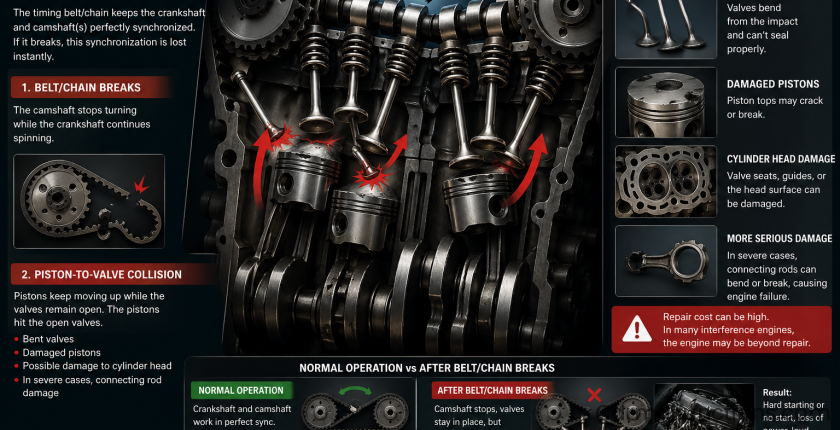
When the timing belt or chain breaks, catastrophic engine damage is the most common and immediate consequence, especially in modern interference engines. This failure severs the critical synchronization between the crankshaft and camshaft. This disrupts the precise timing of valve openings and closings, often leading to pistons colliding with open valves. This collision can cause severely bent or broken valves, damaged pistons, scored cylinder walls, and even a cracked engine block. Such extensive internal damage typically necessitates a complete engine rebuild or replacement, resulting in extremely high repair costs, often thousands of dollars. You will find detailed tables and FAQs below.
- 1. Understanding the Critical Role of Timing Belts and Chains
- 1.1. Timing Belts: The Rubber Connection
- 1.2. Timing Chains: The Metal Durability
- 2. What Happens When the Timing Belt Chain Breaks?
- 2.1. Interference vs. Non-Interference Engines
- 2.2. Consequences of a Broken Timing Belt Chain
- 3. Warning Signs of a Failing Timing Belt or Chain
- 3.1. Common Symptoms for Both Belts and Chains:
- 3.2. Specific Signs for Timing Chains:
- 3.3. Specific Signs for Timing Belts:
- 4. Preventative Maintenance: The Key to Avoiding Catastrophe
- 4.1. Timing Belt Maintenance:
- 4.2. Timing Chain Maintenance:
- 5. Cost of Repair vs. Replacement
- 5.1. Timing Belt Replacement Costs:
- 5.2. Timing Chain Replacement Costs:
Understanding the Critical Role of Timing Belts and Chains
The timing belt and timing chain are vital components within an internal combustion engine. Their primary function is to synchronize the rotation of the crankshaft and the camshaft(s). This synchronization ensures that the engine’s valves open and close at precisely the right moments in relation to the position of the pistons. This precise timing is essential for efficient combustion, optimal engine performance, and preventing internal component collisions.
Timing Belts: The Rubber Connection
Timing belts are typically made of reinforced rubber and are often cogged to grip pulleys connected to the crankshaft and camshaft. They are usually located on the exterior of the engine, covered by a protective casing. Because they are made of rubber, timing belts are subject to wear and tear over time. They can crack, stretch, or lose teeth, eventually leading to failure. Manufacturers recommend specific replacement intervals, usually between 60,000 and 100,000 miles, though this can vary based on the vehicle and materials used. Regular inspection and timely replacement are crucial to prevent failure.

Timing Chains: The Metal Durability
Timing chains, on the other hand, are made of metal and are generally more durable and long-lasting than timing belts. They are located inside the engine and are lubricated by engine oil. While timing chains are designed to last much longer, often for the life of the engine, they are not immune to wear. Over time, a timing chain can stretch, and its tensioners and guides can wear out. This wear can lead to slack in the chain, affecting engine timing and potentially causing damage. Regular oil changes with high-quality oil are essential for maintaining the health of a timing chain.
What Happens When the Timing Belt Chain Breaks?
The immediate aftermath of a timing belt or chain breaking while the engine is running is usually a sudden and complete engine shutdown. The loss of synchronization between the crankshaft and camshaft means the engine can no longer operate. This can be particularly dangerous if it occurs at high speeds, as it can lead to a loss of power and potentially affect steering and braking control, forcing the driver to pull over safely. However, the more significant concern is the internal engine damage that often follows.
Interference vs. Non-Interference Engines
The severity of the damage depends heavily on whether the engine is an “interference” or “non-interference” type.
- Interference Engines: In these engines, the valves and pistons occupy the same space within the cylinder, but at different times. The timing belt/chain ensures they never collide. If the belt/chain breaks, the valves may remain open while the pistons continue to move upwards. This results in a violent collision between the piston and the open valve. This catastrophic event can lead to bent or broken valves, damaged pistons, cylinder head damage, and even a cracked engine block. Repairs can cost thousands of dollars, often making engine replacement more economical.
- Non-Interference Engines: In these engines, there is sufficient clearance between the valves and pistons, even if the timing is lost. While a broken belt/chain will still cause the engine to stop running, the risk of internal component collision and severe damage is significantly lower. The primary issue is the engine ceasing to function, requiring replacement of the belt/chain.
Consequences of a Broken Timing Belt Chain
When what happens when the timing belt/chain breaks is considered, the potential consequences are severe:
- Engine Shutdown: The engine will stop running immediately and will not restart without repair.
- Internal Engine Damage: In interference engines, this is the most common and costly outcome. It includes bent valves, damaged pistons, cylinder head damage, and potentially a destroyed engine.
- Loss of Power: Even before a complete break, a slipping belt or chain can cause a noticeable loss of engine power and poor performance.
- Costly Repairs: Repairing the damage from a broken timing belt or chain can range from hundreds to thousands of dollars. A simple belt replacement might cost $400-$1,000, but if internal engine damage occurs, costs can skyrocket to $3,000-$5,000 or more for repairs, or even necessitate a full engine replacement.
Warning Signs of a Failing Timing Belt or Chain
Catching a failing timing belt or chain before it breaks is crucial to avoid catastrophic damage. Several warning signs can indicate an impending failure:
Common Symptoms for Both Belts and Chains:
- Engine Misfires or Rough Idling: This occurs when the engine’s timing is off due to a slipping or stretched belt/chain. You might feel the engine shake or hesitate.
- Difficulty Starting the Engine: A worn or stretched belt/chain can prevent the engine from starting correctly or at all. The starter motor might engage, but the engine won’t fire up.
- Check Engine Light: Modern vehicles have sensors that can detect timing issues, illuminating the check engine light.
- Engine Won’t Start: This is a clear indicator of a broken belt or chain.
Specific Signs for Timing Chains:
- Rattling or Clattering Noises: A loose or stretched timing chain can rattle against its housing, especially when the engine is idling or at low speeds.
- Metal Shavings in the Oil: As a timing chain wears down, it can shed metal particles into the engine oil, which can be discovered during an oil change.
- Reduced Engine Performance: A stretched chain can lead to sluggish acceleration, poor fuel efficiency, and a general loss of power.
Specific Signs for Timing Belts:
- Ticking or Clicking Noises: A worn timing belt might produce a ticking sound, often from the area of the belt or its tensioner.
- High-Pitched Whine or Squeal: This sound can indicate a loose or slipping timing belt, particularly during acceleration.
- Visible Wear and Tear: While often hidden, a visual inspection might reveal cracks, fraying, or missing teeth on the belt.
- Oil Leaks: Oil leaks near the timing belt cover can indicate a failing seal or gasket, which can degrade the belt.
- Exhaust Fumes/Smoke: In some cases, issues with the timing belt can lead to excessive exhaust smoke due to improper combustion.
Preventative Maintenance: The Key to Avoiding Catastrophe
Preventing the failure of your timing belt or chain is significantly more cost-effective and less stressful than dealing with the aftermath of a break. Regular maintenance is paramount.
Timing Belt Maintenance:
- Adhere to Manufacturer’s Schedule: Replace the timing belt at the mileage or age intervals recommended by your vehicle’s manufacturer. This is typically between 60,000 and 100,000 miles.
- Replace Related Components: It is highly recommended to replace the timing belt kit, which often includes tensioners, idler pulleys, and sometimes the water pump. These components have similar lifespans and are accessed during the timing belt replacement, saving on future labor costs.
- Visual Inspection: If accessible, visually inspect the belt for cracks, fraying, or missing teeth.
Timing Chain Maintenance:
- Regular Oil Changes: Use high-quality oil of the correct viscosity recommended by the manufacturer. Clean oil lubricates and cools the chain and its components, reducing wear.
- Listen for Noises: Pay attention to any rattling or unusual sounds from the engine, especially at idle.
- Monitor Check Engine Light: Address any illuminated check engine light promptly.
- Professional Inspections: Have the timing chain and its related components (tensioners, guides) inspected during regular maintenance intervals, particularly on high-mileage vehicles.
- Consider Upgrades: For high-mileage vehicles, consider aftermarket reinforced guides and tensioners for increased durability.
Cost of Repair vs. Replacement
The cost difference between preventative maintenance and post-failure repair is substantial.
Timing Belt Replacement Costs:
- Preventative Replacement: Typically ranges from $400 to $1,285, depending on the vehicle and whether related components like the water pump are replaced simultaneously. Parts usually cost $100-$427, and labor $584-$858.
- Repair After Breakage: If the timing belt breaks and causes internal engine damage, repair costs can range from $3,000 to $5,000 or more, often involving engine rebuilding or replacement. In many cases, this cost exceeds the vehicle’s value.
Timing Chain Replacement Costs:
- Preventative Replacement: Generally more expensive than timing belt replacement due to internal engine access, costing between $2,000 and $2,700. Labor accounts for a significant portion of this cost ($1,300-$1,900), with parts averaging around $800. Related components like tensioners can add further expense.
- Repair After Breakage: While timing chains are more durable, if one breaks and causes damage, the repair costs are similarly high, often requiring engine rebuilding or replacement. The cost of replacing a timing chain tensioner alone can be over $1,400.
In conclusion, what happens when the timing belt/chain breaks is a critical event that can lead to severe, costly engine damage. Understanding the function of these components, recognizing the warning signs of failure, and adhering to a strict preventative maintenance schedule are essential steps for every vehicle owner to avoid catastrophic mechanical failure and exorbitant repair bills.