225 75 R15 Tire Air Pressure
Correct 225/75 R15 Tire Air Pressure is vital for your vehicle’s safety and performance. This tire size is commonly used in light commercial vehicles, some SUVs, and pickup trucks. The ideal tire pressure should be determined based on the manufacturer’s recommendations found on the vehicle’s door pillar, fuel filler cap,...

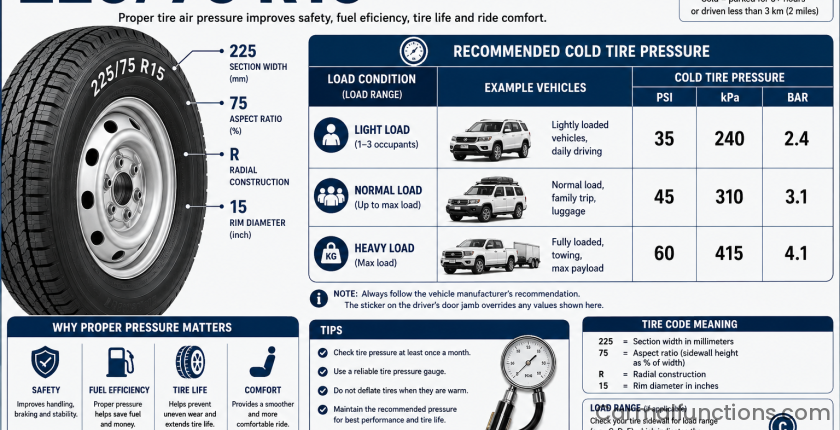
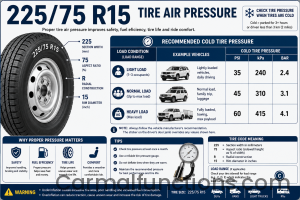
Correct 225/75 R15 Tire Air Pressure is vital for your vehicle’s safety and performance. This tire size is commonly used in light commercial vehicles, some SUVs, and pickup trucks. The ideal tire pressure should be determined based on the manufacturer’s recommendations found on the vehicle’s door pillar, fuel filler cap, or in the owner’s manual.
Proper pressure improves fuel efficiency, extends tire life, and significantly enhances driving safety. This comprehensive guide covers everything you need to know about 225/75 R15 tire pressure, including detailed tables and FAQs.
Why is 225/75 R15 Tire Air Pressure Important?
Your tires are the only point of contact between your vehicle and the road. Therefore, maintaining the correct pressure is paramount for several reasons:
-
Fuel Efficiency: Low tire pressure increases the rolling resistance, forcing the engine to work harder. This leads to higher fuel consumption. Correct pressure ensures optimum fuel economy.
-
Tire Life and Wear: Proper pressure allows tires to wear evenly. Low pressure causes excessive flexing and heating of the sidewalls, leading to faster wear on the “shoulders.” High pressure causes the center of the tread to wear out prematurely.
-
Driving Safety and Handling: Correct pressure shortens braking distances and increases road grip. Under-inflated tires can lead to stability loss during cornering and increase the risk of hydroplaning, while over-inflated tires reduce the contact patch, weakening road hold.
-
Driving Comfort: Tires at the correct pressure better absorb road imperfections, providing a smoother ride. Over-inflation makes the ride stiff and uncomfortable.
How to Determine the Correct Pressure
Every vehicle is different. The ideal pressure depends on the vehicle’s model, weight, and intended use.
-
Manufacturer Recommendations: This is the most reliable source. Check the driver’s side door jamb, the inside of the fuel flap, or the owner’s manual.
-
Maximum Pressure on Sidewall: The PSI value on the tire sidewall indicates the maximum pressure the tire can hold. This is not the recommended driving pressure. Never exceed this value.
-
Load Capacity: If you are carrying a heavy load, you may need to increase the pressure. Manufacturers typically suggest adding 2-3 PSI for full-load conditions to prevent overheating.
Step-by-Step Control Process
-
Frequency: Check your tires at least once a month and before long trips.
-
The “Cold” Rule: Always measure when tires are cold (parked for at least 3 hours). Driving generates heat, which expands the air and gives a false high reading.
-
Procedure:
-
Remove the valve cap.
-
Press the pressure gauge firmly onto the valve.
-
Read the value and compare it to the manufacturer’s recommendation.
-
Add air if low, or release air by pressing the center pin of the valve if too high.
-
Check all tires, including the spare.
-
Recommended 225/75 R15 Tire Pressure Table (General Guide)
| Condition | Front Tire (PSI / Bar) | Rear Tire (PSI / Bar) |
| Normal Load (Summer) | 32-35 PSI / 2.2-2.4 Bar | 32-35 PSI / 2.2-2.4 Bar |
| Normal Load (Winter) | 33-36 PSI / 2.3-2.5 Bar | 33-36 PSI / 2.3-2.5 Bar |
| Full Load (Summer) | 36-39 PSI / 2.5-2.7 Bar | 38-42 PSI / 2.6-2.9 Bar |
| Full Load (Winter) | 38-41 PSI / 2.6-2.8 Bar | 40-44 PSI / 2.7-3.0 Bar |
| Off-Road (Light Terrain) | 20-25 PSI / 1.4-1.7 Bar | 20-25 PSI / 1.4-1.7 Bar |
Note: Always refer to your vehicle’s specific placard for the final authority on pressure values.
Frequently Asked Questions (FAQ)
What is the ideal pressure for 225/75 R15 tires?
It generally ranges between 32-38 PSI (2.2-2.6 Bar), but the exact value depends entirely on your specific vehicle’s requirements.
Should I increase pressure when carrying a heavy load?
Yes. When fully loaded or towing a trailer, manufacturers usually recommend an increase of +2 to +4 PSI (0.15-0.28 Bar).
Does temperature affect tire pressure?
Yes. For every 10°C drop in temperature, tire pressure decreases by approximately 1 PSI. This is why frequent checks are necessary during winter.
What is the difference between Maximum Pressure and Recommended Pressure?
Maximum pressure is the structural limit of the tire. Recommended pressure is the optimized value set by the car manufacturer for the best balance of safety, comfort, and economy.
Summary: Keeping your 225/75 R15 tires at the correct pressure is a simple but vital habit. It minimizes road risks, saves you money at the pump, and ensures your tires last as long as possible. Check them monthly while they are cold to stay safe on the road.